Summary:
Domestic institutional investors bought ₹12,504 crore of Indian shares in September as foreign investors sold ₹10,825 crore following the Federal Reserve rate hike. DII buying provided support, but the Nifty still declined amid higher yields, crude prices and global risks.
Domestic institutional investors (DIIs) have started buying in Indian shares as reaction to the Federal Reserve hiking rates for the first time in over three years. The rate hike by the US central bank has led to fears that higher yields in the US would lure money away from emerging markets.
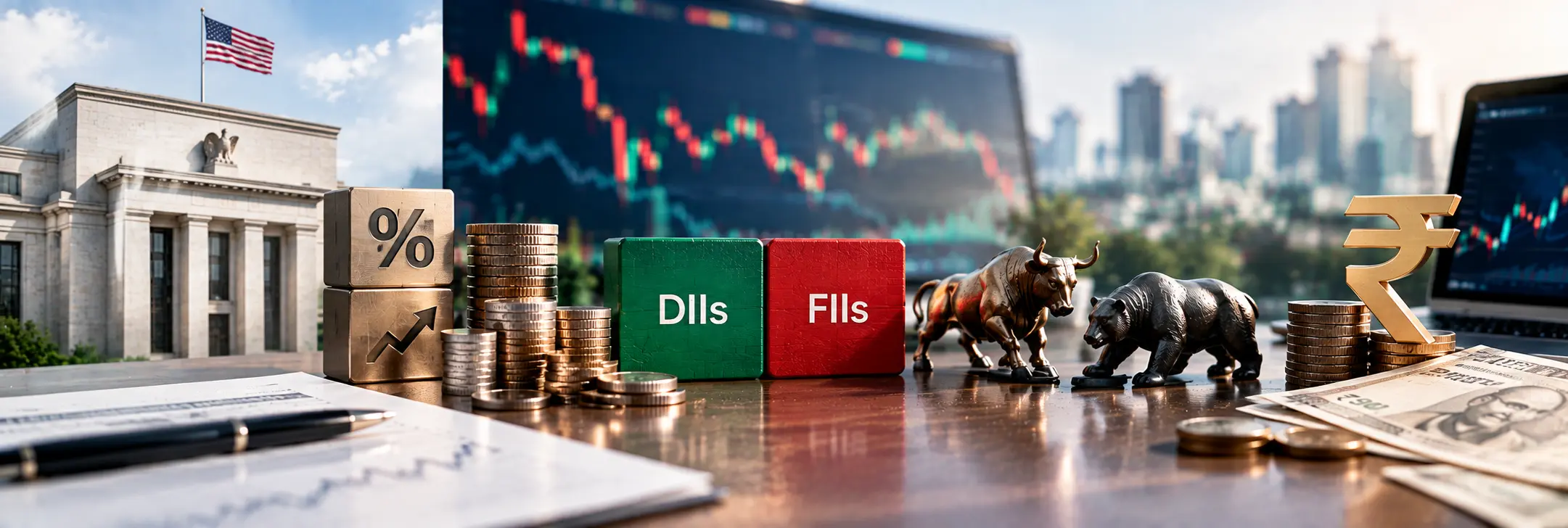
Meanwhile, domestic investors have been there to rescue the market as they countered the foreign outflows. DIIs bought shares worth Rs 12,504 crore in Sept while the foreign investors sold Rs 10,825 crore in the same month. Thus, even as the Nifty plunged 6.4 per cent to post its sharpest drop during any of such rate hike cycle in recent times, the inflows from domestic investors helped the market.
The latest rate hike cycle by the US Federal Reserve has again demonstrated the critical role of domestic institutional investors in Indian markets. Though the inflows from DIIs helped the market to some extent, but it could not stop the slide. Even during the previous hikes by the Fed, the domestic investors had bought shares as the foreign investors sold.
Fed Rate hike Again Worries Emerging Markets as Dollars Seem More Attractive To Global Investors
The Federal Reserve's rate hikes have once again created worries about the impact on emerging markets. Higher interest rates in the US can create pressure on other countries as dollar assets become more appealing.
The US dollar gained ground after the Fed's rate hike while the bond yields also climbed. This led to the depreciation of the rupee, however, it recovered from the sharp slide after possible intervention by the Reserve Bank of India (RBI) and inflows of money. Foreign investors are staying on the sidelines with rising crude oil prices, rising bond yields, and global challenges. They sold shares worth Rs 3,209 crore on September 17 while domestic institutions bought shares worth Rs 3,618 crore on the same day.
Past Data Show Mixed Trends for Domestic Investors During Fed Rate Hikes
In the last rate hike cycle by the Federal Reserve which began in December 2015 and ended in September 2016, the monthly data showed a similar pattern. There were 21 months (Dec 2015-Sep 2016) when Fed had hikes rates and in all these 21 months, DIIs have bought in each month when foreign funds sold shares. However, in seven such months, the Nifty fell despite the inflows of domestic institutional investors.
Domestic investors are once again buying in as foreign investors sell during this latest rate hike cycle by the Fed. However, the market has seen mixed trends during such periods. The domestic investors bought widely across market caps, sectors and themes during the recent selling by foreign investors. But it is also seen that investors have not aggressively added to the positions.
During any such period of rate hikes by the Fed in the past, domestic investors had bought selectively. During the last hike, DIIs bought mid-cap stocks which were seen as value pockets while they remained cautious about the small-caps. Moreover, the domestic investors took cue from the sectors in which foreign investors had heavy exposure as any outflows from such sectors during Fed hikes lead to sharp falls.
Market Outlook after the Fed Rate hike
The immediate outlook for the market will be guided by how the investors perceive the impact of higher global interest rates, bond yields and growth prospects. The foreign funds will play a big role in determining the direction of the market, however, the domestic inflows have also been a big positive for the market.
The latest hike by the Fed once again showed the changing dynamics of the Indian equity markets, in which domestic institutional investors are playing an important role. Thus, the domestic investors are acting as stabilizers for the market but the global investors will keep on playing an important role. The market direction will be determined by the local domestic factors along with foreign flows.