Summary:
IT and FMCG stocks are often considered defensive, but sector returns depend on earnings growth, valuations and business risks. Slower technology spending, AI disruption, changing consumer channels and rising costs can affect returns differently across companies and sectors.
Sector returns show that steady business categories do not always deliver steady equity prices.
Information technology and consumer-staples stocks have long attracted investors during periods of market volatility because many of their products and services generate repeat demand. That defensive reputation has weakened as earnings growth slows, competition rises, and valuations adjust.
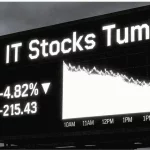
During the three years to October 2026, the Nifty IT index was broadly flat, and the Nifty FMCG index fell around 16%. The Nifty 50 advanced approximately 17% over the same period.
That gap challenges the assumption that a historically defensive sector must outperform whenever markets are unsettled. A business may have regular customers while its share price falls because earnings expectations, margins or valuation multiples change.
Earlier cycles had very different outcomes. Strong phases for technology after economic disruptions and periods of faster demand growth helped some sector indices record outsized returns. Those exceptional years cannot be treated as a normal forecast for future periods.
Why Technology and Consumer Staples Face Pressure
Indian IT services businesses are closely linked to technology budgets at overseas companies. Clients can postpone discretionary projects even when they continue paying for essential operations and maintenance. Artificial intelligence adds another uncertainty: it may create implementation work while also changing pricing, staffing requirements and the amount clients spend on existing services.
FMCG companies face different pressures. Traditional distribution has to compete with direct-to-consumer brands, online channels and quick-commerce platforms. Advertising and product-launch expenses can rise, while consumers may trade down to lower-priced alternatives.
Neither sector has the same earnings drivers across all companies. Export-oriented technology providers face currency and global spending risks; domestic consumer companies depend more on household demand, pricing, and distribution. Comparing them simply as one defensive category can hide those differences.
What Does This Mean for Individual Stocks?
Tata Consultancy Services and Infosys are examples of large IT services firms where deal conversion, client budgets, employee costs, and revenue mix influence earnings. Their stability needs to be judged from reported cash flows and margin trends, not the sector label alone.
For Hindustan Unilever and ITC, the relevant measures include volume growth, product pricing, raw-material costs, and the economics of distribution. One consumer company may gain share while another loses it, even when both belong to the same index.
A defensive equity is often associated with recurring demand, manageable debt and relatively predictable cash generation. However, paying a high valuation for those characteristics can reduce the protection offered by the underlying business during a market correction.