Summary:
India’s rising electricity demand is shaping plans for coal, renewables, battery storage and transmission infrastructure. The CEA projects 1,121 GW of installed capacity by FY36, while proposed coal additions remain subject to planning, approvals, execution and changing power-system requirements.
Why India’s Electricity Demand Is Rising?
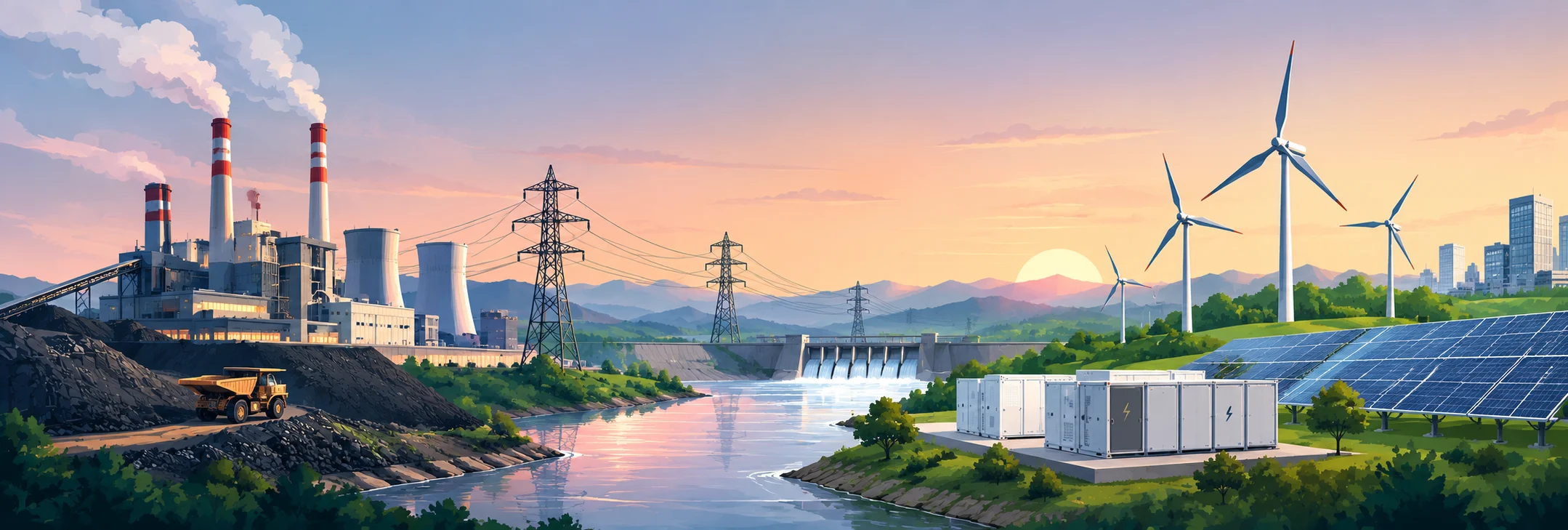
A rise in demand has put storage, grid readiness, and dependable power in focus. India’s electricity system faces a difficult balancing task. Solar and wind capacity are expanding rapidly, yet power demand remains high after sunset, when solar generation fades. Recent planning discussions have raised the possibility of adding 105–150 GW of coal-based capacity by 2035, above an earlier 97 GW expansion benchmark.
Factories, transport, data centres, homes and air conditioners require electricity throughout the evening. A large volume of installed solar capacity therefore does not automatically meet the hours when the sun is no longer available. Wind and hydropower help, but their output depends on weather and seasonal conditions. Reports say that peak electricity demand reached about 260 GW on October 5, 2026.
An earlier government release confirmed a then-record 256.1 GW peak on April 25. Together, the figures show the scale of short-term supply that the grid must manage. When generation and demand do not align, grid operators need dependable plants, stored energy, flexible generation, or demand management. Coal units currently provide a substantial part of that dispatchable supply, even as the energy mix changes.
Power Demand Hits Record High: What It Means for India’s Power Sector
What the CEA’s Power Capacity Plan Projects by FY36
The Central Electricity Authority’s March 2026 National Generation Adequacy Plan projects approximately 1,121 GW of installed capacity by FY36. Its breakdown includes 315 GW of coal, 509 GW of solar, 155 GW of wind, 78 GW of large hydro and 22 GW of nuclear generation, alongside smaller categories.
The same plan envisages 174 GW/888 GWh of energy storage: 80 GW/321 GWh of battery systems and 94 GW/567 GWh of pumped storage. It puts non-fossil sources at about 70% of installed generation capacity by FY36. That is a capacity share, not a statement that non-fossil sources will supply 70% of electricity at every hour.
The separate 105–150 GW coal-addition range reflects a later discussion about requirements under changing demand and system conditions. It should not be presented as already sanctioned construction or added mechanically to the CEA’s projected coal capacity.
Storage, Networks and Costs
Can Battery Storage and Pumped Hydro Support Renewable Energy?
Battery storage can move some daytime solar output into evening hours. However, longer periods of low renewable generation can require more storage duration or other flexible sources. Pumped hydro offers an alternative, but sites, water availability and project lead times limit deployment.
Stronger transmission networks can move power across regions and make better use of renewable generation. Demand-side changes, including more efficient cooling and shifting certain loads outside the evening peak, can also reduce the need for additional conventional generation.
The central trade-off is reliability, cost, and emissions. Coal offers dispatchability but increases fuel requirements and environmental burdens. New coal projects also involve large capital commitments and long operating lives.
Sector and Stock Impact
NTPC and Power Grid Corporation of India are exposed to different parts of the investment cycle: power generation and electricity transmission. Equipment manufacturers such as Bharat Heavy Electricals could be affected by orders for thermal generation equipment if projects actually proceed.
Renewable developers and storage providers face a parallel market shaped by competitive tariffs, battery prices and grid access. Demand projections do not automatically translate into awards or revenue for individual companies.