Summary:
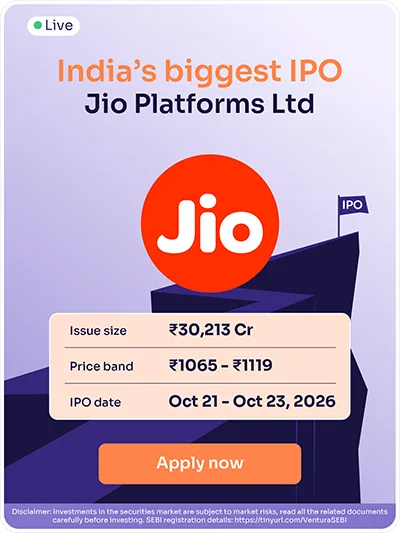
Jio Platforms’ ₹30,213 crore IPO opened on October 21, 2026, with a price band of ₹1,065–₹1,119 per share. The issue’s scale, anchor investor participation and subscription trends may influence views on Reliance Industries and India’s telecom sector, market sentiment and valuations.
The Jio Platforms IPO has attracted efforts to increase retail participation, while Indian auto component manufacturers, including Sona Comstar, Gabriel India and Varroc Engineering, are expanding global partnerships to strengthen their technology capabilities. Meanwhile, HDFC Bank reported profit growth in Q2FY27 despite pressure on its net interest margin.
The public offer runs from October 21 to October 23, with a price band of ₹1,065–₹1,119 per share. It comprises 27 crore fresh equity shares. At the upper end of the band, the fundraise would be India’s largest IPO by issue size.
Around ₹10,500 crore of shares are earmarked for retail investors, according to the newspaper report. Before the public opening, the company allocated roughly ₹8,110 crore to anchor investors on October 19. Bids for that institutional allocation substantially exceeded the shares available, showing the distinction between early institutional demand and retail applications.
Check Jio Platforms IPO subscription details
What Could It Mean for Stocks and the Market?
For Reliance Industries, an independently traded subsidiary would provide a visible valuation benchmark for its digital operations. That may influence how investors assess the parent’s businesses, but Reliance and Jio shares will have different ownership structures and market drivers.
The wider telecom sector, including Bharti Airtel, remains exposed to changes in pricing, subscriber growth, 5G spending and competition. A high IPO valuation does not automatically revalue other operators.
On October 21, Reliance shares rose around 1.7% in early trade while broader benchmarks opened higher. One session’s move, however, cannot establish whether the offer will improve long-term market sentiment.
The final allocation pattern, use of proceeds and post-listing disclosures will provide a clearer basis for judging the issue’s longer-term significance. Retail, institutional and non-institutional subscription figures should be examined individually, since strong bids in one category do not automatically establish equally strong participation across the entire offer.