Summary:
Pace Digitek’s ₹2,691.3 crore NTPC award adds a major BESS project at Khavda. Its 5-GWh operational manufacturing base and Q2 growth support execution potential, but GST, project costs, commissioning, working capital, margins and collections will determine the order’s actual value.
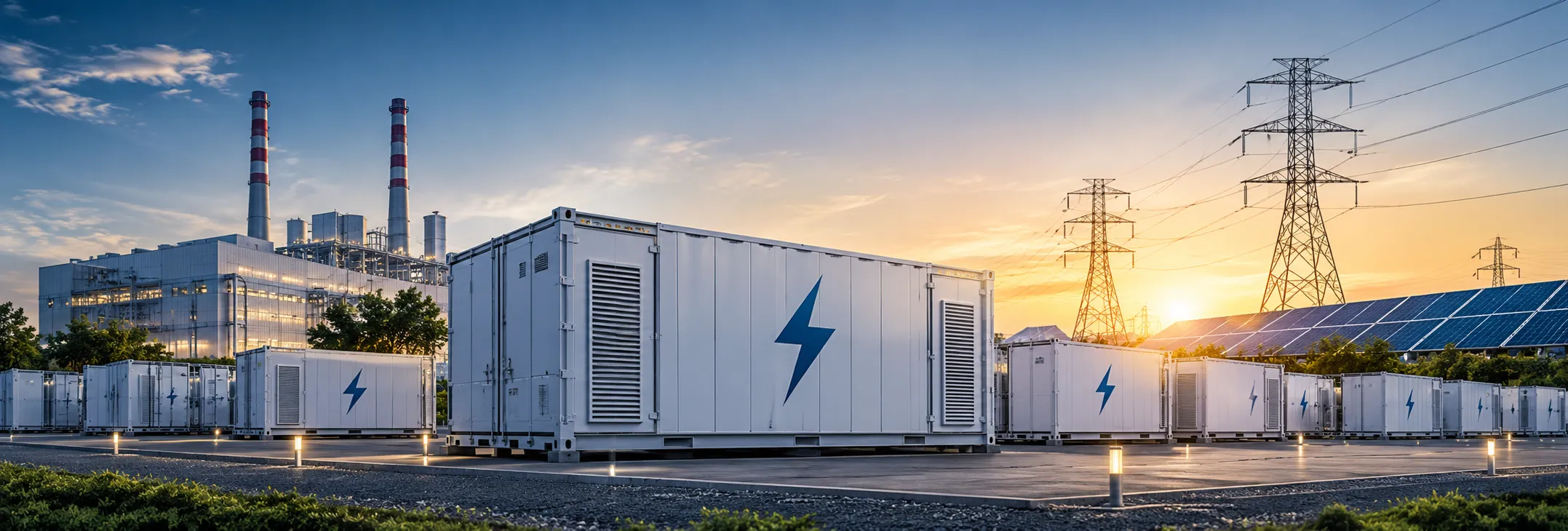
Pace Digitek Limited (NSE: PACEDIGITK) said on 16 November 2026 that it had received a Letter of Award from NTPC Green Energy Limited for a battery energy storage system (BESS) project at Khavda in Gujarat. The contract is valued at ₹26,913 million, or about ₹2,691 crore, including GST. It covers a 600 MW / 1,800 MWh installation, along with integration, commissioning work and a 15-year operations and maintenance commitment. For a business that reported FY26 revenue of around ₹2,641 crore, this is a significant award. It also raises a question investors cannot answer from the order size alone: how much of the contract will turn into profitable revenue and when?
Pace Digitek NTPC Khavda order: scale, scope and revenue recognition
The project covers two blocks of 300 MW / 900 MWh each at the NTPC REL Khavda solar site. The distinction between MW and MWh is worth understanding. MW measures how quickly a battery can supply electricity. MWh measures the energy it can deliver. At 600 MW and 1,800 MWh, the project provides around three hours of storage at rated output. That matters for shifting renewable generation into hours when the grid needs it.
Pace Digitek’s responsibilities include supplying and installing the BESS, civil works, testing, system integration and commissioning, followed by 15 years of maintenance. This is therefore more substantial than a standalone battery-supply order. But it is also not a simple ₹2,691 crore revenue addition to FY27. The reported contract value includes GST, and the long-duration maintenance element will be earned over time. The disclosure available at publication does not give a detailed construction schedule or the split between upfront project work and recurring services. Investors should not assume either.
The order arrives on top of a ₹10,735 crore September backlog
Pace Digitek already reported an executable order book of ₹10,735 crore as of 30 September 2026. Energy accounted for ₹8,528 crore of this, while Telecom and ICT contributed ₹2,208 crore. The NTPC award was announced more than six weeks after that reporting date, so it was not part of the September-end figure. Its ₹2,691 crore headline size is equivalent to roughly one-quarter of the earlier order book, although the comparison mixes a tax-inclusive new award with a company-reported backlog and should be treated only as an indication of scale.
The company is moving rapidly from a telecom infrastructure contractor toward a larger energy-storage business. That transition changes what investors need to monitor. Winning orders provides visibility. Manufacturing systems, funding inventory, securing cells and electronics, meeting commissioning milestones and collecting payments determine the actual economics. A larger backlog can support revenue for several years, but it can also make cash management more demanding during the build-out.
Q2 FY27 financial performance shows the pace of the transition
| Metric | Q2 FY27 | Q2 FY26 | Q1 FY27 |
| Revenue from operations | ₹808 cr | ₹533 cr | ₹555 cr |
| EBITDA | ₹159 cr | ₹94 cr | ₹86 cr |
| EBITDA margin | 19.6% | 17.6% | 15.5% |
| PAT | ₹97 cr | ₹68 cr | ₹63 cr |
The Q2 FY27 result, released on 31 October, showed that the expansion had already reached the income statement. Revenue increased 51.5% year on year to ₹808 crore and EBITDA rose 68.5% to ₹159 crore. Margin improved to 19.6% from 17.6% a year ago and 15.5% in Q1 FY27. PAT rose 43.3% to ₹97 crore. Management attributed the growth mainly to energy-storage supply and project execution, with the Energy division contributing about 80% of first-half revenue.
Those numbers give the NTPC award greater credibility than a contract announcement without an execution record. Still, the margins achieved in Q2 are not necessarily the margins that will apply to a large multi-year turnkey project. Pace Digitek operates across battery manufacturing, engineering-procurement-construction (EPC), operations and maintenance, and selective build-own-operate projects. Each has a different capital requirement, cash cycle and profitability profile.
Manufacturing capacity and project execution: can the business scale?
Through its subsidiary Lineage Power, the company doubled operational BESS manufacturing capacity from 2.5 GWh to 5 GWh in August 2026. It manufactured 844 MWh in the first half and commissioned 875 MWh of storage capacity during the same period. A further 5 GWh line was targeted for December 2026, which would take planned manufacturing capacity to 10 GWh if completed on schedule.
The latest Khavda order, at 1.8 GWh of storage, is meaningful against this operational base. It should improve capacity visibility, particularly as the company moves toward domestic integration and container fabrication. Management expects its own container facility to eventually meet about half of container requirements. That could support cost control, but the production ramp, sourcing of battery cells and delivery milestones remain important execution variables. Announced capacity does not by itself guarantee attractive utilisation or margins.
Working capital, debt and cash generation deserve equal attention
The financial risk is not that storage demand disappears overnight. It is the amount of capital required to deliver a growing order pipeline. The company reported ₹515 crore of cash and bank balances and net debt-to-equity of 0.35 times at September-end. Management also said the energy business can operate with a net working-capital cycle of around 90 to 120 days. Faster growth may therefore require funds for components, receivables and project mobilisation before cash is collected.
The distinction between EPC and build-own-operate projects is particularly important. An EPC contract generally generates revenue during execution, while an owned asset can require funding upfront in exchange for a longer income stream. The NTPC announcement includes long-term maintenance, but that does not mean Pace Digitek owns the project or earns fifteen years of electricity-sale revenue. The maintenance contract creates service visibility; ownership economics would require a separate disclosure.
FY27 guidance and valuation: what is already reflected in the share price?
Before this order, management had raised FY27 revenue guidance to ₹3,300–3,500 crore from ₹3,200–3,400 crore and indicated ₹4,000–4,200 crore for FY28. Both are company expectations, not achieved sales. The latest award strengthens longer-term revenue visibility, but without a project milestone schedule it would be premature to add the full contract value to either forecast.
Pace Digitek traded around ₹156–158 in dated market references available on 16 November, giving it a market value of roughly ₹3,375–3,405 crore. Published trailing earnings multiples vary by provider, so a precise comparison requires consistent earnings and share-count definitions. The larger point is that the market capitalisation is not much higher than the headline NTPC award value. That can look striking, but contract size is not profit, and a substantial portion of project receipts must fund equipment, installation, labour, guarantees and taxes. The relevant valuation question is how much cash the enlarged backlog can generate after those costs.
Pace Digitek investment outlook: the execution test
The NTPC Green Energy order substantially strengthens Pace Digitek’s position in utility-scale storage. It adds a recognised customer, meaningful deployment volume and a long service component at a time when its manufacturing base is expanding. The recent Q2 result suggests the company has begun converting storage demand into higher revenue and EBITDA.
What comes next is less about winning another order and more about delivering this one well. Investors should track the contractual execution schedule, manufacturing output, project-level margin trends, working-capital requirements and collections. Successful commissioning with disciplined cash conversion would make the order more valuable than its headline suggests. If equipment costs, delays or receivables absorb the gains, a larger order book alone will not produce stronger shareholder returns.