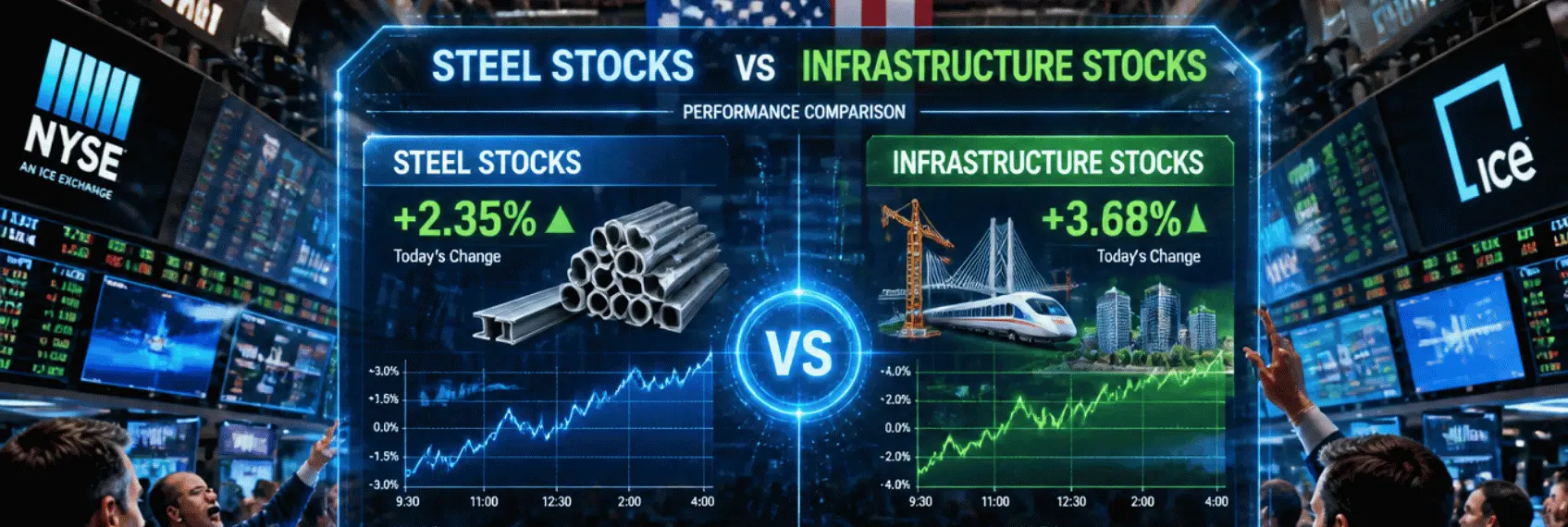
Steel and infrastructure stocks both stand to benefit from India's capex-led growth story, but they offer different risk-reward profiles. While steel companies could deliver higher returns during commodity upcycles, infrastructure stocks provide steadier earnings visibility backed by strong government spending and robust order books.
Every time the Union Budget rolls around, two sectors light up investor WhatsApp groups almost instantly: steel and infrastructure. Both ride on the same story, India building roads, railways and cities at a pace the world has rarely seen. But the way this story plays out in your portfolio is quite different depending on which side you pick.
The steel story: cyclical but currently in a sweet spot
Steel is a commodity business first and a growth business second. Right now, the commodity part is working in favour of Indian producers. Domestic HRC prices have climbed close to 20% over the last four months, helped by safeguard duty extensions, rupee weakness and elevated freight costs. That is a big swing in a short window and it shows up directly in margins.
JSW Steel is in the middle of the largest capacity build in Indian steel history, moving from 28 MTPA to 38 MTPA by FY27, with a longer term roadmap toward 62 MTPA by FY32. Tata Steel's India business is the real profit engine here, generating EBITDA of over ₹12,000 per tonne even as its UK and Netherlands operations continue to bleed. The structural demand backdrop is strong too. India is targeting 300 million tonnes of steel capacity by 2030, up from 170 million tonnes today, and every ₹1 lakh crore of infrastructure spending pulls in roughly 6 to 7 million tonnes of steel demand.
The catch is that steel stocks live and die by the commodity cycle. A Chinese oversupply wave or a sudden fall in global prices can undo a year of margin gains in a quarter. Brokerage views on the sector are split too, some see JSW Steel's fair value near ₹1,425 while others peg it closer to ₹890, which tells you how wide the range of opinion really is.
The infrastructure story: slower but more predictable
Infrastructure names run on a different rhythm. The Union Budget 2026-27 pushed capital expenditure to ₹12.2 lakh crore, up from ₹11.2 lakh crore the previous year, a rise of nearly 9%. That capital flows fairly directly into order books. L&T alone is sitting on an order book of ₹5.5 lakh crore, effectively multiple years of revenue already locked in. NHAI is awarding highways at the rate of roughly 35 km a day, among the fastest construction paces anywhere in the world.
What makes Infrastructure Stocks appealing to a retail investor is the Hybrid Annuity Model used in most road projects, where the government pays 40% of project cost upfront and the rest as fixed annuity payments over 15 years. That removes a big chunk of the demand uncertainty that plagues most other cyclical sectors. Companies like KNR Constructions run debt free with EBITDA margins above 16%, and IRB Infrastructure's InvIT structure offers dividend yields above 7% for investors who want steady income rather than pure price appreciation.
The trade off is that infra earnings growth tends to be slower and lumpier, tied to execution timelines, right of way clearances and how quickly government payments actually come through.
Explore: Best Infrastructure Stocks for Long Term Investments
So which one wins
Honestly, this is not really an either or question for most retail portfolios. Steel gives you leveraged exposure to a commodity up cycle that is currently in your favour, but you need to be comfortable exiting if global prices turn. Infrastructure gives you longer revenue visibility and in some cases dividend income, but the upside per rupee invested tends to be more gradual.
A reasonable approach many analysts suggest is treating steel as a tactical, cycle aware allocation and infrastructure as a core, multi year holding, given that both sectors ultimately feed off the same capex engine anyway. As always, position sizing and your own risk appetite should decide how much of each you actually hold, this is not a recommendation to buy either sector blindly.