Summary:
Gillette India’s Q2 FY27 revenue rose 4.4% and PAT increased 10.8% year on year. Sequentially, EBITDA and PAT were nearly flat. Grooming profit improved, but Oral Care profit declined, making segment margins, commodity costs and productivity key monitoring points.
Revenue increased 4.4% to ₹846 crore while PAT grew by 10.8%. While productivity metrics helped buffer commodity costs EBITDA and PAT remained flat from Q1.
For the quarter and half year ended 30 September 2026 (All amounts are in Rs. Crores unless specified otherwise)
Gillette India's standalone revenue from operations stood at ₹846.10 crore in Q2 FY27, an increase of 4.4% YoY. PAT stood at ₹159.10 crore with 10.8% growth, and EBITDA derived from the stand-alone profit and loss statement was ₹227.36 crore, an increase of 9.4% YoY. With a 2.2% increase in total expenditure, cost discipline cushioned the impact of rising commodity prices on the profitability.
Q1 figure can't be compared with this as well. In Q2 compared to Q1 revenue grew sequentially by 8.1% but derived EBITDA fell by 0.2% and PAT also was 0.2% lower. EBITDA margin in Q2 declined to 26.9% from ~29.1% in Q1. The annual growth is genuine but the last quarter did not contribute to op profit in absolute.
Grooming is still the bigger business; growth in that department is muted
Grooming generated around ₹679 crore, or 80 per cent of sales, and expanded 2 per cent on-year. Segment profit jumped 18.5 per cent, translating to higher take from a modest topline expansion. The company has announced that part of the profit improvement came from a productivity programme that helped mitigate major commodity-cost headwinds, without detailing the specific efficiency initiatives.
Oral Care posted a double-digit growth, with the launch of the Oral-B iO2. Given Grooming grew just 2%, I suspect it was Oral Care that contributed more of the incremental sales in the quarter. The product launch will be a strong growth factor, but repeat sales and launch momentum will be more important than the launch response.
Standalone quarterly performance
| Please note (₹ crore unless mentioned) | Q2 FY27 | Q2 FY26 | Q1 FY27 | YoY | QoQ |
| Revenue from operations | 846.10 | 810.81 | 783.02 | +4.4% | +8.1% |
| EBITDA (derived) | 227.36 | 207.76 | 227.79 | +9.4% | -0.2% |
| EBITDA margin (derived) | 26.9% | 25.6% | 29.1% | +125 bps | -222 bps |
| Profit before tax | 213.67 | 192.72 | 214.02 | +10.9% | -0.2% |
| PAT | 159.10 | 143.65 | 159.45 | +10.8% | -0.2% |
EBITDA and EBITDA margin are calculated and are not shown on the face of the income statement as stand alone headline line items. EBITDA is derived as: Profit before tax+ finance costs + depreciation and amortisation - other income. Figures are rounded.
Less overheads make up for the increased material costs
Total expenditure was up 2.2% YoY, underperforming the rise of 4.4% in sales. Ad-and-selling expense decreased 3.7% to ₹108.21 crore, employee-benefit expense down 2.9% to ₹51.74 crore and other expenditure fell 2.6% to ₹90.98 crore. Their lower levels saved the operating profit from an impact of input costs.
There was also a change in the composition of the purchases. Cost of materials consumed declined 33.1% to ₹166.11 crore while purchases of traded goods increased 84.0% to ₹210.45 crore. The filing does not shed any light on the reasons for the change; therefore it would be too early to attribute the movement solely to prices of commodities. Relative to revenue, material and traded-goods costs accounted for roughly 43.5% (₹367.81 crore as per report expense lines), compared with 42.4% in the previous year.
On H1 compared to last quarter's sales trend
In Q2 there was a 4.4% revenue growth that is not enough to offset the first-half growth, and flat EBITDA and PAT quarter-on-quarter suggests that the higher sales did not have much impact on the bottom line. In H1 FY27, revenue from operations grew 7.4% to ₹1,629.12 crore and PAT grew 10.1% to ₹318.55 crore.
The subsequent results are likely to reveal whether or not the momentum within the Oral Care enterprise is sustained, and whether or not Grooming can grow at a quicker tempo. On this time period, cost-avoidance is exerting extra strain on topline progress with the intention to offset high-margin performance.
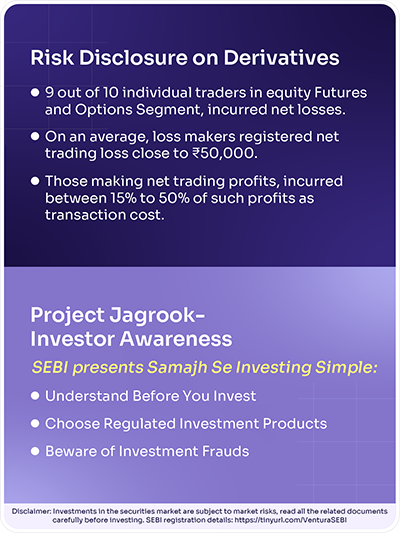
Disclaimer: This article is analytical commentary for informational purposes and is not personalised investment advice.