Summary:
Indian fertiliser companies are increasingly shifting toward specialty nutrients as concerns over urea overuse and soil health grow. Deepak Fertilisers, Coromandel International and SML are expanding into micronutrients, water-soluble fertilisers, biostimulants and biologicals. Specialty products can offer better nutrient efficiency and higher margins with less dependence on subsidies. However, the transition is likely to be gradual as conventional fertilisers still dominate India's market.
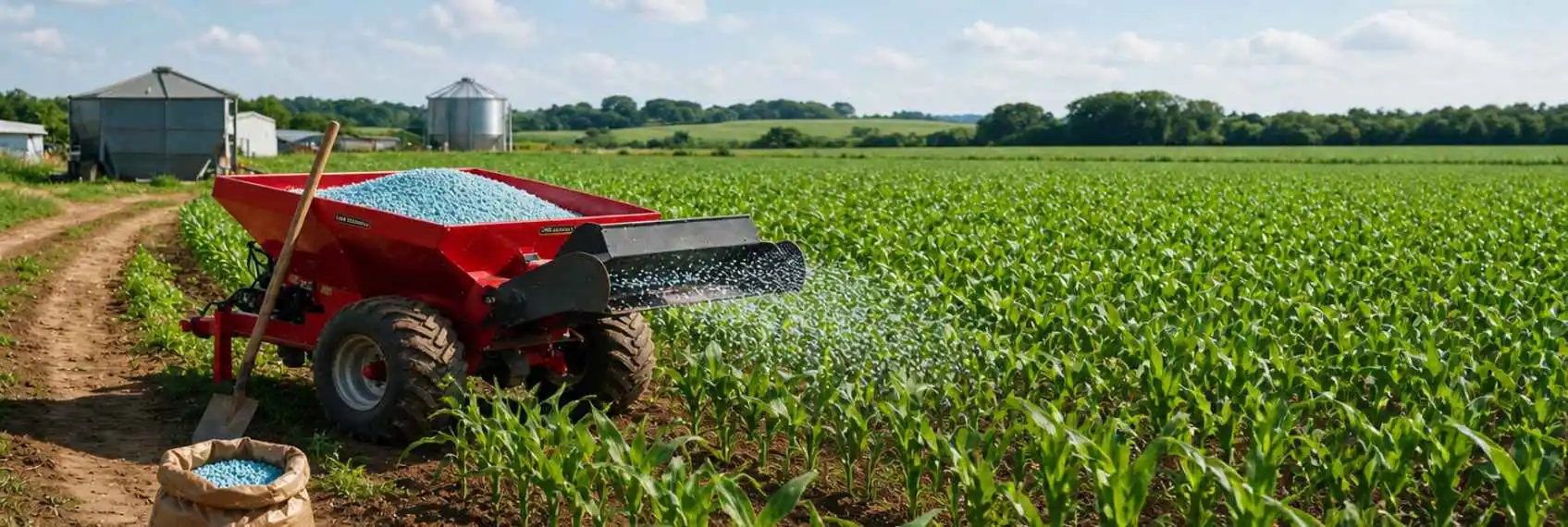
The Indian fertiliser sector is undergoing a paradigm shift as companies look to move away from traditional subsidised fertilisers toward high-efficiency specialty nutrients. Deepak Fertilisers, Coromandel International and SML are counting on greater demand for crop-specific fertilisers, water-soluble fertilisers, micronutrients and biologicals to meet the rising need for improved crop production and soil health.
There is a significant efficiency gap between traditional and specialty fertilisers, with the latter helping to increase nutrient absorption by plants by 80%-85%, compared to 30%-40% for urea.
Why Fertiliser Companies Are Pursuing Specialty Nutrients
More than 70 million tonne of fertilisers were used in India in FY26, of which about 50% consisted of subsidised urea, while the remaining proportion comprised diammonium phosphate (DAP), potash, and NPK blended fertilisers. During FY26, the fertiliser subsidy accounted for close to Rs 2.17 lakh crore, of which urea fertilisers received more than 90% of the subsidies.
While fertiliser subsidy has helped farmers across India to improve yields, it has also resulted in the overuse of urea, resulting in soil degradation. Farmers growing high-value crops such as fruit, vegetables, cotton, sugar, soybean, and wheat are moving toward specialty nutrients for better yield and quality. Specialty fertilisers are also less reliant on government subsidies, offering manufacturers an opportunity to realise higher profit margins.
Recent News: Falling Ammonia prices ease cost pressure in Fertilizer Companies
Deepak Fertilizers’ Expansion into Specialty Nutrients Domain
Deepak Fertilisers has been able to scale its specialty nutrient portfolio comprising NPK-plus, micronutrients, soil conditioners, and water-soluble fertilisers for fertigation. Around 0.4 million tonne of specialty fertilisers are produced annually by the company. According to the company, almost 95,000-100,000 demonstration plots have been created over the past four to five years educate farmers about the benefits of these fertilisers.
In Q1 FY27, Deepak Fertilisers recorded revenue from operations of Rs 3,256.26 crore, compared to Rs 2,658.75 crore in Q1 FY26. Consolidated net profit for the quarter came to Rs 490.04 crore in Q1 FY27, compared to Rs 243.17 crore in Q1 FY26. Similarly, consolidated operating EBITDA for the quarter stood at Rs 883.28 crore, with operating EBITDA margins coming to 26% for FY27, compared to 19.3% in FY26.
The company signed a 15-year liquefied natural gas (LNG) sales agreement with Equinor in May 2026 to hedge against volatile energy prices.
Coromandel And SML’s Emphasis On Specialty Nutrients
Coromandel International is also counting on higher demand for its micronutrient fertilisers and water-soluble fertilisers, along with organic and biological fertilisers. The company expects changing climatic conditions to drive demand for its products, which can help improve soil health and build crop resilience.
SML is also focusing on biostimulants and biologicals. The company stressed the need to ramp up manufacturing capacity as the current production of specialty fertilisers was inadequate to meet demand.
India’s specialty fertiliser market for water-soluble fertilisers, micronutrients, and biostimulants is valued at around Rs 8,232 crore.
Impact On Fertiliser Stocks
The shift toward specialty nutrients is bound to have a positive impact on the fertiliser stocks of companies that are able to pivot toward this market segment. Fertiliser companies with a larger exposure to non-subsidised fertilisers stand to gain the most by reducing their reliance on government subsidies.
It must be noted that the transition toward specialty fertilisers will be a slow process as these products comprise only a small proportion of total fertiliser consumption in India.