Summary:
AI infrastructure spending by major technology companies is estimated to exceed $700 billion in 2026, compared with approximately $80 billion in 2019. Investors are assessing data-centre utilisation, free cash flow, financing costs and whether AI investments can generate adequate returns.
Spending on artificial intelligence infrastructure has continued to increase in 2026, even as technology shares have faced renewed volatility. The market is weighing current revenue from chips and data centres against the cost of building them.
The shift matters because projects that generate orders for suppliers today may take years to deliver profits for the companies financing them. Earnings, debt and cash flow are therefore central to the comparison.
Large Technology Firms Expand AI Infrastructure
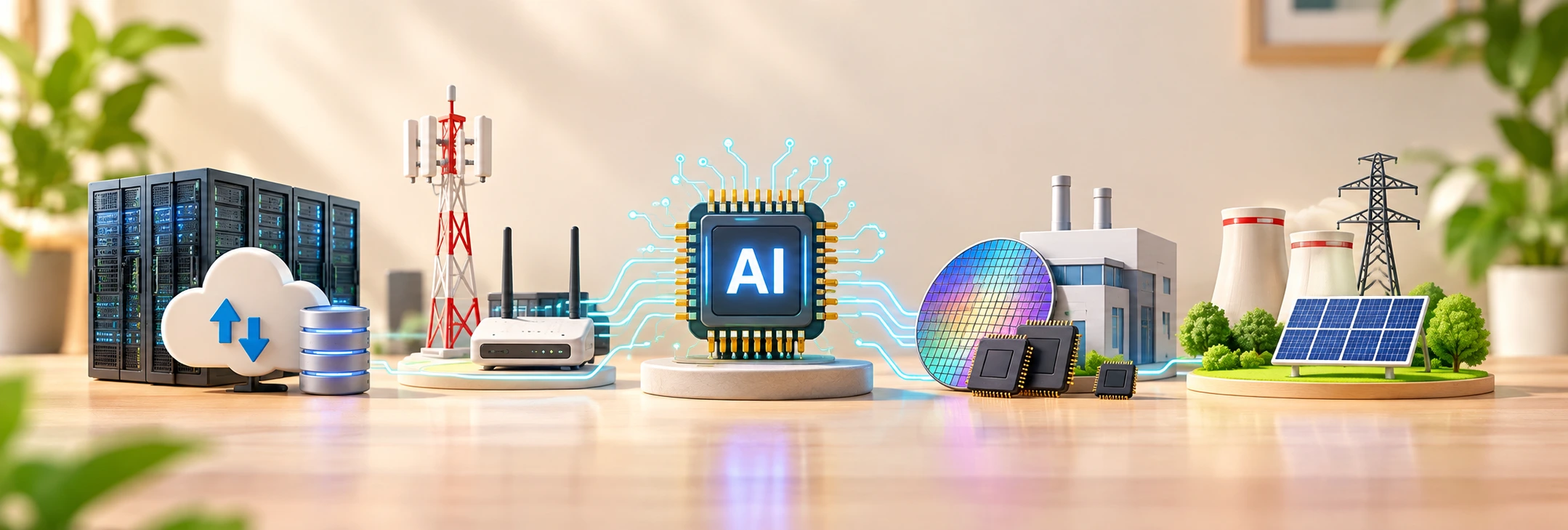
Amazon, Microsoft, Alphabet and Meta Platforms are spending heavily on data centres, computing equipment and related networks. Capital expenditure creates tangible assets but also brings power costs, maintenance and depreciation.
A September 2026 review of technology capital markets placed AI-related hyperscaler capital spending above $700 bn in 2026, compared with approximately $80 bn in 2019. This measure covers infrastructure expenditure rather than revenue from paid AI products.
High demand for computing capacity also affects suppliers of semiconductors, networking gear, cooling systems and electricity equipment. Their sales can increase during construction phases without establishing that every infrastructure project will earn an adequate return.
AI Investment: Data to Track
| Indicator | Why it matters |
| 2026 AI capex estimate | Over $700 bn |
| 2019 comparable spend | $80 bn |
| Data-centre utilisation | Customer use of capacity |
| Free cash flow | Cash left after investment |
| Bond yields | Cost of future financing |
Stock Prices Reflect Expectations as Well as Profit
Technology shares weakened during October amid higher bond yields, funding-cost concerns and questions about the pace of AI monetisation. Nvidia and other semiconductor names were among the companies experiencing sharp price movements.
Share prices reflect forecasts of future profit as well as reported earnings. If investors apply a lower price-to-earnings multiple to a business, its stock can decline even when current profit continues to grow.
Rising interest rates can affect highly valued growth companies because more of their expected cash generation may arrive in later years. Borrowing costs also matter for operators expanding infrastructure through debt-funded projects.
Capital Spending Is Not the Same as Free Cash Flow
Capital expenditure initially uses cash to construct or purchase assets; those assets are then depreciated over their useful lives rather than deducted immediately from earnings.
That means accounting profit and cash available after investment can move differently. Free cash flow is commonly assessed after operating cash flows and capital expenditure, although reported definitions may vary between companies.
For AI infrastructure, useful operating measures include data-centre occupancy, realised computing prices, energy usage, customer commitments and the period over which expensive chips remain productive. These factors influence the gap between the construction bill and later customer revenue.
Concentration and Timing Remain Key
When a small group of large technology companies accounts for a substantial share of index value, movements in those stocks can have an outsized effect on index returns. The impact is mechanical and is separate from the progress of AI research. The current build-out may support demand for hardware and power infrastructure, while the financial outcome for the purchasers depends on utilisation and pricing. Different parts of the AI supply chain face different profit cycles.
Upcoming quarterly results will provide evidence of revenue growth, cash expenditure, and depreciation. Those figures offer a clearer measure of financial progress than investment announcements or changes in share prices alone.
Disclaimer: This article is for informational purposes only and not investment advice.