Summary:
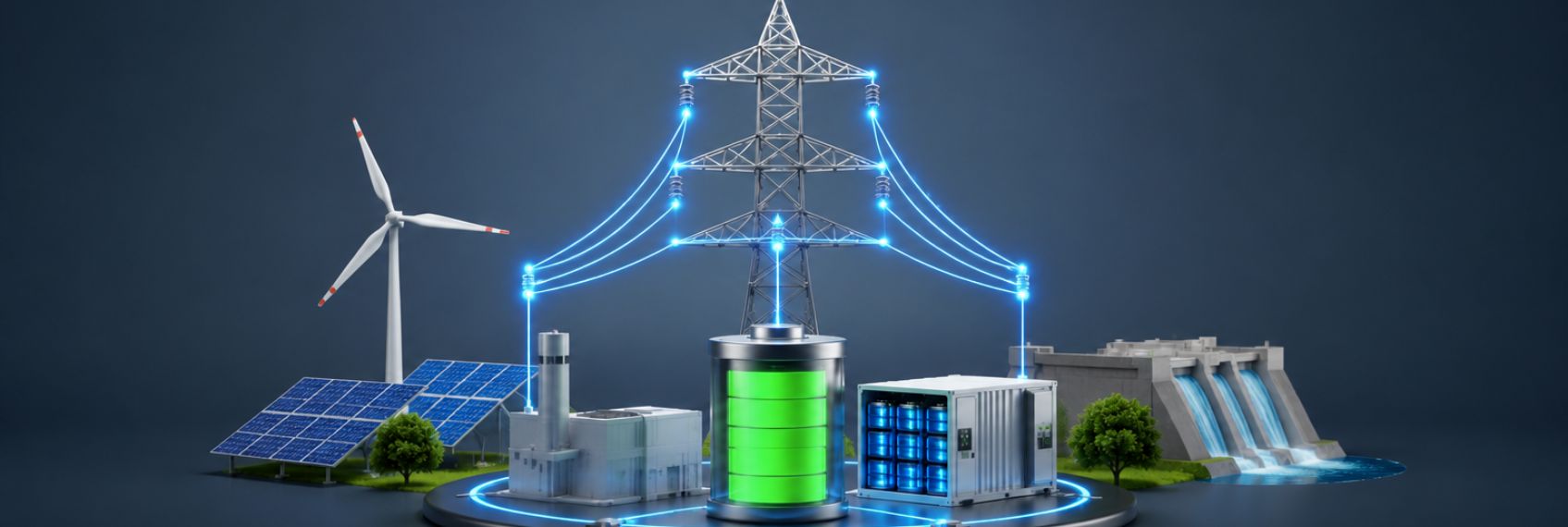
India's energy transition is shifting beyond renewable capacity towards storage, transmission and green hydrogen. Stronger grid infrastructure and large-scale battery storage will be critical to achieving the 500 GW renewable energy target by 2030 while ensuring reliable and secure power supply.
India’s energy transition is moving beyond simply adding solar and wind capacity. The next challenge is creating a dependable power system in which renewable generation, energy storage, transmission networks and green hydrogen work together. At the Sustainability Impact Summit 2026, representatives from L&T Energy GreenTech, WRI India and Hinduja Renewables highlighted storage and transmission as two of the biggest requirements for scaling clean energy reliably.
India is targeting around 500 GW of renewable energy capacity by 2030, making grid integration increasingly important. Government planning already envisages transmission infrastructure capable of integrating more than 500 GW of renewable capacity by the end of the decade.
Why Storage and Transmission Have Become Critical
Madhav Pai, CEO of WRI India, warned that transmission additions could lag renewable generation by around 40-50 GW. If renewable plants are commissioned faster than transmission lines, power can become stranded even when generation capacity is available.
Pai also highlighted behind-the-meter battery systems installed at MSMEs and commercial and industrial facilities, estimating that they could potentially contribute around 20% of the required battery storage capacity.
The scale of the requirement is significant. The National Electricity Plan projects India will need 8.68 GW/34 GWh of battery storage in 2026-27, rising to 47.24 GW/236 GWh by 2031-32. Pumped-storage requirements are projected at 26.69 GW/175 GWh by 2031-32. Estimated investment requirements stand at around ₹3.49 lakh crore for battery storage and ₹1.29 lakh crore for pumped storage.
List of Power Sector Stocks
L&T Energy GreenTech: Building Integrated Energy Systems
Derek M Shah, MD and CEO of L&T Energy GreenTech, said the sector’s success should not simply be measured by gigawatts installed but by whether electricity is available when customers require it.
That requires moving from standalone solar and wind projects towards integrated portfolios combining generation, storage, forecasting and transmission. L&T Energy GreenTech is already active across green hydrogen, green ammonia, electrolysers, project development and EPC, positioning it as an industrial stakeholder in this shift.
Hinduja Renewables Bets on Storage and Green Hydrogen
Hinduja Renewables, led by Deepak Thakur, is also moving towards round-the-clock renewable power. The company has a portfolio exceeding 3,000 MWp and aims to build a 10 GW renewable platform by 2030, supported by solar, wind, hybrid projects and energy storage. List of Hinduja Group Stocks
Green hydrogen is another important component. Industries such as refineries, fertilisers, steel, chemicals and mobility can gradually replace grey hydrogen and other fossil-fuel-based inputs with cleaner alternatives, widening the energy transition beyond electricity generation.
How Samudra Manthan Supports the Broader Energy Transition
The ₹84,084-crore Samudra Manthan National Offshore Exploration Scheme does not directly finance renewable transmission or battery storage. Instead, it complements the transition by strengthening India’s domestic energy security while cleaner systems scale up.
The five-year programme supports deepwater and ultra-deepwater oil and gas exploration, including seismic surveys, exploratory wells and common offshore infrastructure. By increasing domestic gas and oil availability, India can reduce import vulnerability while maintaining dependable energy supplies during the transition towards renewables, storage and hydrogen.
Samudra Manthan Oil and Gas Exploration Push
Natural gas can also provide flexible, dispatchable energy alongside intermittent solar and wind, making Samudra Manthan part of a broader energy-security strategy rather than a substitute for clean-energy investment.