Summary:
IndiGo plans to expand its Airbus A321XLR fleet from four aircraft to 14 by December 2027, strengthening international connectivity while retaining its short-haul focus. The expansion follows Q2 FY27 revenue growth of 25.9%, despite a consolidated net loss.
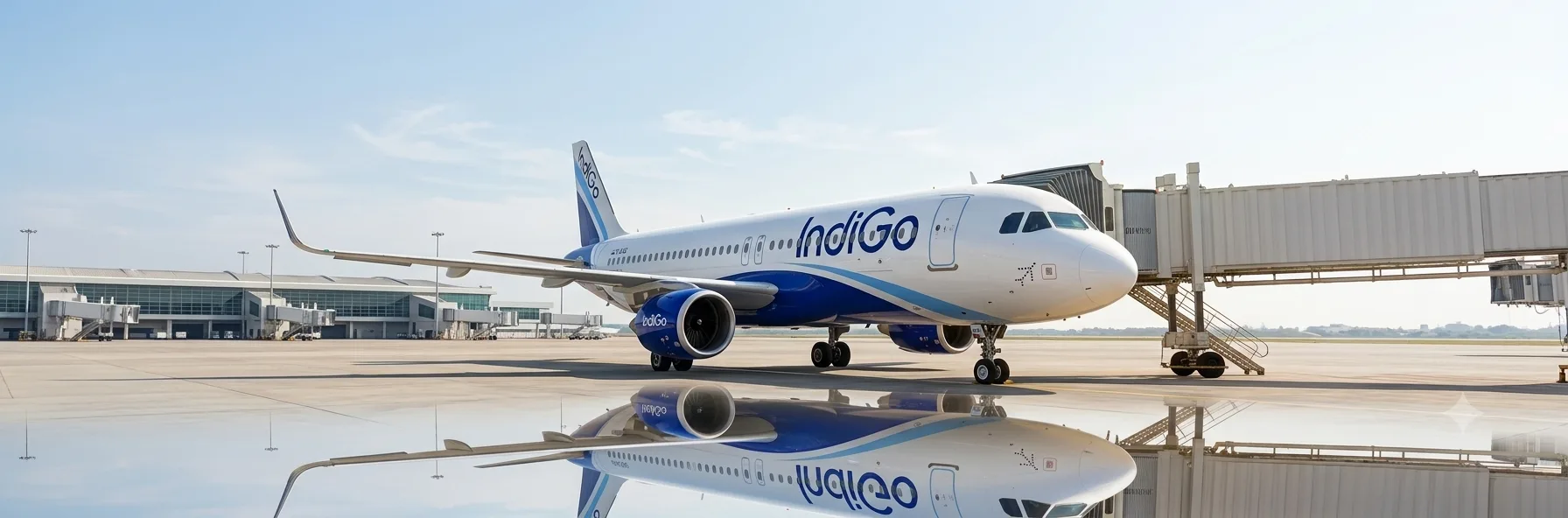
India’s largest airline, IndiGo, owned by InterGlobe Aviation Ltd (NSE: INDIGO, BSE: 539448), is set to expand its international reach by adding 14 Airbus A321XLRs to its fleet by December 2027. The expansion will allow the carrier to add international routes, but it will still focus on domestic and short-haul operations.
IndiGo to add 100 international aircrafts
IndiGo said on November 3, 2026 it would expand its fleet of Airbus A321XLR aircraft to 14 by December 2027 from four now. Before the end of 2026, a second aircraft will be added to the fleet.
The A321XLR is a narrow-body plane that can fly longer routes than typical single-aisle planes. The longer range will enable airlines to link international points without having to rely exclusively on larger wide-body jets.
This could help IndiGo expand into overseas markets while retaining the cost advantages of its current narrow-body operations.
The airline has also stopped using its leased Boeing 787 aircraft. The next step in the long-haul fleet growth will be the Airbus A350-900 aircraft, with deliveries expected to commence in Q2 of calendar year 2028.
IndiGo has more than 440 aircraft in its fleet now, and plans to raise the overall fleet to 600 by the year 2030.
New Indian Express: IndiGo Q2FY27 Results: Revenue up 26%, loss narrows
Soaring aviation fuel prices and rupee depreciation, which are eroding profitability, are driving IndiGo’s overseas expansion.
Consolidated revenue from operations for the second quarter of FY27, ended September 30, 2026 stood at ₹23,363.8 crore, up 25.9% YoY from ₹18,555.3 crore.
However, the company reported a consolidated net loss of ₹1,879.1 crore against a loss of ₹2,582.1 crore in Q2FY26.
The financial and operational key indicators are:
| Particulars | Q2FY27 |
| Revenue from Operations | ₹ 23,363.8 crore |
| Revenue growth | +25.9% year-over-year |
| Net loss | ₹1,879.1 crore |
| EBITDAR | ₹2,459.9 crore |
| Passenger traffic | 2.75 crore |
| Passenger load factor | 80.3% |
| Passenger yield | ₹ 6.30 |
Passenger traffic fell 4.7% year on year while passenger yield increased 34.3%. Higher operating expenses impacted results with the cost of fuel per available seat kilometer up 68.9%.
Revenue was up but profitability still came under pressure from fuel cost and foreign exchange movement.
Why did IndiGo shares jump after the announcement?
The shares of InterGlobe Aviation closed 2.14% higher at ₹5,025 on the NSE on November 3, 2026 against the previous close of ₹4,919.90.
The stock opened at Rs 5,024 and went up to an intra-day high of Rs 5,120.10 before closing lower.
Trading volume on the counter stood around 13.45 lakh shares, compared with the 30-session average of 6.96 lakh shares.
The jump comes as the company unveiled plans to expand its international fleet. However, the move itself could not be blamed for the development as the stock had already risen in past sessions.
What does the expansion mean to IndiGo?
IndiGo could add longer-range aircraft to benefit from higher international capacity, entry into more overseas markets and better connectivity from Indian airports.
But as the airline expands its fleet of aircraft it will have to spend more money, more on maintenance and be more exposed to fluctuations in the price of global fuel supplies.
Deliveries of the A350 from 2028 will also herald a different operating model as the airline prepares for increased long-haul services.
For now, the key will be IndiGo's ability to keep costs low while expanding international operations. The financial growth from the expansion will depend on future aircraft deliveries, demand for passengers, fuel costs and profitability.