Summary:
India is considering domestic manufacturing requirements for solar inverters and battery components under the next phase of PM Surya Ghar. The proposed rules could support local manufacturers, while implementation costs, supply capacity and final policy details remain important uncertainties.
What Are India's Proposed Local Solar Manufacturing Rules?
India is considering new domestic manufacturing requirements for solar inverters and battery components under the next phase of the PM Surya Ghar Muft Bijli Yojana. The proposed changes could expand business opportunities for Indian solar equipment manufacturers while reducing dependence on imported components. However, the new rules are still under consideration and have not been finalised.
Government Plans to Expand Domestic Content Rules
The Ministry of New and Renewable Energy is examining proposals to make domestically manufactured solar inverters mandatory and introduce minimum local content requirements for batteries used in rooftop solar installations.
The proposals form part of the next phase of PM Surya Ghar Muft Bijli Yojana, with the existing programme running until March 2027.
Currently, domestic content requirements focus mainly on solar modules and cells used in government-supported projects. The proposed changes would extend these requirements to inverters, batteries and related components.
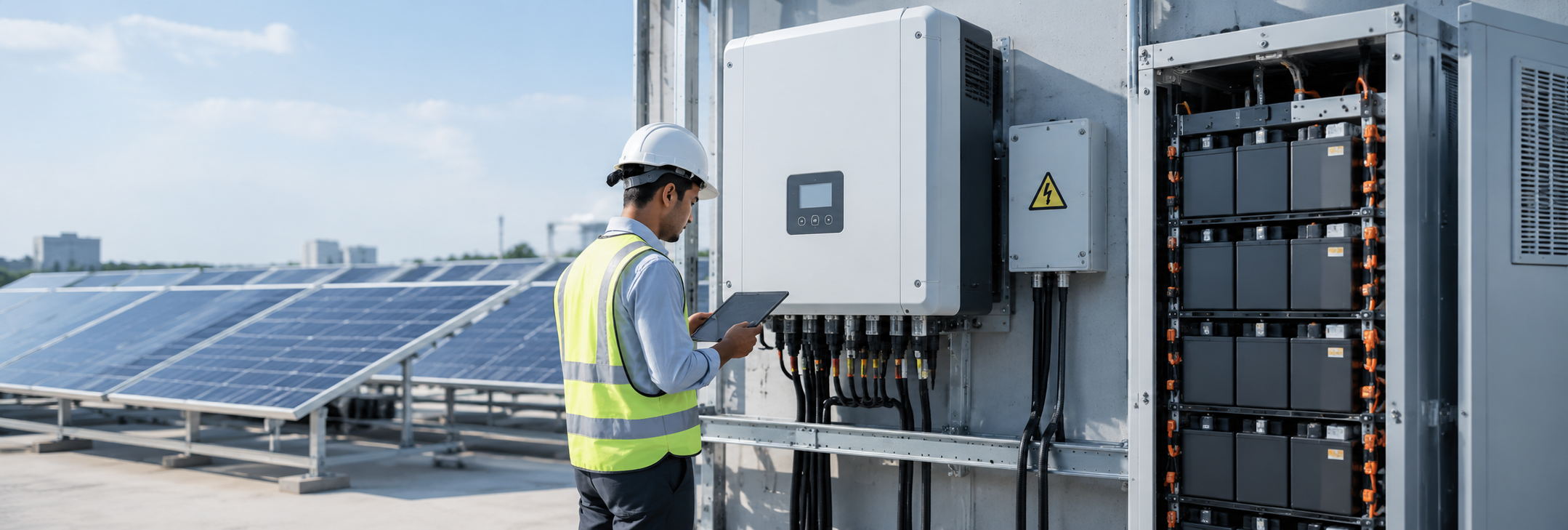
Solar inverters convert electricity generated by solar panels into usable power, while batteries store electricity for later use.
The government is reviewing suggestions from industry participants before deciding the final requirements.
PM Surya Ghar Scheme Targets 1 Crore Households
Launched in February 2024, PM Surya Ghar Muft Bijli Yojana has an approved allocation of ₹75,021 crore and aims to install rooftop solar systems across 1 crore households.
The scheme seeks to help participating households generate enough solar electricity to offset up to 300 units of monthly consumption.
Under the original subsidy structure, financial assistance is linked to installed capacity:
| Rooftop Solar Capacity | Central Subsidy |
| 1 kW | ₹30,000 |
| 2 kW | ₹60,000 |
| 3 kW or above | ₹78,000 |
The programme is expected to add approximately 30 GW of residential rooftop solar capacity. It also supports electricity bill savings, employment generation and lower dependence on conventional energy sources.
Why India Wants Locally Manufactured Batteries
India continues to depend heavily on imports for lithium-ion battery materials, including lithium, cathodes and anodes.
This creates exposure to global supply disruptions, foreign exchange movements and fluctuations in international raw material prices.
New domestic content rules could encourage local production of battery packs, energy storage components and solar power electronics.
The government has already introduced production-linked incentives to support advanced battery manufacturing and domestic solar production.
However, enforcing localisation requirements may initially raise procurement costs if domestic manufacturing capacity cannot match demand.
What Could This Mean for Solar Stocks?
The proposals could bring attention to listed companies operating across solar manufacturing, energy storage and power equipment.
Waaree Energies and Premier Energies operate in solar manufacturing, while Exide Industries and Amara Raja Energy & Mobility are expanding their battery and energy storage businesses.
Companies with domestic inverter manufacturing capabilities could benefit more directly if the proposed requirements become mandatory.
However, the actual impact will depend on the final domestic content thresholds, implementation timelines and eligibility conditions.
For manufacturers, higher localisation could create fresh demand but may also require additional capital expenditure, technology investment and supply chain development.
India's proposed solar equipment rules reflect a broader effort to build domestic manufacturing capabilities beyond solar panels. The final policy framework will determine how these changes affect production costs, manufacturers and rooftop solar adoption.