Summary:
India’s retail inflation rose to 4.45% in July 2026 from 4.38% in June, mainly due to higher food prices. Food inflation climbed to 5.52%, while transport costs also increased. Inflation remains above the RBI’s 4% target but within its 2%-6% tolerance band. The RBI is unlikely to raise rates immediately, though persistent food and fuel pressures could keep tightening risks alive.
India’s retail inflation accelerated to 4.45% in July 2026 from 4.38% in June, driven primarily by higher food prices. The Consumer Price Index remained above the Reserve Bank of India’s 4% medium-term target for the second consecutive month, although it stayed comfortably within the central bank’s 2%-6% tolerance band. The July reading was also marginally below market expectations of around 4.5%.
The rise strengthens expectations that inflation could remain elevated over the coming months, but current levels are not high enough to force an immediate monetary policy response.
Food Inflation Rises to 5.52%
Food inflation increased to 5.52% in July from 5.32% in June, continuing its recent upward trajectory from 4.78% in May and 4.20% in April.
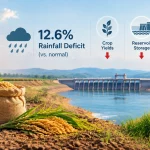
Prices of ginger, garlic and onions recorded notable increases during July, while lower tomato prices provided some relief. Uneven monsoon rainfall has affected agricultural output in some regions, although a subsequent recovery in rainfall could help moderate food inflation in the coming months.
Food prices remain particularly important because food accounts for more than 40% of household consumption expenditure in India, making agricultural output and monsoon distribution important drivers of headline inflation.
Fuel and Transport Costs Add Pressure
Higher energy costs are another source of inflationary pressure. State-run fuel retailers increased petrol and diesel prices four times in May following higher crude costs related to the West Asia conflict.
Although global crude prices subsequently moderated, they were still around 27% above pre-conflict levels in July. Transport inflation consequently increased to 4.43% in July from 4.31% in June.
Underlying inflation, however, remains relatively contained. Core inflation, which excludes volatile food and fuel components, was estimated at around 3.9% in July, below expectations of approximately 4.08%. India does not officially publish a core inflation number.
Economic Indicators: GDP Growth, Inflation, Unemployment
Will RBI Raise Interest Rates?
The RBI kept its benchmark repo rate unchanged at 5.25% in its latest monetary policy review, preferring to assess whether the recent inflation increase becomes more broad-based. The central bank also lowered its FY27 inflation forecast to 5% from 5.1%.
RBI maintains Repo Rate at 5.25%
For now, the July data is unlikely to trigger an immediate rate hike. However, economists expect inflation to potentially move above 5% from September, keeping the possibility of monetary tightening later in FY27 alive if food, fuel and broader price pressures persist.