Summary:
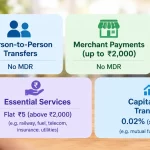
UPI users will not have to pay transaction charges under the proposed 2026 amendment, and person-to-person (P2P) payments will remain free. The proposal only creates a framework that could allow Merchant Discount Rate (MDR) charges on certain merchant transactions in the future. If the Bill is passed, the NPCI-led UPI and Services Steering Committee will decide whether MDR should be introduced. Any potential MDR would apply only to selected merchant transactions above a specified threshold and is expected to be lower than card payment charges.
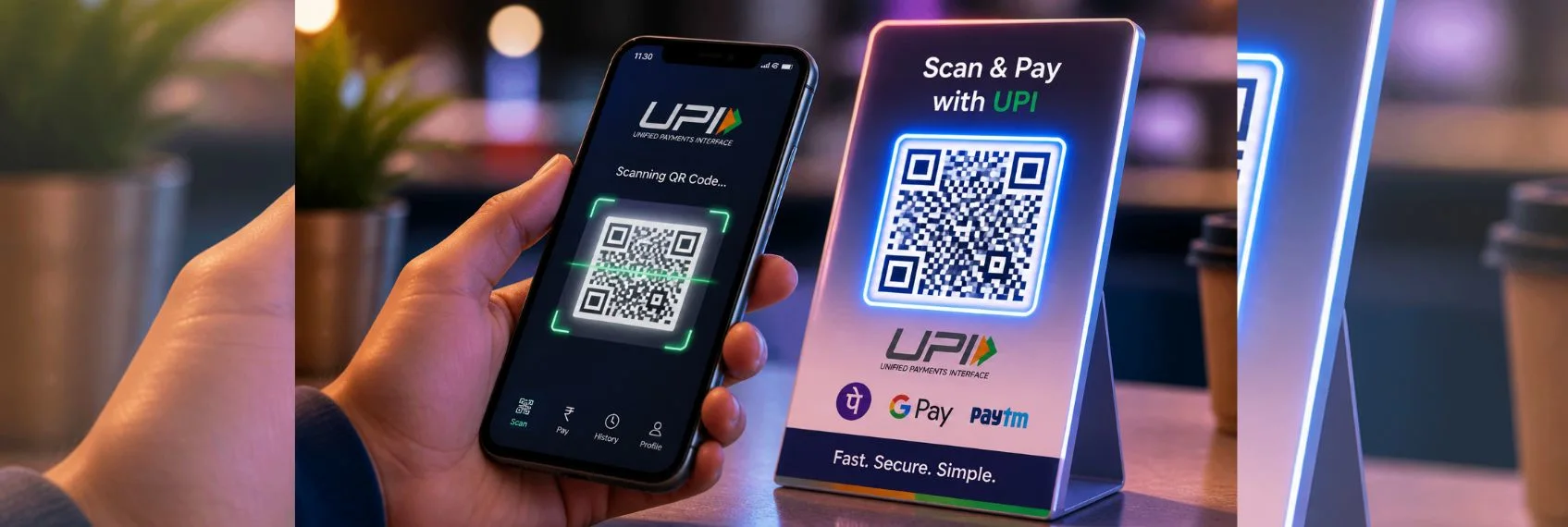
Unified Payments Interface (UPI) has emerged as an indispensable tool for making payments in India, which allows users to pay for their shopping needs such as grocery and utilities payments along with sending money to their friends and relatives.
This can be understood by looking at the recent transaction numbers of UPI. In July 2026, UPI recorded transactions of 2,366 crore with a total value of ₹29.9 lakh crore. The digital payments system has also grown globally, and is now operational in 11 countries. Its fast-growing popularity has also led to debates regarding the cost associated with the running of UPI system.
What Is the Recent UPI Change?
Issues came to light due to an amendment proposal to Section 10A of the Payment and Settlement Systems Act, 2007. The amendment is contained in the Taxation and Other Laws (Amendment) Bill, 2026.
The amendment proposal does not propose the imposition of charges for the use of the Unified Payment Interface system. Rather, it proposes a scenario where the MDR can be imposed on some merchant transactions in the future.
The Ministry of Finance has indicated that users will not incur any charges for UPI transactions. Person to Person (P2P) transactions will also continue to be free.
Explore: MDR rates on high value UPI payments
What Is Merchant Discount Rate?
MDR refers to the fee that merchants have to pay for their transactions which go through digital payments. It is usually paid by the merchant and could also be shared amongst different stakeholders who deal with the transaction process.
In case the amendment bill is passed by the Parliament, then the UPI & Services Steering Committee led by the NPCI will determine whether the MDR will be levied or not.
Who Will Pay and Who Won’t?
No changes are apparent to consumers at the moment. Customers using the UPI system will still transact payments without transaction fees, and those transferring money to their friends and relatives will do so free of cost as before through P2P transactions.
As per the government, any MDR in the future will not apply to all merchant transactions but to selected merchant transactions beyond a certain threshold only.
Any such MDR will be very nominal and much lower than the charges for using debit cards and credit cards as per the Ministry of Finance.
What Happens Next?
The amendment proposal still needs the consent of Parliament. In the meantime, there is no new MDR system created out of the amendment proposal.
In case the Bill is approved, the decision to implement the MDR system or not will be taken by the UPI and Services Steering Committee.