Summary:
Tata Steel’s proposed APL Apollo acquisition combines a ₹15,510 crore promoter-stake purchase, a ₹16,756 crore open offer and a ₹28,000 crore asset sale. Reported structure changes, financing, approvals and leverage will determine whether the strategic benefits materialise.
Key Takeaways
- Tata Steel is acquiring the entire 26.6% promoter stake in APL Apollo Tubes at ₹2,100 per share for ₹15,510 crore, in three tranches.
- It will also launch a mandatory open offer for another 26% at ₹2,301.40 per share (up to ₹16,756 crore). Full acceptance would give it ~52.6% control.
- In the linked leg, APL Apollo is buying Tata Steel’s steel tubes business and Tata Steel Colors for a combined ₹28,000 crore.
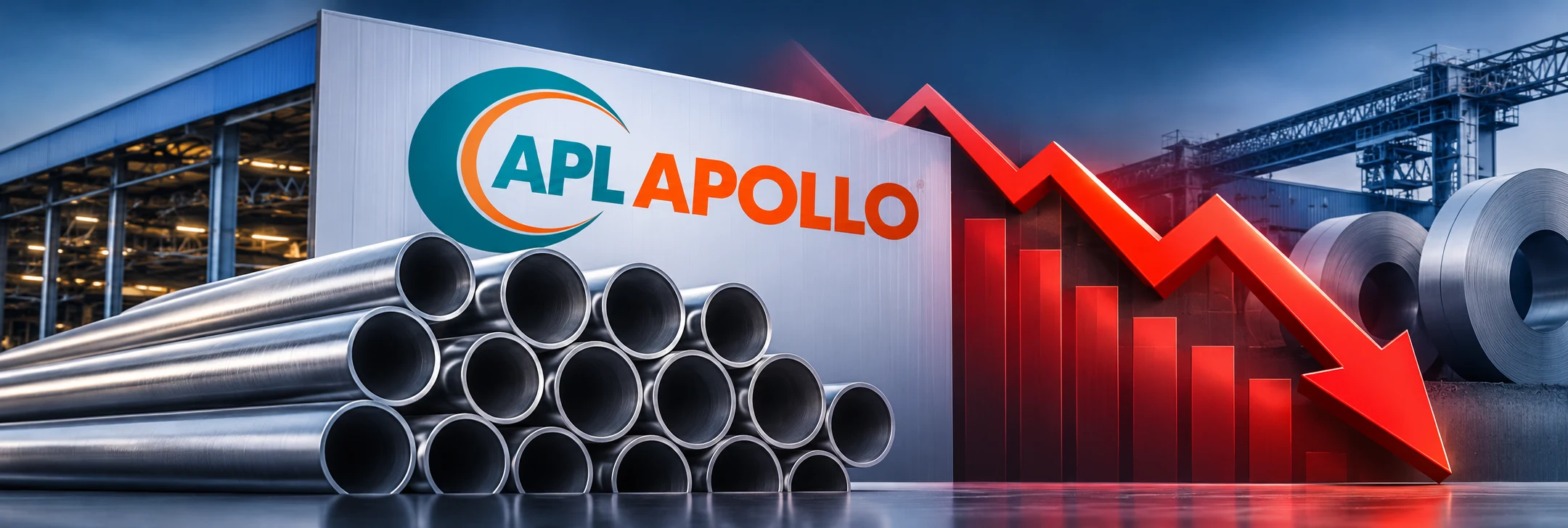
- On 23 November, APL Apollo fell ~21% and Tata Steel dropped ~8%, wiping out over ₹30,000 crore in combined market value.
- Transactions remain subject to regulatory approvals and are targeted for completion within FY27.
Tata Steel shares are under pressure after the company announced a complex set of agreements that would give it control of APL Apollo Tubes while transferring its own downstream tubes and colour-coated businesses to APL Apollo. The stock reaction has been sharp, raising questions about the near-term cash outlay, balance-sheet impact and the logic of the combined structure.
₹15,510 Crore Stake Purchase and 26% Open Offer: What Is Tata Steel Acquiring?
The trigger is the set of agreements executed around 23 November 2026. Tata Steel is buying the full 26.6% promoter stake held by S Gupta Holding at ₹2,100 a share for ₹15,510 crore. The first tranche of about 2.77 crore shares (~10%) was already completed via block deals. A mandatory open offer for a further 26% at ₹2,301.40 will follow. Simultaneously, APL Apollo is acquiring Tata Steel’s tubes business and Tata Steel Colors for ₹28,000 crore. On the announcement day APL Apollo plunged over 21% while Tata Steel fell around 8%.
₹28,000 Crore Asset Transfer: What Is APL Apollo Buying From Tata Steel?
The stated aim is to build a larger downstream platform. Post-deal, the combined tubes and colour-coated capacity is expected to start at about 7.5 MTPA and is targeted to reach 15.5 MTPA by 2035. Tata Steel says this will lift the share of finished steel products in its portfolio. For APL Apollo, the acquisition of Tata Steel’s assets brings scale but also significant debt, which will need to be refinanced. Near-term earnings visibility for both companies is clouded by the funding structure, integration costs and the open-offer acceptance level.
21% Fall in APL Apollo and 8% Drop in Tata Steel: Why Did Shares Decline?
The market has treated the deal as dilutive and complex rather than immediately value-accretive. The sharp fall in APL Apollo, despite an open-offer price above the pre-deal close, suggests investors are pricing in dilution, leverage and uncertainty over the final structure. Tata Steel’s decline reflects concern over the net cash outlay (stake purchase plus open offer minus proceeds from the asset sale) and the time required for regulatory clearances. Trading volumes were elevated, indicating genuine repositioning rather than thin-market noise.
7.5 MTPA to 15.5 MTPA by 2035: How the Deal Changes Downstream Capacity
Key near-term events are the formal open-offer process, regulatory approvals from CCI and other authorities, and the pace of the remaining promoter-stake tranches. Clarity on how APL Apollo will fund the ₹28,000 crore asset purchase and refinance acquisition debt will matter for its balance sheet. For Tata Steel, the market will watch the net cash impact and any guidance on the enlarged downstream contribution. Risks include delayed approvals, lower-than-expected open-offer acceptance, or integration challenges that keep leverage elevated longer than planned.
Final Analyst Takeaway
The APL Apollo stake purchase is a strategic downstream bet, but the market has focused on the complexity, cash outlay and leverage rather than the long-term capacity story. Near-term stock movement for both names will track open-offer progress and regulatory timelines. Medium-term outlook improves only if the combined entity delivers the targeted scale and margin benefits without prolonged balance-sheet strain. The key signal is the level of open-offer acceptance and any update on funding of the asset purchase.