Summary:
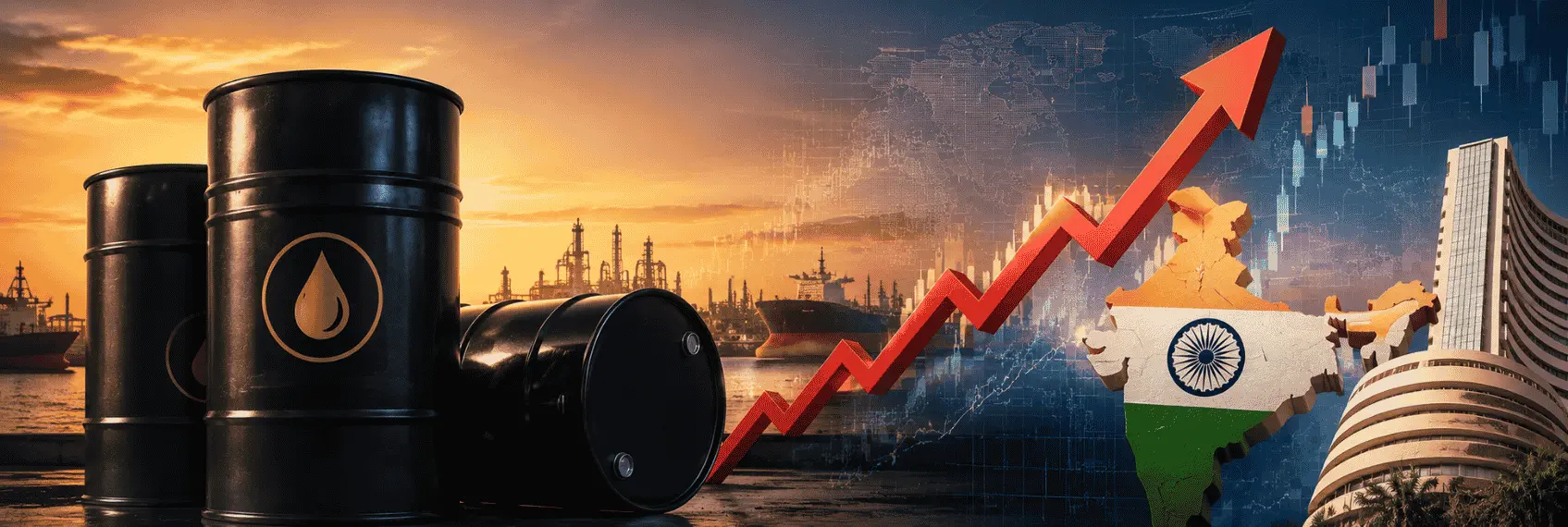
Brent crude crossed $92 per barrel on November 19, 2026, raising concerns over input costs for Indian companies. Airlines, paint makers and tyre manufacturers could face margin pressure, while upstream oil producers may benefit from higher crude realisations.
Brent crude oil was above $92 a barrel on November 19, 2026, keeping energy costs in focus for Indian companies and investors. Oil prices have fallen back from the October highs but remain vulnerable to geopolitical events and global supply conditions.
India is one of the world's largest crude oil importers, and oil price swings affect inflation, corporate profits and the rupee. The effect, however, varies greatly from industry to industry.
Why Did Brent Crude Break Above $92?
Brent futures were at about $92.12 per barrel in early Asian trade on 19 November, up 0.18%.
Oil markets have been juggling geopolitical supply risks and fears of a possible supply surplus.
US crude inventories rose by 3.4 mn barrels to 417.8 mn barrels in the week to 13 November, indicating a rise in available supply.
But outages in major oil-producing areas can still lead to price fluctuations.
“This means that even small changes in supply expectations can impact international oil prices.”
For Indian companies, the duration of high crude prices is more important than one-day movement.
What Stocks in India could be most impacted?
Several large Indian companies use crude oil or petroleum products as major inputs.
| Company | Impact of higher oil prices |
| InterGlobe Aviation | Higher aviation fuel cost |
| Asian Paints | Raw-material costs higher |
| Berger Paints | Pressure from petroleum products |
| Apollo Tyres | Increased synthetic rubber prices |
| BPCL | Fuel Marketing Margin Pressure Potential |
| HPCL | Exposure to crude and fuel price movement |
InterGlobe Aviation Ltd (NSE: INDIGO) operates IndiGo, and it’s particularly sensitive to aviation turbine fuel prices.
Fuel is one of the largest operating costs for airlines. A sustained rise can have an impact on profitability, unless the higher costs are passed on to customers in ticket prices or some other way.
Paint makers such as Asian Paints Ltd (NSE: ASIANPAINT) and Berger Paints India Ltd (NSE: BERGEPAINT) use petroleum-linked raw materials.
Higher input prices can increase production costs, although procurement contracts and changes in product prices may mitigate the impact.
Apollo Tyres Ltd (NSE: APOLLOTYRE) is also exposed to synthetic rubber and other crude-linked materials.
What Can Move Oil Stocks Up or Down?
Not every energy company moves in the same direction as oil prices.
Oil & Natural Gas Corporation Ltd (NSE: ONGC) and Oil India Ltd (NSE: OIL) are crude oil producers.
Their revenue may be supported by higher realised crude prices, but profitability is also impacted by production volumes, government levies and operating costs.
Bharat Petroleum Corporation Ltd (NSE: BPCL) and Hindustan Petroleum Corporation Ltd (NSE: HINDPETRO) buy crude oil for refining and sell petroleum products.
Earnings are also dependent on refining margins, retail fuel pricing and their ability to recover costs.
Several aviation, paint, tyre and oil-marketing shares rose on 17 November as crude prices fell, showing the inverse relationship that can sometimes develop between fuel costs and these stocks. 
[image](https://www.google.com/s2/favicons?domain=https://www.moneycontrol.com&sz=32)
Moneycontrol is a leading financial media house in India.
Higher Crude Prices: How Can It Affect India's Economy?
India imports the majority of crude oil it uses.
Longer-term rises in world prices could increase the country's import bill and put pressure on the current account.
Higher energy costs could also affect transportation, manufacturing and consumer prices.
If higher imports drive up demand for US dollars, the rupee could come under further pressure.
A weaker rupee then can increase the cost of imported crude domestically creating more complications for businesses.
But the final impact depends on exchange rates, fuel taxation, pricing policies and how long the increase lasts.
In conclusion
Brent crude trades above $92 as oil-sensitive Indian stocks come under scrutiny
Airlines, paint makers and tyre firms might feel pressure on input costs, while upstream oil producers could see higher crude realisations.
For the larger market, the key factors remain global supply conditions, the rupee and whether oil prices stabilise or go higher.