Summary:
Aluminium stocks came under pressure after a preliminary US-Iran peace agreement reduced concerns over supply disruptions through the Strait of Hormuz. Shares of Vedanta, NALCO, and Hindalco declined as global aluminium prices corrected from recent highs. While analysts expect short-term weakness in metal prices, supply normalization could take several months, with Hindalco remaining a preferred pick due to its diversified business model.
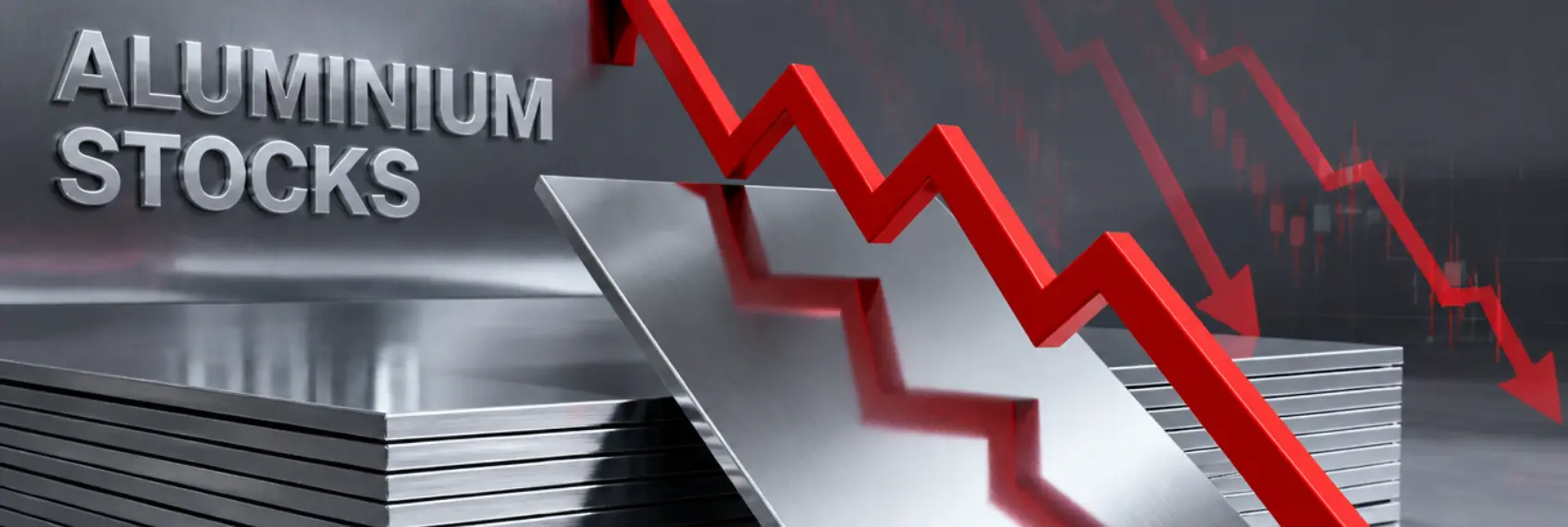
Tuesday saw the aluminum stocks coming under heavy sell-off pressure, following a preliminary peace accord between the US and Iran, which removed fears related to the disruption in supplies leading to a sharp decline in global aluminum prices.
Vedanta's share price was down by 5%, National Aluminum Company (NALCO) stock was down by 4.1%, and Hindalco Industries' share price fell 3.1%. Nifty Metal Index fell by 1.6% on Tuesday despite an increase in benchmark index Nifty by 0.6%.
Supply Concerns Ease as Strait of Hormuz Reopens
Reopening of the Strait of Hormuz will be conducive for the resumption of regular supplies of aluminium in the international market, which was previously hampered owing to the conflict situation in the region.
It will reduce the profits gained by aluminum firms due to increased supply in the market. With the signing of the deal by the parties involved on 19th June, more profits will be made by selling stocks, thereby reducing the performance of Nifty Metal index.
Aluminium Prices Correct Sharply
The peace accord has already made its mark on the global aluminium prices. Analysts predict that the agreement will release around 10% of the total supply of aluminium in the world amid reduced energy costs lowering production cost across the globe.
Aluminium prices in LME have plunged by over 8% in June after six months of rallies. Aluminium prices shot up by around 9% back in March, which was the peak of the war between Ukraine and Russia. Recently, aluminium prices plummeted to as low as $3,333.75 per metric tonne.
Global Market Expects Further Price Correction
On June 15, the LME spot aluminium price dropped to $3,418 per metric tonne, which is 11% below its 2026 peak of $3,854 recorded on June 2. The three-month aluminium contract dropped by 4.4% to settle at $3,380 per metric tonne.
A drop of up to 5%-10% can be expected in the coming two to four weeks, where prices could fall to between $2,850 and $2,950 per metric tonne if shipping through Hormuz begins again in two to three weeks.
Supply Recovery May Take Months
Despite the peace agreement helping to ease the current supply worries, experts are saying that a total recovery would take some time. GCC aluminium output declined to only 62% of pre-conflict levels during April. GCC is responsible for producing 6%-8% of the world’s aluminium while accounting for 19% of Europe's imports, 20%-21% of U.S. imports, and 28% of Japan's imports of aluminium.
Major manufacturers such as EGA, Alba, and Qatalum, which currently operate at about 30%-60% of their capacity levels, would not recover to 100% efficiency until the last quarter of 2026. According to ING, it can take months, and not weeks, for aluminium smelters to regain normal production levels.
Hindalco Remains Preferred Pick
In spite of the short-term negative impact on the sector, analysts continue to be bullish about specific companies. Hindalco continues to be the company of choice, considering that it derives most of its revenues from its US subsidiary Novelis, which depends on processing spreads and not LME aluminium prices.
Moreover, the aluminium players are expected to show strong results for June quarter, owing to margins earned from elevated metal prices. However, with risk premium being stripped off fast from geopolitical concerns, there doesn’t seem to be much left for aluminum stocks to gain for the moment.