Summary:
Nifty and Sensex fell sharply on September 2 as renewed US-Iran tensions, rising crude oil prices and global bond yields triggered broad-based selling. Auto, realty, banking and IT stocks faced significant pressure, while midcap and smallcap indices also declined. Higher crude prices raised concerns over inflation and corporate margins, keeping investor sentiment weak.
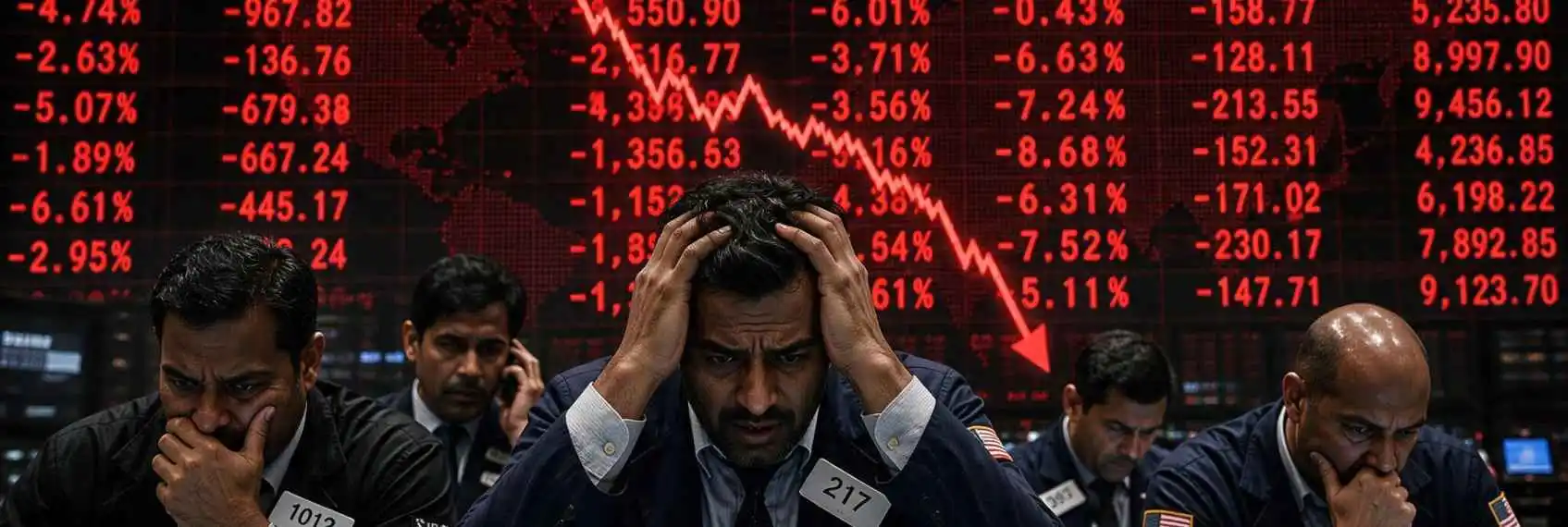
Indian equity markets witnessed a sharp decline on Wednesday, 2 September, as weak global cues triggered broad based selling across sectors. The Sensex fell more than 800 points, declining nearly 1%, to touch an intraday low of 76,136, while the Nifty 50 dropped over 250 points, or more than 1%, to hit 23,787.
The selling pressure was not limited to large cap stocks. The BSE Midcap and Smallcap indices also declined more than 1%, reflecting cautious sentiment across the broader market. Investors lost nearly ₹4 lakh crore in market capitalisation during the first 30 minutes of trade as the total value of BSE listed companies declined to ₹484 lakh crore from over ₹488 lakh crore in the previous session.
Nifty 50 Live Index & Sensex Live Index
US Iran tensions raise global uncertainty
The biggest trigger behind the market weakness was renewed tension in West Asia after fresh missile and drone exchanges between the US and Iran. The escalation reduced expectations of an early resolution to the conflict and increased concerns over a prolonged period of elevated energy prices.
The conflict has increased worries that higher crude oil prices could push inflation higher globally and delay monetary policy easing. For India, which depends heavily on crude oil imports, a sustained increase in energy prices could put pressure on inflation, corporate margins and the current account balance.
Crude oil prices jump near $96 per barrel
Brent crude prices surged around 5% overnight and moved close to $96 per barrel after the latest developments in the US Iran conflict. The sharp rise in crude prices weighed heavily on investor sentiment as India imports around 85% to 90% of its crude oil requirements.
Higher oil prices increase input costs for companies across sectors, particularly transportation, manufacturing and consumer businesses. They can also impact government finances through higher fuel related costs.
The strong Q1 FY27 GDP growth of 7.8% had earlier highlighted the resilience of the Indian economy despite external challenges. However, prolonged crude oil volatility remains a key risk for maintaining the current growth and inflation balance.
Global bond yields add pressure on equities
Another factor impacting global markets was the rise in bond yields. Investors continued to sell bonds amid concerns over inflation, higher government debt levels and expectations of tighter monetary conditions.
The US 10 year bond yield climbed to 4.82%, while Japan’s 10 year bond yield touched 3%, its highest level since 1996. UK 10 year government bond yields also increased to 5.23%, the highest level since June 2008.
Rising bond yields make fixed income investments relatively more attractive compared with equities and can increase borrowing costs for companies. Investors remain cautious as a further rise in yields could put additional pressure on global equity valuations.
Auto and realty stocks lead sectoral decline
The market decline was broad based, with several major sectors facing selling pressure. The Nifty Auto index fell more than 2% after August sales numbers from several automobile companies failed to meet market expectations.
The Nifty Realty index also declined around 2%, while banking, financial services, consumer durables and IT stocks witnessed losses of around 1%.
Outlook
The near term direction of markets will depend on developments in West Asia, crude oil movement and global bond yields. Any moderation in geopolitical tensions or decline in energy prices could improve sentiment, but continued uncertainty may keep volatility elevated in Indian equities.