Summary:
US sanctions on Russian oil could increase crude costs for Indian refiners by forcing them to rely on costlier alternative supplies. IOC, BPCL and HPCL may face pressure on refining margins if Russian discounts disappear and global crude prices rise.
With the possibility of higher costs for crude acquisition, and even more limited sources of crude supply, Indian refiners need to get ready after US Senate approval of a bill that enables the American President to place tariffs as high as 100 percent on countries buying Russian oil and gas.
Called Lindsey O. Graham Sanctioning Russia and Iran Act of 2026, the legislation passed the Senate with 86 votes in favor and 11 against on August 7 and will now proceed to the House of Representatives.
While the effect may not be immediate, state-owned refiners will have their sources of crude locked up for at least 50 days, meeting most of their requirements for that period. However, tenders for post-September cargoes will be made sometime during mid-August.
Why Russian Crude Matters to Indian Refiners
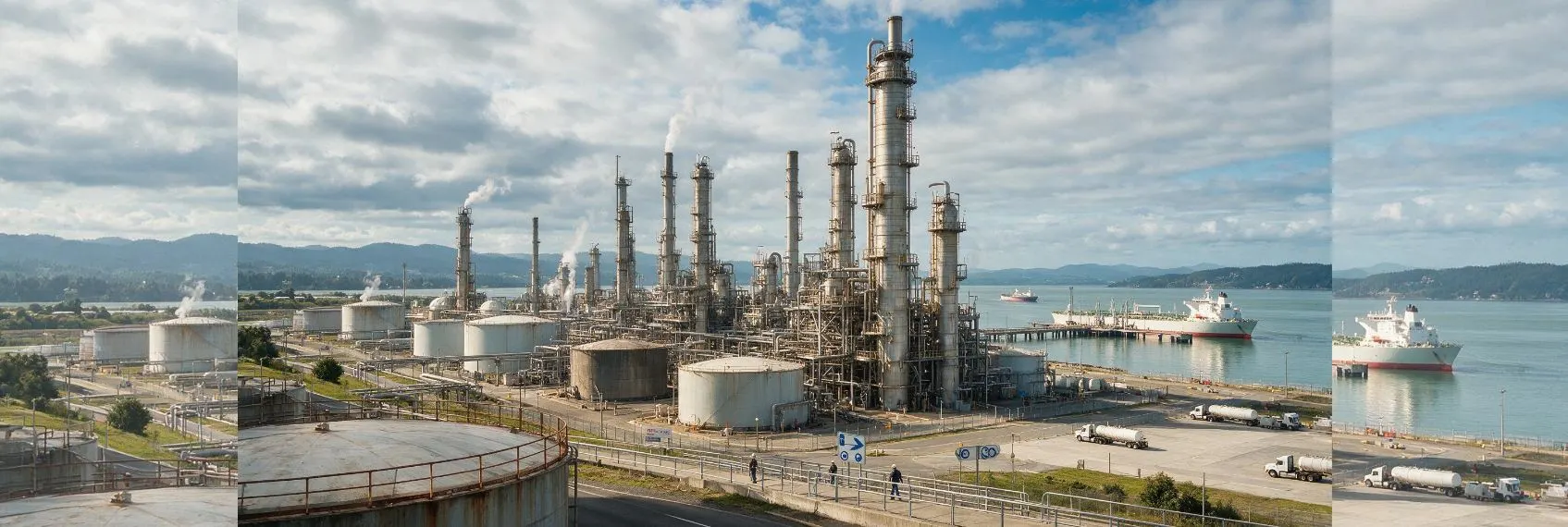
India ranks third in the world in terms of crude imports and is among the largest refineries in the world. Russian oil became significant after 2022 due to discounts that enabled Indian companies to reduce procurement costs and cut down their purchases in Europe.
Russian oil comprised 48% of oil purchased by the state-run refiners in India according to the period mentioned in the report. During April-June 2026, imports of Russian oil and other CIS countries increased by 8.3% to 2.26 million barrels per day. The highest figure was reached in June 2026 with 2.64 million barrels per day of Russian oil that accounted for nearly half of total imports in India.
The Senate bill does not automatically place 100% tariff on India. It empowers the US President to levy tariffs of up to 100% on the largest purchasers of Russian oil.
List of Crude Oil Sector Stocks
Alternative Supplies Could Come at a Higher Cost
India could buy more crude from the US, UAE, Oman, Venezuela, Africa and other sources in case the supply from Russia gets hampered. The problem is pricing.
The transport cost of replacing crude will go up due to longer distances involved for most of the substitutes. Besides, refiners will lose the benefit of cheap barrels, while changing international purchasing behavior may drive up crude oil prices themselves.
This trend is reflected in India’s crude bill too. Oil imports have been cut by about 4.6% in quantity terms during April-June FY27 as per government figures even as crude import value shot up on account of rising prices in the international market.
Crude oil imports constitute nearly 90% of India’s crude oil requirement. It has been estimated that each rise of $1 per barrel in crude prices will increase India’s import bill by about ₹18,000 crore.
West Asia Crisis Adds Another Layer of Risk
There is also increasing difficulty in diversification due to continued exposure of West Asian oil production to geopolitics. On August 10th, Brent crude oil was above $84 per barrel, due to uncertainty regarding transit of crude oil through the Strait of Hormuz.
This suggests that there could be a double whammy for the refineries in terms of lack of access to competitive Russian crude oil, along with high crude prices.
Check Out: How rise in Crude Oil Prices Affects the Indian Markets
Why Refinery Stocks Are in Focus After the Sanctions Bill
So far there hasn't been a sudden, dramatic drop in Indian refinery inventories because of the Senate vote. Indian Oil Corporation had opened slightly down on the morning of August 10, suggesting that investors are currently viewing this legislation as a risk factor rather than an issue of imminent supply problems.
For companies like IOC, BPCL, HPCL, and others, the greater problem will be one of margins if Russian discounts evaporate and oil prices, as well as costs of shipping and insurance, go up. The stock market implications will become evident depending upon how the legislation passes through the US House of Representatives and what tariff measures are taken.