Summary:
US generic drug tariffs could pressure Indian pharma exporters by squeezing margins and raising the cost of serving the US market. Companies are responding by expanding US manufacturing and shifting towards higher-margin specialty drugs, biologics and biosimilars.
It is clear that Indian pharma companies are now bracing for a radical change in the strategy of their operations in the US since President Donald Trump has unveiled his phased tariff schedule on imported generic drugs. Zero percent tariffs will apply until 2028 on generics, but then they will see a jump to 100% tariff rate for a period of one year and thereafter it will be 200%.
The implications of the above scenario are far-reaching. In terms of prescription volume, generics constitute over 90% of all prescription volume in the US, while India supplies nearly 47% of generic pharmaceuticals consumed in the US. On a value basis, however, India constitutes just around 30%. Imports of pharmaceuticals to the US have increased to around $214 billion from $84 billion ten years back.
Check Out: India's Customs Tariff Plans by Budget 2028
Why Indian Generic Companies Are Vulnerable
Generic exporters generally work at profit margins of just 10-15%, and it becomes difficult to sustain 100% or even 200% of tariff costs. Production of generics in India is said to cost 30-50% lower compared to production in the US, which makes moving all of its operations to the US difficult from an economic standpoint.
What makes the situation worse is the upstream dependency on China. According to NITI Aayog, the first five types of API import in India make up 84% of the total imports, with China supplying close to 66-86% of those. Thus, it becomes difficult to reduce dependency on Chinese API at the same time as increasing production capacity in the US.
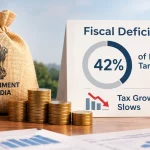
For companies which are more involved in generics production in the US, risks are high. For example, 42% of income for Lupin comes from the US, and Dr Reddy’s generates 34%.
Indian Pharma Companies Accelerate US Manufacturing
Tariff threat is already shaping capital investment decisions. The total value of US pharma M&A transactions was about $65 billion in Q1 2026 as firms tried to build up domestic manufacturing capability.
Explore: Trump's Drug Tariff plan puts pressure on Pharma Companies
Sun Pharma spent $11.75 billion to buy out Organon, a US firm with six manufacturing plants worldwide. Aurobindo Pharma has made a $250 million acquisition of Lannett. It received the Seymour, Indiana plant that has the potential to increase capacity by about 4 billion units per year. Zydus Lifesciences bought two biologics manufacturing sites in California.
Lupin is spending about $250 million on its Coral Springs, Florida facility for complex drugs. India's pharmaceutical firms are now more and more allocating capital to biosimilars, biologics and speciality drugs where profit margins could cover higher manufacturing costs in the US. In a pharma industry survey conducted by an executive research company, 55% of executives chose specialty drugs and biologics as their top choice and 45% chose biologics and biosimilars for their future R&D focus over the next two to three years.