Summary:
A growing number of retail investors are checking markets daily, sometimes hourly, while actually placing fewer trades than before. This pattern, sometimes called passive trading or passive watching, reflects a shift from active speculation toward monitoring, planning, and occasional action. It is driven by market volatility fatigue, better financial content, and a maturing understanding of what long-term investing actually requires.
Introduction
Screen time on trading apps has gone up. Trade frequency, in many segments, has not kept pace. This gap between attention and action is becoming a defining trait of a certain kind of retail investor, one who treats the market app more like a news feed than a transaction tool.
This is not disengagement. It is a different kind of engagement, and it is worth understanding why it is happening.
What "watching more, trading less" actually looks like
| Behaviour | A few years ago | Now |
| App opens per week | Tied closely to active trades | High, even with no trades placed |
| Typical action | Buy or sell on most visits | Checking price, portfolio value, or news |
| Trade frequency | Higher among younger cohorts | Declining even as time-on-app rises |
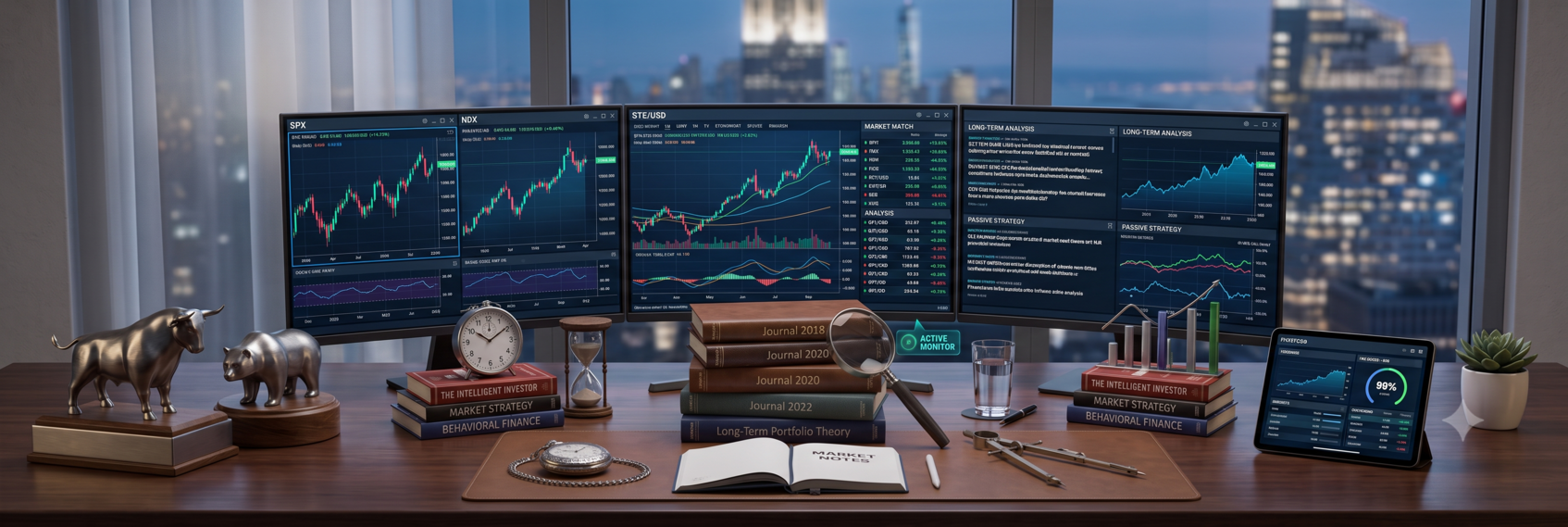
The app has effectively become a dashboard. People are tracking positions, reading market commentary, and watching price movements without necessarily acting on any of it.
Why this shift is happening
A few forces are pushing investors toward this watch-and-wait mode.
Volatility fatigue
Frequent, sharp swings over the past couple of years have made rapid in-and-out trading feel more like gambling than investing for a lot of people
Better financial content
Regional-language explainers, YouTube channels, and social media have pushed the idea that patience tends to beat frequent trading, and that message seems to be landing
SIP-first habits
Investors who entered markets through SIPs are used to a monthly, hands-off rhythm rather than constant intervention
Regret from past losses
Many who traded actively during 2020 and 2021 saw losses when volatility picked up later, and that experience tends to stick
The role of financial content and communities
Telegram groups, finance influencers, and market commentary channels have changed what "staying informed" looks like. Instead of scanning charts for entry and exit points, a large share of this audience is consuming opinion, analysis, and macro updates. The information diet has broadened even as the appetite for actual trades has narrowed.
This creates an interesting dynamic. Investors are more informed than before, in the sense of consuming more content, but that information does not always translate into more transactions. Sometimes it does the opposite, reinforcing a decision to stay put.
What this means for platforms and products
| Old assumption | What is changing |
| More app engagement should predict more trades | Engagement and transactions are decoupling |
| Trading tools are the primary product | Portfolio tracking, watchlists, and market context matter just as much |
| Active traders are the core user base | A growing segment wants information, not necessarily execution |
Platforms built primarily around transaction volume may need to rethink what value looks like for this segment. A user who logs in daily but trades quarterly is still a meaningfully engaged user, just not in the way trading revenue models have traditionally counted.
Is this a permanent shift or a phase?
It is hard to say with certainty. Some of this behaviour is clearly tied to the volatile stretch markets have been through recently, and calmer markets could bring trading frequency back up. But some of it also looks structural: SIP-led entry points, better content, and a broader investor base that came in without a trading-first mindset to begin with.
What seems more durable is the habit of watching. Even if trade frequency picks back up during calmer periods, the expectation of daily market visibility, price checks, portfolio tracking, and casual content consumption is unlikely to go away.
Conclusion
The passive trader is not inactive. They are informed, attentive, and deliberately unhurried. This shift reflects a retail investor base that has grown more comfortable separating information consumption from transaction decisions, which is arguably a sign of maturity rather than disengagement.
For anyone building products or content for this audience, the takeaway is simple: attention and action are no longer the same metric, and treating them as one risks misreading what a large share of investors actually want.