Summary:
India achieved its 20% ethanol blending target ahead of schedule, but revised procurement rules for ESY 2026-27 are changing the industry's economics. Lower maize ethanol prices and restrictions on sugar-based feedstocks could pressure distillery margins and ethanol-linked stocks.
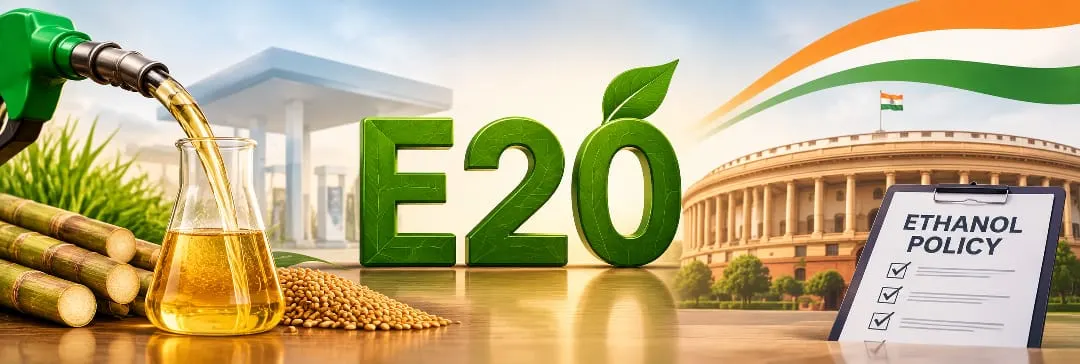
India has achieved its target of blending 20% ethanol with petrol, five years ahead of the original 2030 deadline. However, the challenge now is to maintain this level without affecting food supplies, pushing up production costs or leaving distilleries underutilised. Recent changes to government procurement rules have brought these concerns into focus.
India Achieves 20% Ethanol Blending Target
India’s ethanol blending programme has expanded significantly over the past decade. The blending rate increased from approximately 1.5% in FY14 to 20% in the Ethanol Supply Year (ESY) 2025-26, which ended on October 31, 2026.
The programme aims to reduce India’s dependence on imported crude oil, improve farmers’ incomes and lower emissions from petrol consumption.
Of the total ethanol supplied during ESY 2025-26, grain-based ethanol accounted for around 73.52%, amounting to 800.53 crore litres. Maize was the largest individual feedstock, contributing 489.71 crore litres.
This represents a major shift from the programme’s earlier dependence on sugarcane and molasses.
Government Alters Ethanol Procurement Regulations
The government has introduced significant restrictions for ESY 2026-27, which runs from November 1, 2026, to October 31, 2027.
Oil marketing companies have been instructed to stop purchasing ethanol produced from sugarcane juice, sugar syrup and B-heavy molasses to maintain domestic sugar availability.
The latest procurement tender covers approximately 1,100 crore litres of ethanol. Eligible feedstocks include maize, damaged foodgrains, surplus Food Corporation of India (FCI) rice and C-heavy molasses.
The procurement price for maize-based ethanol has also been reduced by ₹3 per litre, from ₹71.86 to ₹68.86.
| Key Parameter | Details |
| Ethanol Supply Year | ESY 2026-27 |
| Procurement tender | ~1,100 crore litres |
| Previous maize ethanol price | ₹71.86 per litre |
| Revised maize ethanol price | ₹68.86 per litre |
| Price reduction | ₹3 per litre |
| Eligible feedstocks | Maize, damaged foodgrains, surplus FCI rice and C-heavy molasses |
These changes place greater responsibility on grain-based distilleries while reducing a revenue source that sugar mills previously relied on.
Why Ethanol Producers Are Facing Margin Pressure
Ethanol production involves substantial expenses related to raw materials, energy, transportation and plant operations.
As grain-based ethanol becomes increasingly important, competition for maize could intensify among ethanol producers and the poultry, dairy and starch industries.
Government restrictions on using surplus FCI rice and damaged foodgrains for ethanol production could further limit feedstock availability.
Lower procurement prices, combined with rising input costs, could put pressure on operating margins. Distilleries without integrated operations or access to reasonably priced raw materials may face greater difficulties.
Unused manufacturing capacity is another concern. Companies that expanded their distilleries expecting sustained ethanol demand may struggle to maintain high utilisation levels if feedstock shortages or procurement allocations restrict production.
Why Ethanol-Linked Stocks May Come Under Pressure
The revised policy could affect listed companies differently, depending on their business operations.
Balrampur Chini Mills (NSE: BALRAMCHIN), Triveni Engineering & Industries (NSE: TRIVENI) and Dwarikesh Sugar Industries (NSE: DWARKESH) operate in the sugar and ethanol segments.
Restrictions on sugarcane-based ethanol could limit production flexibility for integrated sugar manufacturers. However, retaining more sugar for domestic sales could offset some of the impact, depending on prevailing sugar prices.
Grain-based producers may receive more procurement opportunities, although lower selling prices could affect profitability.
There is currently no verified company-specific share price movement directly linked to these developments in the available data. The actual impact will depend on each company’s feedstock mix, procurement allocation and production costs.
What Is the Future of India’s Ethanol Programme?
India’s achievement of 20% ethanol blending marks an important milestone. However, maintaining this level will require a steady supply of feedstock and procurement prices that remain commercially viable for producers.
The government must balance fuel requirements with agricultural supplies, food inflation and the financial viability of distilleries.
For the ethanol industry, the next phase will be less about achieving blending targets and more about whether manufacturers can sustain production volumes, capacity utilisation and profitability under the revised policy.