Summary:
For many traders, the past few years felt like a golden era. The new financial year may feel very different.
From 2026-27, the Indian financial market is entering a new phase. The environment for traders is changing. Regulatory, structural, and economic shifts are coming together. These changes are expected to affect how people trade, how much they trade, and even who continues to participate in the market.
For the past few years, specifically post covid-19, the markets have had one of the best bull rallies in the history of mankind. Retail participation increased sharply. Easy access to trading platforms, lower costs, and high leverage encouraged more people to enter the market.
Eventually, the derivatives segment in India saw quick growth. Some were attracted by stories of quick profits. Others joined due to increased awareness and easy access to trading apps. However, not all of them were able to sustain profits. However, this phase is now slowing down.
The Union Budget 2026-27 Impact
In the Union Budget 2026-27, the government has increased the Securities Transaction Tax, commonly known as STT. This change came into effect on April 01, 2026. It is meant to reduce excessive trading activity, especially in the derivatives segment.
In the futures market, the STT has increased from 0.02% to 0.05%. This is a 150% rise. In the options market, the tax on premiums has gone up from 0.1% to 0.15%. At first glance, these numbers may appear small. They do, however, have a significant impact on active traders.
Let's say you trade a single futures contract worth ₹ 10 lakh.
· Earlier STT at 0.02% = ₹ 200
- New STT at 0.05% = ₹ 500
So, for the same trade, you now pay ₹ 300 more. That may not sound huge for one trade, but if you do this 10 times a day, the extra cost becomes ₹ 3,000 a day. Over a month, that can eat a noticeable chunk of your profits.
If you consider it in options and you buy or sell an option worth ₹ 1 lakh.
- Earlier tax at 0.1 percent = ₹ 100
- New tax at 0.15 percent = ₹ 150
That is an extra ₹ 50 per trade. Again, it looks small, but if a trader enters and exits multiple option positions daily, the total cost can become significant.
As a result, trading behaviour is likely to change. Some traders may reduce the number of trades they take. Others may move towards slightly longer holding periods. Strategies that rely purely on speed and volume may become less attractive.
Borrowing of Funds
Another major shift is taking place in the area of leverage and funding. The Reserve Bank of India and the Securities and Exchange Board of India have introduced stricter rules. These rules are aimed at making the system safer and less dependent on borrowed money.
One key change is the requirement for 100% collateralisation. Banks must now ensure that loans given to stockbrokers are fully backed by collateral. In addition, banks are no longer allowed to fund proprietary trading desks of brokers.
For retail traders, these changes have a direct impact. Brokers will now have less access to cheap credit. As a result, they may reduce the amount of leverage they offer to clients. Traders may need to put up more of their own money to take positions.
Liquidity Challenges
The structure of market participation is also changing. Recent data shows a decline in the number of individual traders in the futures and options segment.
Another related issue is the concept of impact cost. In a highly liquid market, large orders can be executed with minimal price movement. However, when volumes fall, even moderate orders can move prices significantly.
Impact costs are predicted to increase as the volume of derivatives declines. When traders enter or exit positions, they might get worse prices.
The Macro Outlook
Alongside these market-specific changes, traders must also deal with broader economic conditions. The macroeconomic environment is becoming more complex. It is anticipated that India's economic growth will slow down. In the fiscal year 2026-27, the GDP is expected to grow by about 6.5%. This is less than the growth of 7.5% in the prior year.
Another issue is the cost of energy. West Asian geopolitical tensions continue to drive up the price of crude oil globally. As of March 31, 2026, Brent crude oil is trading over USD 115 per barrel. A year ago, the price of Brent crude oil was around 74 USD per barrel. This is an increase of over 55% from the previous year. India imports around 80% of its oil requirements. Higher oil prices increase costs for businesses and consumers. This can lead to higher inflation.
Slower growth and inflation may affect corporate earnings. Investors should also expect muted growth in the last quarter of the financial year. Even if the ongoing geopolitical tensions ease or the war comes to an end, the impact may be seen in the next two quarters of FY 2026-27. This, in turn, can impact stock prices.
The discussion on changing market conditions becomes even more meaningful when we look at the market data from 2025 and early 2026. On a calendar basis, the year 2025 delivered a total return of 10.51%. This is a healthy outcome, especially considering the intermittent volatility seen during the year.
In contrast, the first three months of CY 2026 have all recorded negative returns. January declined by -3.10%. February followed with a smaller loss of -0.56%. The most significant drop came in March, with a sharp fall of -11.31%.
In India, April marks the start of a new fiscal year, which is related to high investments and allocation and optimism. During bullish periods, the average monthly return stands at 2.68%. While the historical data cannot guarantee future performance, it can provide some insights. Thus, the stock market might be able to recover from any weak period.
What Else Might Work?
Taking into account all the information above, traders should enter the market with caution and discipline. The stock market behaviour might become more unpredictable. For instance, strategies like scalping, which involve frequent transactions and narrow spread prices, will become ineffective owing to rising commissions. On the other hand, swing trading, which involves holding trades for several days, seems more efficient.
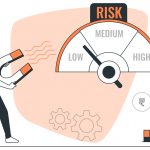
Risk management will become vital. By controlling the size of each trade, minimising leverage, and applying stop-loss orders, investors might prevent losing large sums of money.
Finally, traders should focus on self-improvement and education. Investing in oneself and learning more about the stock market is essential to succeed in the new environment. Relying on tips and luck will not work anymore.
References:
https://www.ibef.org/economy/union-budget-2026-27
https://www.perplexity.ai/finance/BZUSD
Seasonality Analysis: Historic Performance of the Indices and Stocks – Moneycontrol