Selling property in India has substantial tax implications, which have already been redefined in the 2024 Union Budget. Whether you are selling your home or an investment property, the key to safeguarding your profits is to understand the difference between short-term and long-term gains.
The difference: STCG vs. LTCG
The taxation of your property depends entirely on the holding period:
- Short-Term Capital Gains (STCG): If you sell your property within 24 months of purchase, the gains are added to your income and taxed according to your income tax slab rates, which go up to 30% plus cess.
- Long-Term Capital Gains (LTCG): If the property is held for more than 24 months, the property qualifies as a long-term asset.
The new rates
The 2024 budget tried to create a dual system for LTCG on real estate, moving away from inflation adjustments or indexation. For properties acquired before July 23, 2024, you have a choice. You can compute tax at 20% with indexation (inflation adjustment) or 12.5% without indexation. You may choose the one that results in a lower tax liability. Other than that for the properties acquired on or after July 23, 2024, the tax is a flat 12.5% without any indexation benefits.
Understanding tax-saving provisions
- Section 54: If you have sold your residential property, then under Section 54, you can exempt your entire LTCG by investing in another residential property, which must be acquired 1 year before or 2 years after the sale, or by constructing another property within 3 years. This is subject to a maximum reinvestment amount of ₹10 Crore.
- Section 54EC: Alternatively, if you do not wish to invest in another residential property, then under Section 54EC, you can invest your capital gains amount, which is up to ₹50 Lakh, in bonds issued by NHAI and REC within 6 months from the date of sale. These bonds have a 5-year lock-in period.
- Section 54F: If you have sold your plot of land or commercial property, then under Section 54F, you can exempt your capital gains by investing your entire sale amount in a residential property.
Conclusion
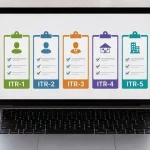
Capital gains are to be disclosed in ITR-2 or ITR-3. If your estimated tax liability is more than ₹10,000, you need to pay ‘Advance Tax’ in four instalments so that you do not incur interest under sections 234B and 234C. When it is inherited, your ‘cost of acquisition’ is the amount at which it was originally purchased, and your ‘holding period’ includes the time it was originally owned.