Summary:
SEBI is not planning an immediate review of the new Closing Auction Session (CAS) despite sharp Nifty swings during its initial rollout, as it believes the volatility is part of the market's adjustment process. The regulator expects participation and liquidity to improve over time, with CAS-driven price movements already moderating by the third trading session. Brokers have also been asked to encourage greater retail participation to support smoother price discovery.
The Securities and Exchange Board of India is unlikely to immediately review the newly introduced Closing Auction Session (CAS) despite sharp movements in the Nifty 50 and derivatives during its first few trading sessions. The regulator currently sees no structural or design flaw in the mechanism and expects the initial volatility to settle as market participation increases.
CAS became effective from August 3, 2026, changing how closing prices are determined for stocks available in the derivatives segment. The system was introduced to improve closing-price discovery, increase transparency and bring the Indian market closer to practices followed in major global markets.
How Does the New Closing Auction Session Work?
Under the earlier system, the closing price of a stock was based on the volume-weighted average price of trades executed during the final 30 minutes of normal trading.
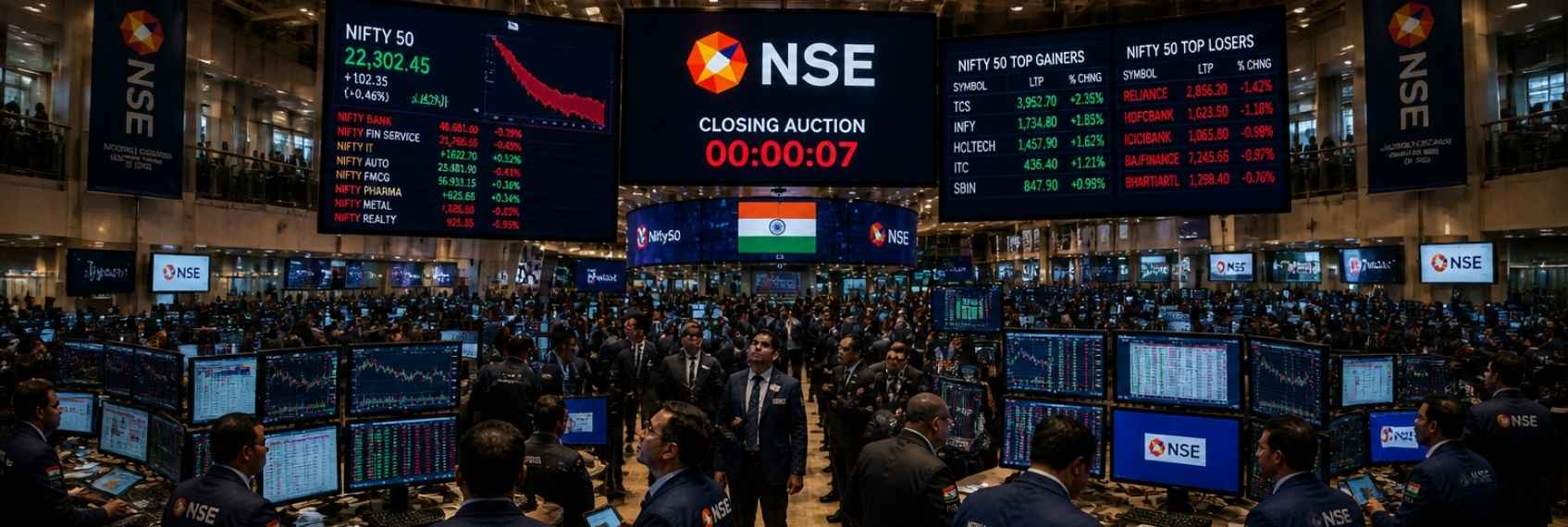
Under CAS, continuous trading in eligible F&O stocks ends at 3:15 pm. The closing auction then runs until 3:35 pm, with orders collected and matched to arrive at an equilibrium price that maximises executable volume. Trading in equity derivatives continues until 3:40 pm. Stocks outside the initial CAS universe continue normal trading until 3:30 pm.
SEBI introduced CAS initially for stocks on which derivative contracts are available, while the broader rollout is being implemented in phases.
Nifty Sees Sharp Closing Swings in First Three Sessions
The initial sessions produced unusually large differences between the Nifty’s level at the end of normal trading and its eventual CAS closing level.
| Date | Normal Session Close | CAS Close | CAS Movement |
| August 3 | 24,573.35 | 24,774.30 | +0.82% |
| August 4 | 24,463.45 | 24,614.90 | +0.62% |
| August 5 | 24,570.20 | 24,624.65 | +0.22% |
On August 3, CAS lifted the Nifty by about 201 points, while the index gained around 151 points during the August 4 auction. The movement moderated considerably on August 5, when the Nifty rose around 54 points during the closing auction.
Take a look at SEBI pushing Retail Participation
Why Did Nifty and Options Swing Sharply After CAS?
The biggest disruption was seen in derivatives. Options premiums moved sharply as the underlying cash-market closing prices changed during the auction, resulting in unexpected losses for some traders and gains for others. The volatility was particularly significant on August 4, which coincided with the weekly derivatives expiry. Arbitrage funds were among the major beneficiaries and recorded a one-day mark-to-market increase in valuations.
Traders raised concerns that the sharp closing moves suggested the mechanism was not functioning as expected. However, SEBI believes these are initial adjustment issues rather than flaws in the system.
Why SEBI Is Not Planning an Immediate Review
According to reporting on the regulator’s position, participation increased on the second day and is expected to rise further. Brokers have also been encouraged to increase retail participation. SEBI therefore considers it too early to review the mechanism and currently has no specific timeline for reassessing it.
The decline in CAS-driven Nifty movement from around 201 points on August 3 to 54 points on August 5 provides an early indication that volatility may be moderating. The key test will be whether liquidity deepens and closing-price swings become more stable over the coming sessions.
Also Read: CAS: Why Nifty fell but Sensex stayed Flat