Indian pharma stocks came under pressure after US President Donald Trump proposed phased tariffs on generic drug imports to encourage domestic manufacturing. The proposal has raised concerns over export margins and profitability, although analysts believe full implementation could be difficult due to high costs and long timelines.
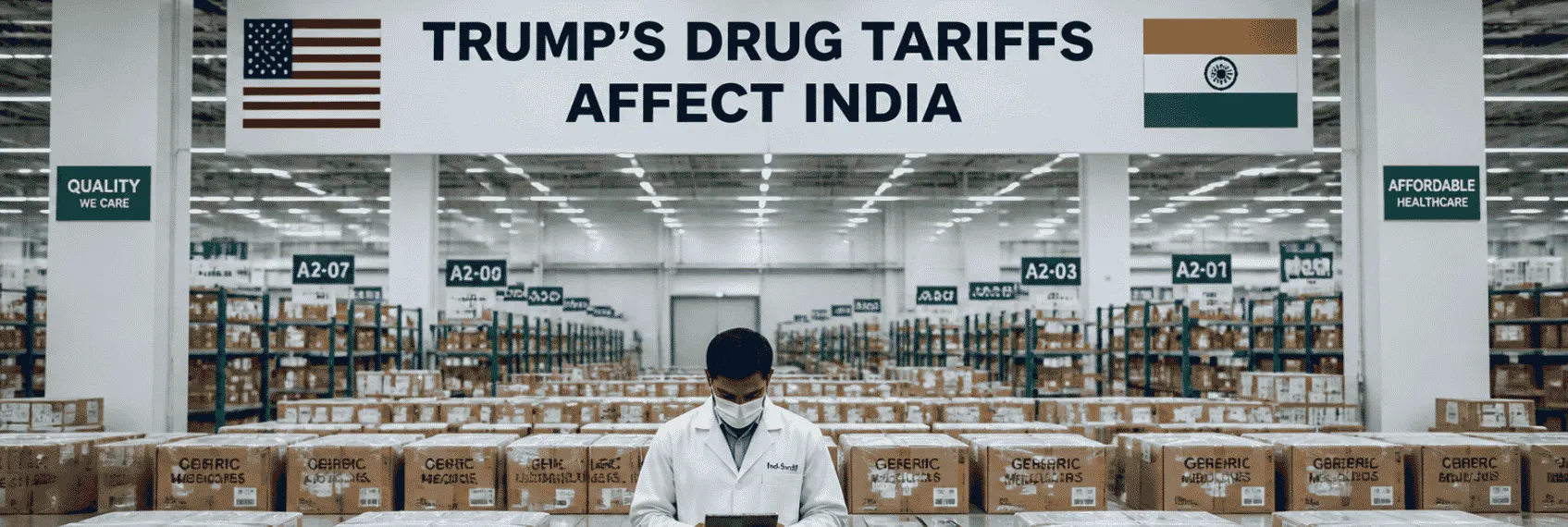
Indian pharmaceutical companies are under threat due to US President Donald Trump announcing his tariff policy in phases for generic drugs. This policy will help bring back the manufacturing of pharmaceuticals in America, and has caused worry for the Indian companies, especially because the US is the biggest foreign market for India's pharmaceutical industry.
In an announcement via social media on 22nd July, Trump stated that America will charge a tariff of 100% for generic drugs after two years, increasing up to 200% after one more year. It was done to force companies to have their manufacturing set up in America, and there will be punishment for those companies that don’t set up manufacturing in America within the given period of time.
Nevertheless, experts think that it would be difficult for them to implement such tariffs on account of time and cost required for the process.
Why the US market is crucial for Indian pharma companies
The United States is a major market for the pharmaceutical industry in India, as over one-third of the total pharma export of India is exported to the US, which makes up a considerable part of the profit of the major pharma companies.
According to some industry estimates, the total pharmaceutical exports of India to the US reached $9.7 billion in 2025, making up about 37% of India’s total pharmaceutical exports. Nearly 90% of the total medications used in the US are generic, while Indian companies supply about 45% of generic prescriptions in the US.
For some major pharmaceutical companies in India, the contribution of the US market in their total sales lies somewhere between 30%-50%.
Also read: The US Supreme Court Ruling on Trump Tariffs: Implications for US-India Trade Relations
Why implementing tariffs may be difficult
Even though the tariff policy seeks to foster manufacturing, analysts have noted that the period suggested in this case may not be realistic. In setting up a plant for manufacturing pharmaceuticals, the process may take at least two years, after which there will be need for inspections and other processes, which take another 12-15 months.
The US has also largely lost its competitive edge in the manufacture of generic drugs over time. Due to the small profit margins associated with generics, production in the US on a large scale may be too costly.
Analysts suggest that companies may want to move only some select high-margin products to the US; however, it may be challenging to substitute all manufacturing in India.
How Indian drugmakers can reduce tariff impact
Several approaches may be explored by pharmaceutical companies for mitigating the risks. First, some pharmaceutical companies may benefit from having existing US manufacturing capacities. The pharmaceutical companies that have existing US manufacturing facilities or future plans for expanding them would be less affected compared to those smaller companies that export to the US.
Some of the pharmaceutical companies might explore the transfer of technology and outsourcing to US manufacturing companies. Nevertheless, considering the size of the US generic drugs market and high costs of production, this approach might not help mitigate the risks.
Pharmaceutical companies of India have been engaging in business diversification as well in order to lessen the dependency on the US generic drugs market.
Why pharma stocks fell after Trump’s tariff announcement
The Indian pharma shares came under selling pressure due to Trump's tariff imposition as there was an expectation of increased cost of manufacturing, margins pressure, and even a disruption in the export business.
The shares of those pharma companies which have a high amount of US business came under pressure as there were fears of lower profits or increased investment in their production infrastructure in the US.
Check out: Pharma Stocks list on Ventura
However, those pharma firms having already made their manufacturing infrastructure in the US or having diverse revenue streams will be well placed in the prevailing scenario.
The market is now waiting for further information regarding the implementation of tariffs and even the negotiations that can take place between the two countries.