Gold prices remain range-bound as geopolitical tensions, higher crude oil prices, a stronger U.S. dollar, and Fed rate expectations keep sentiment cautious. Markets are closely watching the upcoming FOMC meeting, Core PCE inflation data, and developments in the Iran conflict for the next major trigger, while continued central bank buying may support prices over the long term.
Gold has been consolidating since the beginning of this month after enduring a prolonged correction in 2026. Since the year began, dollar-denominated gold (XAUUSD) has shed more than 29% of its value. This follows a remarkable three-year bullish cycle from late 2022 through early 2026, where prices surged by 246% on the back of aggressive central bank accumulation, robust speculative interest, and the Federal Reserve's previous easing trajectory.
The initial week of July offered a brief reprieve; Kevin Warsh’s dovish tone at an ECB gathering in Portugal, combined with soft employment figures, effectively neutralized the bearish sentiment lingering from May’s NFP data. However, the reinvigorated conflict in Iran has since introduced renewed downward pressure. While cooling US inflation sparked a temporary rally this week, intensifying geopolitical tensions quickly capped those gains. Currently, dovish fundamental catalysts are proving insufficient against the backdrop of geopolitical instability, with surging crude oil prices further dampening the outlook for gold.
Recent Events impacting Gold:
The primary obstacle currently hampering bullish momentum for Gold is the escalating conflict in Iran. With the situation in the Strait of Hormuz reaching a fever pitch, alongside threats of strikes against essential energy infrastructure and the Houthis vowed disruption of the Bab al-Mandab passage, climbing crude prices are effectively suppressing gold prices.
This week we also saw a softer than expected US CPI report; headline inflation marked the sharpest fall since April 2020. We saw Gold rally on Tuesday, closing almost 2% from the previous day’s close. Dollar Index fell below 101, and on Wednesday it made a low of 100.35. But this move didn't last long, as renewed gains in crude oil prices, together with fresh US strikes against Iran, reignited concerns that higher energy costs could once again feed through into inflation, fueling the risk of tighter monetary policy. Warsh's testimony yesterday also didn't help, as he reiterated that the Fed would act tough on inflation and also said recent inflation data may not fully capture underlying price pressures. After this, gold came back to its original trend and is hovering around 4000 levels again.
Earlier this month, we saw NFP providing a little relief from May’s surprising high job growth by giving slower than expected jobs growth of just 57000 vs expectations of around 114000. That week was the sole anomaly for Gold prices in a 10-week bearish move during which gold prices gave positive returns.
What's Next for Gold?
Gold, without a doubt, is having a bad 2026 atleast in first half. The near term has a lot of bearish factors weighing Gold down. With MCX Crude Oil back near 7800, inflation fears are still gripping the market despite recent relief. And if we go by the news, there is no peace deal in sight. Ripple effects of high oil prices will be felt across every sector if this continues.
Next, Personal Consumption Expenditures (PCE) Price Index and specifically Core PCE data that the Fed actively tracks as a measure of consumer spending, which will come in the same week as the FOMC decision, will be important. If inflation continues to grow, the FOMC will likely act. Markets as of now are expecting one hike by the October meeting.
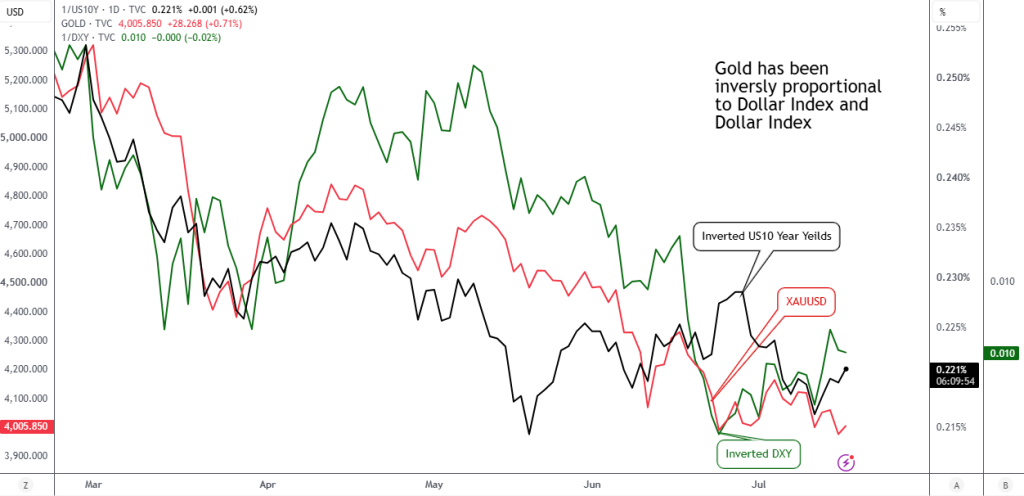
Furthermore, the robust greenback and climbing Treasury yields in the States, alongside tightening yield differentials between U.S. debt and Japanese, European, or British sovereigns, are further squeezing the yellow metal. Positive Dollar and rising yields are bearish for Gold prices.
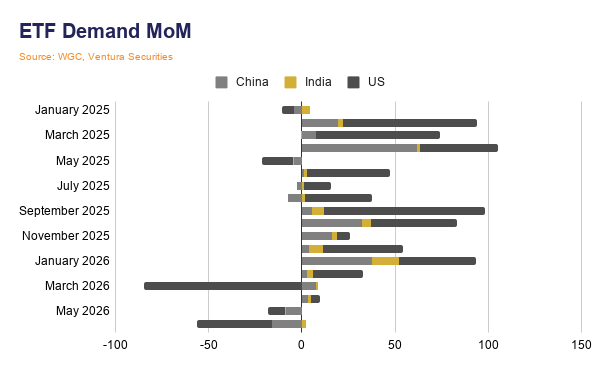
Speculative demand has also remained weak. We continue to see ETF outflows, particularly from North America, reflecting subdued investor sentiment towards gold.
So to sum up, the near-term outlook for gold remains uncertain. Prices are likely to stay choppy and volatile, with the bias remaining sideways to bearish.
However, the longer-term narrative shows a different picture. Eventually, markets are expected to fully absorb and price in the Federal Open Market Committee's policy trajectory. According to the CME FedWatch Tool, markets are already shuffling between one and two rate hikes as the news cycle evolves.
The longer-term impact of high oil prices is slower economic growth. This was recently seen in the Bank of England's monetary policy, which is widely believed to have opted not to raise interest rates due to a weaker economy. Also, with U.S. 10-year Treasury yields hovering between 4.5% and 4.6%, the ballooning national debt and the resulting surge in interest obligations present a significant fiscal hurdle.
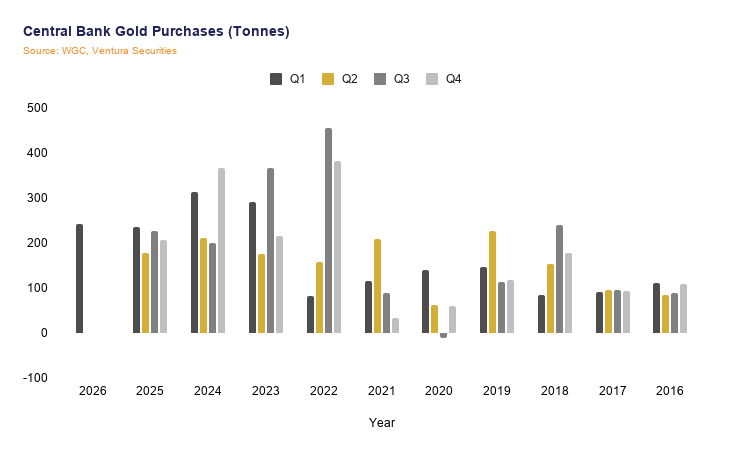
Furthermore, the trend of central bank diversification shows no signs of waning. Central banks have already bought gold at an average pace of roughly 1,000 tonnes a year from 2021 to 2025, double the average of the previous decade. According to World Gold Council (WGC) data, the pace of buying in Q1 2026 has also remained roughly around that level. Poland and China have been the biggest and most consistent buyers in 2026. Additionally, physical demand for gold jewellery could recover now that prices have come down. More stable prices could encourage jewellery buyers who had been waiting for prices to settle before returning to the market.
Market Summary
The yellow metal appears to be finding a floor, lurking in and around the 4000 - 3950 range. It seems the market is currently in a wait-and-watch mode, holding out for a decisive spark bullish or bearish to dictate the next leg of the journey.
Key developments to monitor this month include: any escalation or de-escalation in the Iran conflict, the upcoming FOMC decision on July 29th, the Q2 2026 Advance GDP estimates, and the critical PCE Price Index release scheduled for June 30th.
Beyond these triggers, persistent central bank accumulation remains a cornerstone of support for the current price action. To sum up, XAUUSD is showing resilience near the 4000 - 3950 threshold, which correlates to the 140000 - 139000 zone on MCX. Given that a single rate hike is largely baked in, these levels should hold provided there are no dramatic shocks in the greenback or Treasury yields. However, a breach below this floor would suggest that the narrative of runaway inflation and climbing bond yields has firmly seized control of the market direction.
| Key Levels to Watch | ||
| Index | Support Levels | Resistance Levels |
| MCX Gold | 140000 - 134000 | 155000 - 160000 - 170000 |
| Comex Gold | 3900 -3800 - 3600 | 4300 - 4540 - 4800 |
| Dollar Index | 100 - 98.50 - 96.50 | 102 - 105 - 106.50 |
Disclaimer: This blog post is for informational purposes only and should not be considered financial advice. Please consult with a qualified financial advisor before making any investment decisions.