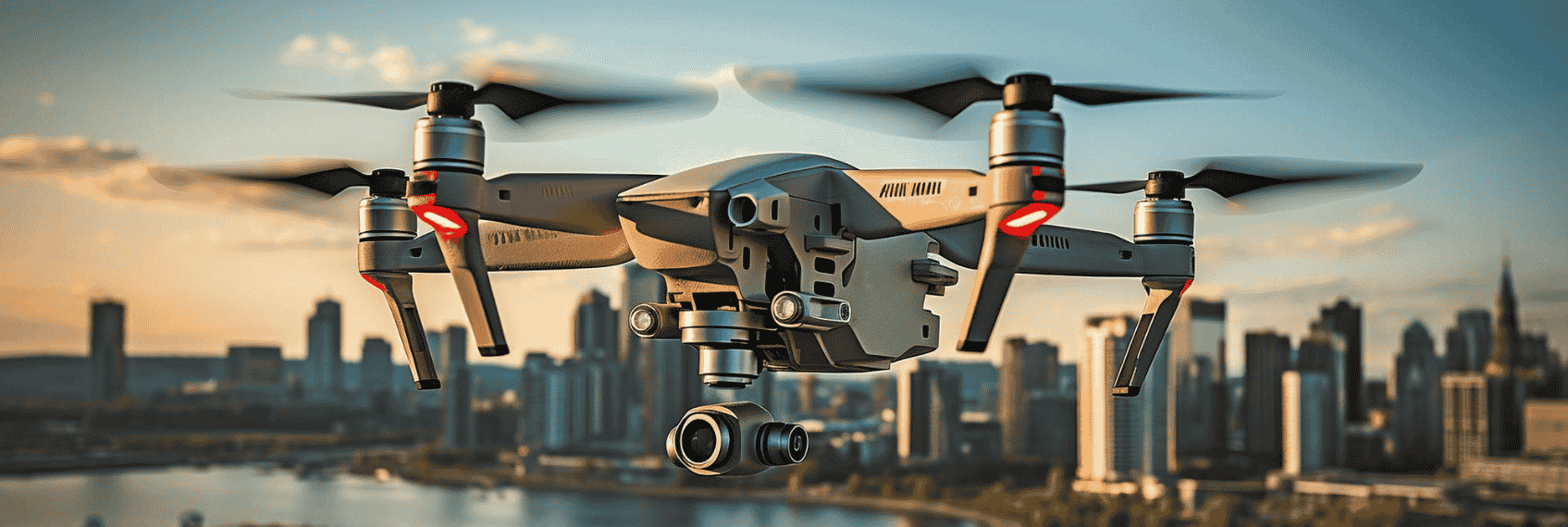
India has transitioned from experimental drone deployment to a mature, regulated, and fast-scaling ecosystem that is reshaping governance, infrastructure management, agriculture, and national security. As of February 2026, the country has built a strong operational base with more than 38,500 registered drones (UINs), nearly 40,000 DGCA-certified remote pilots, and 244 approved training organisations.
The transformation reflects not just technological adoption but institutional integration. Drones are now embedded into national development programs, security operations, and public service delivery frameworks.
Rural Empowerment Through Agriculture and Land Ownership
A major focus of India’s drone expansion is rural empowerment through flagship government schemes.
The Namo Drone Didi Scheme aims to modernise farming while creating sustainable livelihoods for women. So far, 1,094 drones have been distributed to Women Self Help Groups (SHGs), including over 500 under the dedicated “Drone Didi” initiative. These drones enable precision agriculture such as automated spraying, reducing labour intensity, minimising chemical waste, and improving productivity. Importantly, the initiative is turning rural women into agri-service entrepreneurs.
The SVAMITVA Scheme is equally transformative in land governance. Using drone mapping, the government has surveyed 3.28 lakh villages, covering 95% of the total target. As of December 2025, this resulted in 2.76 crore property cards issued across 31 states and Union Territories. The program strengthens property rights, reduces disputes, and allows rural households to access formal bank credit using property as collateral.
Infrastructure Monitoring and Transparency
Drone deployment is now mandatory across large national infrastructure projects to improve transparency and accountability.
The National Highways Authority of India (NHAI) requires monthly drone video recordings of all highway projects. The footage is stored in a centralised “Data Lake,” enabling progress monitoring, discrepancy detection, quality assurance, and legal verification in disputes.
Indian Railways has also adopted UAVs across all zones for inspection and maintenance of tracks and bridges. Additionally, the Railway Protection Force uses drones for real-time surveillance in rail yards and crowd management during peak traffic, improving both efficiency and safety.
Strategic Defence Applications
Drones have become integral to India’s defence preparedness. They are deployed for border surveillance, intelligence gathering, and precision targeting operations.
During Operation SINDOOR, Indian drones and loitering munitions successfully destroyed targets with high precision. The defence ecosystem now includes ISR drones, combat drones (UCAVs), and emerging swarm drone technologies, strengthening battlefield awareness and strike capabilities while reducing risks to personnel.
Policy Reforms Driving Rapid Expansion
The growth of the drone sector has been supported by major regulatory reforms and financial incentives.
The Drone Rules, 2021, drastically simplified compliance by reducing forms from 25 to 5 and approvals from 72 to 4. Nearly 90% of Indian airspace is now designated as a Green Zone, allowing drone operations up to 400 feet without prior permission.
To promote domestic manufacturing, the government launched a ₹120 crore Production Linked Incentive (PLI) scheme. In addition, GST on drones was reduced to a uniform 5% in September 2025, down from earlier rates of 18% and 28%, significantly lowering adoption costs.
Disaster Management and Skill Development
Drones are also enhancing disaster response capabilities. The North East Centre for Technology Application and Reach (NECTAR) has developed heavy-payload drones capable of delivering equipment and providing live visuals during floods and landslides, assisting rescue teams in remote terrain.
To build future talent, the SwaYaan capacity-building program has benefited over 26,000 participants through 857 activities, strengthening the country’s technical workforce.
Sector Growth and Stock Market Impact
The expanding ecosystem has also created investment opportunities in defence and aerospace-linked companies. With policy support, defence procurement, and commercial adoption increasing, India’s drone industry is expected to see multi-fold long-term growth.
Among the listed beneficiaries, Zen Technologies has emerged as a key player in UAV and anti-drone systems. Originally focused on defence simulators, the company now provides counter-drone detection and neutralisation technologies and benefits from rising security and defence demand.
Bharat Heavy Electricals Limited (BHEL) may gain indirectly from higher defence and infrastructure spending. As a major PSU involved in strategic and industrial projects, increased capital expenditure and technology integration support its long-term prospects.
Hindustan Aeronautics Limited (HAL) plays a direct role in indigenous aerospace and unmanned systems development. Its participation in UAV programs and defence aviation manufacturing positions it to benefit from defence modernisation and self-reliance initiatives.
India Moving Toward Global Leadership
With tens of thousands of registered drones and pilots, surveys covering 3.28 lakh villages, 2.76 crore property cards issued, and targeted policy reforms reducing approvals from 72 to just 4, India’s drone ecosystem has matured rapidly.
The country is not merely adopting drones; it is integrating them into governance, agriculture, infrastructure monitoring, disaster management, and national security. By combining inclusive development with technological innovation and domestic manufacturing, India is positioning itself as a potential global leader in unmanned aerial systems.
The drone revolution in India, therefore, represents more than a technological upgrade; it marks a structural transformation toward data-driven governance, rural empowerment, and strategic autonomy.