Summary:
The government is considering a ₹29,852 crore financing support scheme to accelerate electric bus and truck adoption and expand high-powered charging infrastructure. JBM Auto, Olectra Greentech, Ashok Leyland and Tata Motors could benefit from higher commercial EV demand, while Exicom Tele-Systems, Servotech Renewable Power System and Tata Power offer exposure to the charging infrastructure theme.
The government is considering a financing support scheme to accelerate the adoption of electric buses and trucks by reducing the high upfront cost of commercial electric vehicles and supporting the charging infrastructure required to operate them. The proposal, under discussion since early 2026, is pegged at around ₹29,852 crore over five years and could support the rollout of 50,000 electric buses and 50,000 electric trucks.
The proposal is significant because commercial EV adoption depends not only on vehicle prices but also on the availability of high powered charging infrastructure. The government is therefore considering incentives that could help operators establish charging facilities at depots and along major routes.
Why charging infrastructure is the key bottleneck
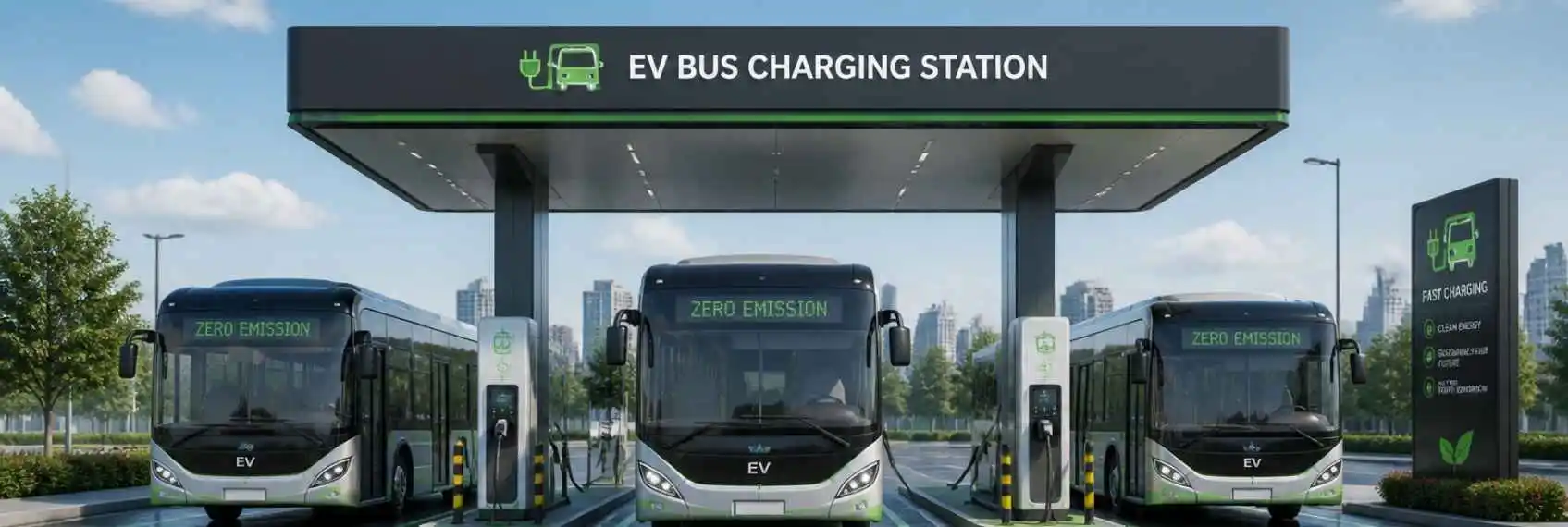
Electric buses and trucks require substantially higher charging capacity than passenger vehicles. According to the proposal, existing charging infrastructure remains inadequate for the rapid expansion of commercial EVs.
The government’s PM E-DRIVE scheme already provides ₹2,000 crore for public EV charging infrastructure and supports 1,800 fast chargers for electric buses, alongside 22,100 chargers for electric cars and 48,400 chargers for electric two wheelers and three wheelers. The scheme has also been extended until March 31, 2028.
The new proposal could therefore complement existing incentives by addressing financing requirements for commercial vehicle charging infrastructure.
Electric bus adoption is gaining momentum
India’s electric bus market is already expanding. A total of 2,944 electric buses were registered during January to June 2026, representing a 40% increase over the corresponding period of 2025. Switch Mobility led with 830 registrations and a 28.2% market share, followed by JBM Auto with 635 units and a 21.6% share. Olectra Greentech recorded 280 registrations, while Tata Motors registered 71 units.
The government’s existing PM E-DRIVE programme provides ₹4,391 crore for procurement of 14,028 electric buses by state transport and public transport agencies.
Listed electric bus manufacturers to watch
JBM Auto has significant exposure to electric buses through its EV business. Its e-bus segment contributed around 36% of revenue in FY26, while its order book stood at 7,000 to 7,500 buses as of June 2026. The company expects the segment’s revenue contribution to rise to 40% to 45% over the medium term.
Olectra Greentech is another direct listed play on electric buses. The company describes itself as a pure electric bus manufacturer and is expanding into electric trucks and tippers. It has more than 3,300 electric buses on the road and has also secured an order for 1,085 electric buses worth approximately ₹1,800 crore.
Ashok Leyland offers electric buses and trucks through its Switch Mobility business, giving investors exposure to the commercial EV transition through a diversified commercial vehicle company.
Tata Motors also has electric bus exposure, although its current registration share is smaller than some specialist manufacturers. Its commercial EV ecosystem is supported by charging partnerships, including collaboration between Tata Power and VE Commercial Vehicles.
Listed charging infrastructure companies
Exicom Tele-Systems is among the most direct listed plays on EV charging. It manufactures AC and DC chargers and has deployed more than 20,000 chargers across India and Southeast Asia. Its charging business has also seen growing activity from e-buses and e-trucks.
Servotech Renewable Power System is another focused listed charging infrastructure company. It manufactures chargers and has secured orders representing approximately 67% of the awarded capacity in a set of PSU and oil marketing company tenders for 60 kW and 120 kW DC fast chargers.
Tata Power provides another route to the charging theme through its EV charging business. It had operationalised more than 1,200 e-bus charging points and over 5,800 public, semi-public and fleet charging points by FY26.
Outlook
The proposed ₹29,852 crore support package could address one of the biggest barriers to commercial EV adoption: the combined cost of vehicles and charging infrastructure. Existing government support already covers 14,028 electric buses and allocates ₹500 crore specifically for electric trucks.
For listed investors, JBM Auto, Olectra Greentech, Ashok Leyland and Tata Motors offer electric bus and commercial EV exposure, while Exicom, Servotech and Tata Power provide exposure to charging infrastructure. The next major trigger will be the final structure of the proposed financing scheme and the allocation of actual projects and tenders.