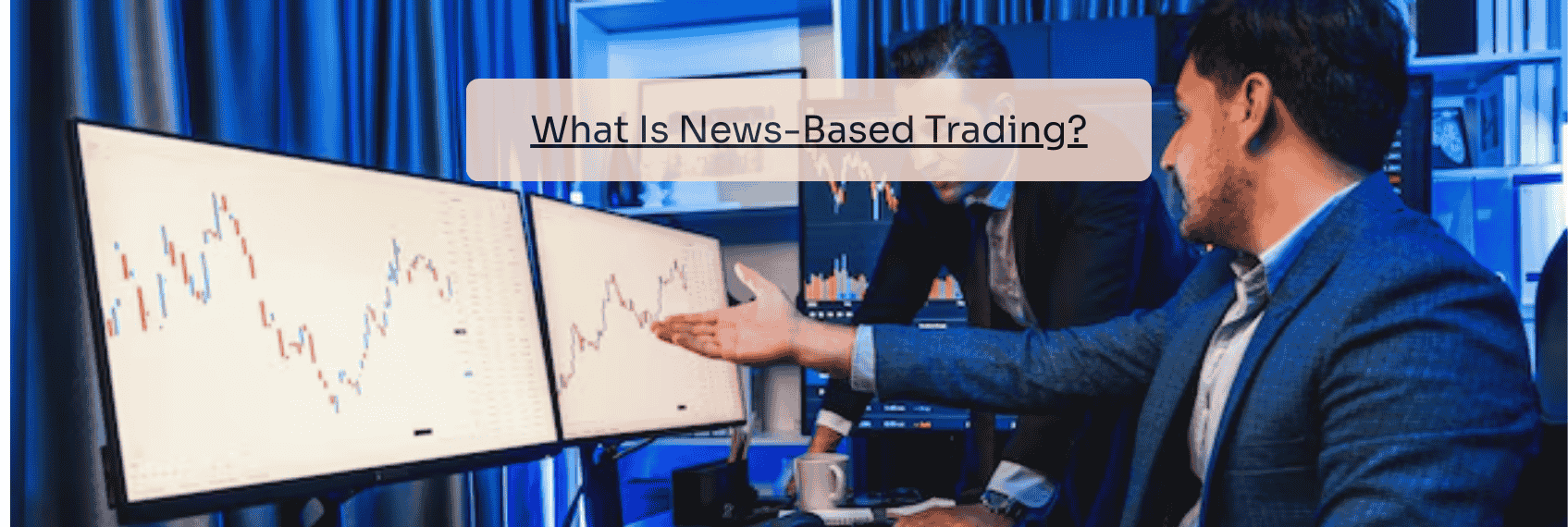
News-based trading (also called news trading) is a strategy used by financial market participants to make trading decisions based on the release of news and market-moving events. Instead of relying solely on long-term fundamentals or technical chart patterns, news traders focus on how new information, such as economic data, corporate earnings, geopolitical events, and central bank announcements, can quickly affect asset prices. The basic idea is to enter or exit positions around the time news is released to profit from the price volatility that follows.
In essence, if a trader can anticipate or react faster than others to a news event, they may take advantage of short-term price swings before the broader market adjusts.
News-based trading revolves around three core actions that traders perform before, during, and after news releases:
Traders use tools like:
These events are expected to influence markets because they change expectations about economic conditions or company performance.
There are two main timing approaches:
Timing is critical because price movements often occur within seconds of the release and can reverse quickly.
Once the news hits, markets react with:
Fast execution, sometimes using automated systems, is essential to capture profits before prices stabilize.
Prices in financial markets largely reflect collective expectations about the future. Investors, analysts, and institutions constantly form opinions about how economies, companies, and policies will evolve, and those expectations get embedded into asset prices. When new information enters the market, even if it alters those expectations slightly, prices tend to adjust quickly to reflect the updated outlook.
This is why news releases can trigger immediate and sometimes dramatic movements across asset classes. For example, better-than-expected employment data, changes in interest rates, or surprising corporate earnings can shift market sentiment and cause sharp moves in currencies, stocks, commodities, or indices.
Crucially, market reactions depend not just on the news itself but on how it compares to what was anticipated. The difference between expected and actual outcomes, such as forecasted unemployment figures versus the reported numbers, often determines the magnitude of the price response. If the actual data diverges significantly from forecasts, the reaction tends to be stronger, as markets rapidly reprice to reflect the new reality.
Here are some practical strategies news traders use:
Entering trades before an announcement based on consensus forecasts. This approach can be high-reward but also high-risk since forecasts are just predictions.
Waiting for the initial price reaction after the news and then entering in the direction of confirmed momentum.
Placing both buy and sell orders just beyond key price levels before a news release to capture whichever direction the market moves.
Sometimes markets overreact to news. Traders may take positions against the initial move, expecting a retracement.
News trading offers several potential benefits:
While the rewards can be significant, several risks make news trading challenging:
News-based trading is a dynamic, event-driven strategy that seeks to profit from how markets react to new information. It blends fundamental understanding with precision timing and risk management. While it offers the exciting possibility of quick gains, it also carries significant risks that demand preparation, discipline, and fast execution.

Natural Gas: A Guide to India’s Trading Market
3 min Read Mar 9, 2026
Capital Gains Tax on Property in India (FY 2025-26)
3 min Read Mar 9, 2026
Top Coal Stocks in India: Key Coal Mining and Lignite Companies to Know
3 min Read Mar 9, 2026
Long-Term Capital Gains (LTCG) Tax for FY 2025-26
3 min Read Mar 9, 2026
AI Summit 2026 Delhi: A New Blueprint for Global Intelligence
3 min Read Mar 9, 2026
For android only