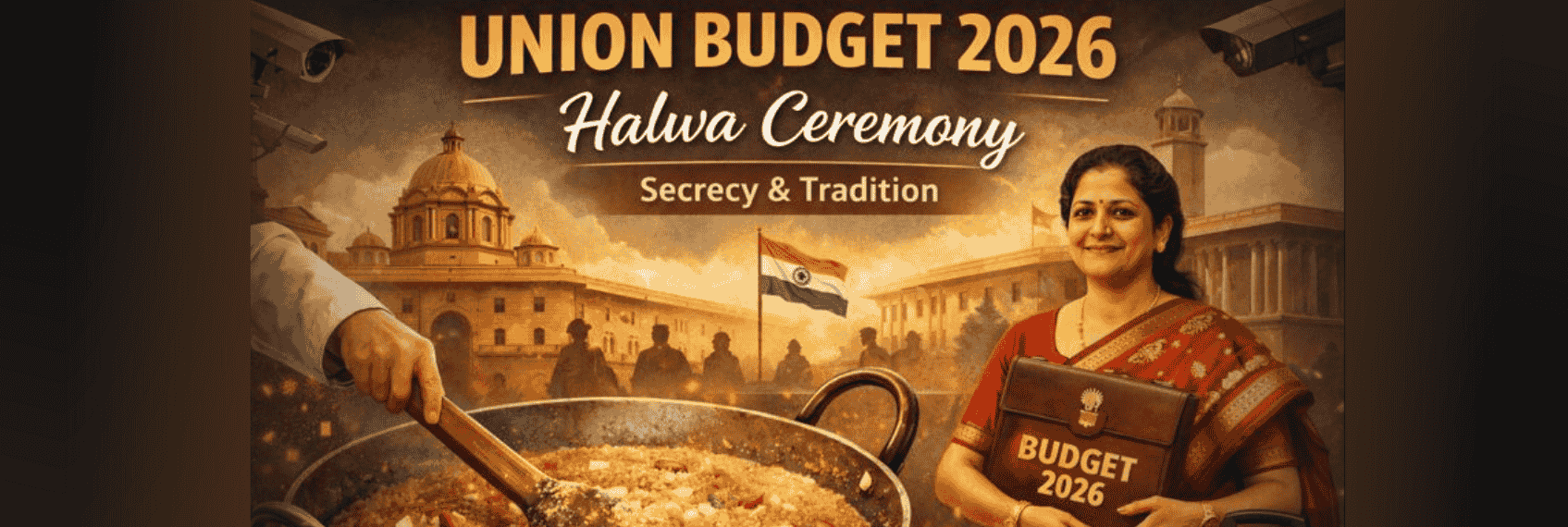
The Union Budget for FY26-27 will be presented on Sunday, February 01, 2026. A few days before the Union Budget is presented in Parliament, a brief but significant tradition unfolds behind closed doors in North Block. Known as the Halwa Ceremony, this long-standing Ministry of Finance ritual indicates that the Budget has entered its final and most confidential stage.
Conducted annually, the ceremony involves preparing and distributing halwa, a traditional Indian dessert, to officials directly responsible for drafting the Budget. For the Union Budget 2026, the ritual will once again mark the point at which policies, figures and allocations are formally locked in.
Though it may appear symbolic, the Halwa Ceremony represents a serious institutional milestone and continues to play a role in safeguarding the secrecy and workflow of India’s Budget preparation process.
What Is the Halwa Ceremony?
The Halwa Ceremony is a time-honored tradition that signals the commencement of printing the annual Union Budget. Typically held 8-10 days before the budget session in Parliament, the event is hosted by the Finance Minister.
During the ceremony, halwa, a sweet dish, is prepared in a large vessel known as a kadhai. The Finance Minister stirs the halwa, which is then distributed among officials and staff. This gesture acknowledges their dedication and hard work, while also marking the beginning of the budget printing process.
Symbolism of the Halwa Ceremony
- Start of Budget Preparations: The Halwa Ceremony officially kicks off the final stages of budget preparation, involving detailed deliberations, calculations, and consultations among various stakeholders.
- Ensuring Confidentiality: Post-ceremony, officials involved in drafting the budget are confined to the North Block and cut off from external communication until the budget is presented in Parliament. Phone usage is monitored, and security is reinforced with CCTV surveillance and oversight by the Intelligence Bureau to prevent leaks.
- Cultural Tradition: Rooted in Indian cultural practices, the preparation and sharing of sweets during ceremonies symbolizes joy, collaboration, and the beginning of something significant.
- Public Awareness:
The ceremony garners media attention, sparking public interest and discussions about the government's fiscal policies and priorities for the upcoming financial year.
What Is the Lock-in Period?
The lock-in period refers to the days of confinement for officials involved in budget preparation. Starting immediately after the Halwa Ceremony, these officials remain within the premises of the North Block, with no contact allowed with their families or the outside world until the Finance Minister delivers the budget speech in Parliament.
For this year’s budget, the lock-in period will last until January 31, when Finance Minister Nirmala Sitharaman is scheduled to present the Union Budget 2026.
This strict protocol ensures complete confidentiality and prevents premature disclosure of budgetary proposals. The practice dates back to 1950 when a budget leak led to the resignation of then Finance Minister John Matthai.
Printing Press and the Digital Shift
For four decades, the basement of North Block housed the printing press where budget documents were printed. However, since 2020, the Union Budget has transitioned to a digital format, with minimal physical documents printed. Distribution now primarily occurs via the government’s official website and mobile app.
The digital shift has also reduced the lock-in period from two weeks to just 8 days, streamlining the process while maintaining secrecy.
The Halwa Ceremony stands as a blend of tradition, celebration, and operational discipline, marking the beginning of a crucial phase in the country’s financial planning. As the ceremony unfolds today, it sets the stage for the Union Budget 2026, which will outline the government's economic vision and priorities for the year ahead.