Summary
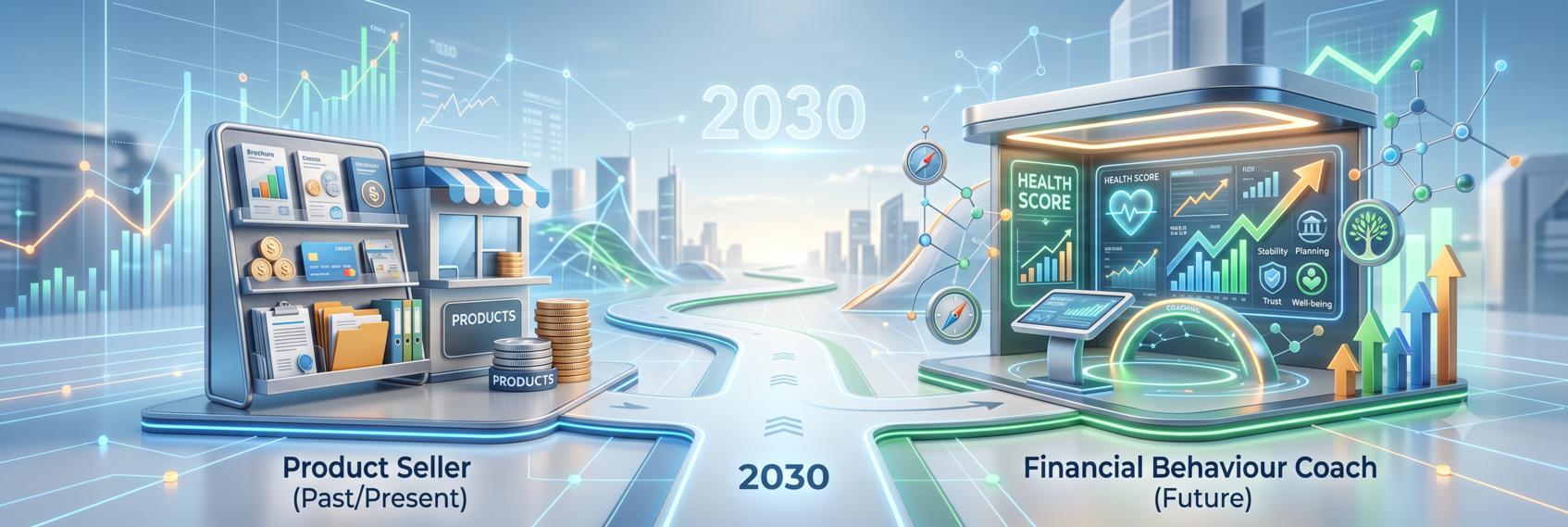
As digital platforms take over transactional tasks, the mutual fund distributor's future role looks less like product distribution and more like behavioural coaching. It has now become vital to look at what is driving that shift, what a behaviour-coach model actually involves, and what distributors need to build toward it over the next several years.
Introduction
Selling a fund used to be most of the job. Explaining what a product does, comparing options, and processing the paperwork to invest in it. Very little of that requires a human intermediary anymore.
What is left, and what is likely to matter more by 2030, is a different skill set entirely: helping people manage their own behaviour around money, not just their portfolios.
Why "product seller" is a shrinking role
| Task | Status |
| Fund selection and comparison | Largely self-service via apps and screening tools |
| Onboarding and transactions | Fully digital, minutes rather than days |
| Basic performance tracking | Available on any investment app in real time |
| Product knowledge as a differentiator | Diminishing, since fund information is now widely accessible |
None of this means distributors have nothing left to offer. It means the offering that used to define the role has largely moved online.
What "behaviour coach" actually means
Managing panic during downturns
Talking a client out of redeeming at the bottom of a correction, something apps notify about but do not actively discourage
Preventing chase-the-trend investing
Redirecting clients away from decisions driven by recent performance or social media trends
Reinforcing consistency
Keeping SIPs running through market cycles rather than pausing them when short-term sentiment turns negative
Contextualising goals over time
Revisiting whether a plan set five years ago still matches a client's current life stage and priorities
This work has less to do with fund mechanics and more to do with the psychological patterns that lead investors to make counterproductive decisions at exactly the wrong moments.
Why this shift matters for outcomes, not just relevance
Retail investor behaviour, not fund selection, is often the biggest driver of the gap between a fund's actual returns and what the average investor in that fund actually earns. Buying high during optimism and selling low during panic erodes returns far more than choosing a slightly suboptimal fund does.
A distributor who prevents even a few of these behavioural mistakes over a client's investing lifetime may add more value than one who simply picks marginally better funds. That is a different value proposition than the one distribution has traditionally been built around, and it is one that is harder for an app to replicate.
What distributors need to build toward this
| Capability | Why it matters by 2030 |
| Behavioural finance literacy | Understanding common biases, loss aversion, recency bias, herd behaviour, to recognise and address them in clients |
| Long-term relationship management | Coaching requires ongoing contact, not one-time transactions |
| Comfort with digital tools | Using apps and dashboards to handle routine work, freeing time for coaching conversations |
| Communication over product knowledge | The ability to explain risk and reframe short-term anxiety matters more than reciting fund fact sheets |
Distributors who invest in these areas now are positioning themselves for a role that digital platforms are not well suited to replicate, at least not without losing the trust element that comes from a human relationship.
The distributors most at risk
Those still building their practice primarily around product recommendations and transaction facilitation face the most pressure, since that function is exactly what digital platforms have already absorbed. Without a shift toward advice and behavioural support, that segment of the distribution business is likely to keep shrinking through the rest of the decade.
Conclusion
By 2030, the distributors who remain relevant probably will not look like distributors in the traditional sense at all. They will look more like financial behaviour coaches who happen to have deep product knowledge as a baseline, not a differentiator.
The shift is not about resisting digital disruption. It is about recognising that the parts of the job worth protecting were never really about selling products in the first place.