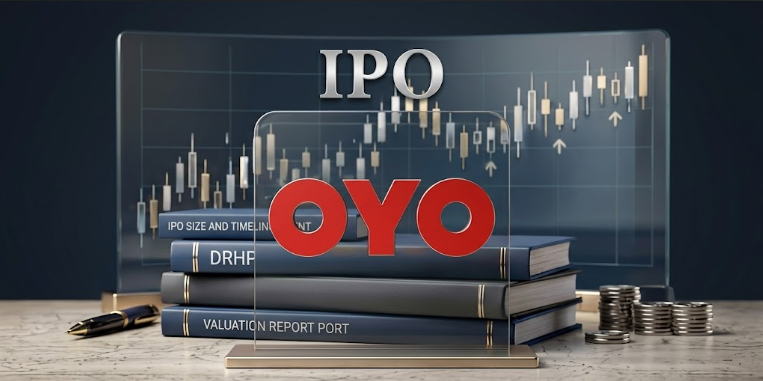
OYO's parent company, PRISM, received SEBI's observations letter on June 5, 2026, clearing the path for what is the company's third IPO attempt after withdrawing twice in 2021 and 2024. The listing entity is PRISM, formerly known as Oravel Stays, targeting a ₹6,650 crore issue. For investors who have tracked this story through two false starts, something has genuinely changed this time.
Three tries. That's what it's taken. OYO first filed for an IPO in 2021 at a $9 billion valuation, pulled it, tried again, pulled that too. Now its parent company PRISM has filed papers with SEBI for a ₹6,650 crore issue, and this time the numbers actually hold up. No offer for sale. No early investors cashing out. Every rupee raised goes straight to the company. Here's what's confirmed, what's still pending, and what to watch before the shares list.
What is OYO?
OYO, under parent entity PRISM, is a hospitality and travel technology company founded by Ritesh Agarwal. It connects budget and mid-market hotels with travellers through a franchise and managed property model across India, Southeast Asia, and parts of Europe. At its peak it briefly ranked as the third-largest hotel chain globally by room count, a title it chased at considerable cost.
Why is OYO's IPO highly anticipated?
OYO is one of the last major Indian unicorns yet to list. FY25 marked its first positive EBITDA, which is the financial inflection point that makes the 2026 filing credible in a way the earlier ones were not. Investors who waited through two withdrawn DRHPs now have actual profitability data to work with.
Nine-month FY26 revenue hit ₹6,941 crore, already ahead of the entire FY25 number. Profit after tax tripled to ₹748 crore over the same period. Adjusted EBITDA came in at ₹1,968 crore. None of that existed on paper in 2021.
OYO IPO latest update 2026
PRISM filed its confidential DRHP on January 1, 2026, using the pre-filing route that keeps details private during the regulatory review. SEBI cleared it in June, and the Updated DRHP was recieved by 30th June, 2026.
SEBI Approval Status
SEBI issued its observations letter on June 5, 2026, part of a batch of five IPOs cleared that day. That's a green light on process, not a locked-in date or price. PRISM now has 18 months to launch.
Why OYO Filed Confidentially
PRISM used the pre-filing route in December 2025, keeping financials private while SEBI reviewed them. After two public withdrawals, that privacy mattered. It let the company negotiate terms without every leaked number becoming a headline.
What Happens Next
The Updated DRHP landed on June 30, 2026. From here: a public comment window, a possible pre-IPO placement of up to ₹1,330 crore, then the final Red Herring Prospectus with actual price band and dates. Listing is targeted for the second half of 2026, but nothing is locked.
OYO IPO details at a glance
The structure is cleaner than OYO's earlier attempts, leaning toward fresh capital rather than a large exit for early investors.
Expected IPO size and fundraising target
PRISM's board approved a ₹6,650 crore IPO. The confirmed size will come with the Updated DRHP in July. At this scale, it sits among the larger internet-economy listings in the current cycle.
Fresh issue vs offer for sale (OFS)
The IPO is structured as a mix of fresh issue and OFS by existing investors. Fresh issue capital goes directly into the business. The OFS allows some early investors to partially exit. The split between the two will be confirmed in the Updated DRHP and this is worth checking, since a heavily OFS-weighted issue means more money going to exiting investors than to the company.
Expected listing on NSE and BSE
Proposed listing on both BSE and NSE. Timing is targeted for the second half of 2026, depending on how the SEBI review and market conditions play out through July and August.
OYO business overview
The business filing in 2026 is structurally different from the one that tried to list in 2021. That distinction is worth understanding before forming a view on the IPO.
OYO's hotel and travel business model
OYO runs a franchise and managed property model, connecting independent hotels with travellers through its platform. After the aggressive growth phase, the company exited over 150,000 hotel rooms from its portfolio, shut down China and several European markets, and refocused on India, Southeast Asia, and select European geographies. Painful. Necessary.
Global presence and market reach
India remains OYO's largest and most profitable market. The company has expanded into premium segments to improve average revenue per booking, moving away from the budget-only positioning of its early years. The geographic consolidation produced a more defensible business, smaller, but with margins that actually make sense.
Is OYO Actually Profitable?
The financial story is the primary reason this attempt lands differently. OYO's losses were what killed market confidence in earlier filings.
Revenue growth and operational performance
Revenue stood at ₹5,604 crore in FY25. The company has reported 12 consecutive profitable quarters heading into the filing. Room count rationalisation improved per-property economics, and the move toward franchise-heavy operations cut fixed costs significantly versus the managed property model that burnt cash in the early years.
Profitability and EBITDA trends
FY25 was OYO's first EBITDA-positive year. PAT came in at ₹623 crore. Legacy debt servicing continues to weigh on the net profit line, so the headline profitability number is real but incomplete. The Updated DRHP will show how much of the net picture improves once IPO proceeds are used to pay down debt.
OYO IPO valuation and shareholding pattern
Valuation is the hardest part to evaluate here. The $9 billion of 2021 is long gone. What replaces it is a more honest number, but still not cheap relative to the earnings base.
Expected valuation in 2026
PRISM is targeting around $7 to $8 billion, implying an issue price of roughly ₹70 per share. That is a significant reset from 2021, and it reflects both the business restructuring and a more realistic market environment for hospitality and travel technology companies post-pandemic.
Key shareholders and investors
SoftBank has been the most prominent stakeholder throughout, and its stance shapes the IPO structure and timing. Other investors include global private equity and technology firms from earlier funding rounds. The OFS component will allow some to partially exit. How large that exit is matters for reading the signal about insider conviction.
How will OYO use the IPO proceeds?
The proceeds split is straightforward and investor-friendly in structure, assuming the allocations hold in the final RHP.
Paying Down Debt
₹4,987.5 crore, roughly 75% of net proceeds, goes toward repaying a debt facility tied to Deutsche Bank from 2021. Finance costs alone ran ₹1,089 crore in the nine months to December 2025. Clearing this debt directly improves the bottom line going forward.
General Corporate Purposes
The remainder goes to general corporate use. Notably, no chunk of this raise is earmarked for expansion or capex. This IPO is about fixing the balance sheet, not funding growth.
Risks associated with OYO IPO
OYO's risk profile is relatively transparent. The company's difficulties have been public for years. Investors know the history.
Competition in hospitality and travel sector
OYO competes with MakeMyTrip, Airbnb, and a growing number of branded budget hotel chains in India, plus global OTAs in international markets. The franchise hotel segment is more crowded than when OYO first filed in 2021, and pricing pressure from platforms has not eased.
Regulatory and market risks
OYO has faced regulatory scrutiny across multiple markets. The hospitality sector is exposed to travel demand cycles, geopolitical disruptions, and macro shifts. The company's early-phase partner disputes left a reputational mark that restructuring has helped but not fully erased.
Should you invest in OYO IPO?
This is a turnaround story asking for a growth valuation. That combination warrants care rather than enthusiasm.
Factors investors should consider
Check whether EBITDA improvement is structural or just what happens when you exit 150,000 underperforming rooms. Compare the asking valuation to listed hospitality and travel technology peers. Read the Updated DRHP when it drops in July. The debt position post-proceeds and the OFS size are the two most important numbers to track.
Who can consider applying for the IPO?
Investors with a three to five year view who believe the restructuring is done and India's hospitality recovery is durable. For listing gains, the subscription level will be noisy. A company with OYO's history attracts polarised views, and that polarisation shows up on listing day.
Conclusion
OYO's 2026 attempt is the most credible of its three tries. SEBI approval is confirmed, the financials have genuinely turned, and the business bears little resemblance to the sprawling, loss-heavy version that tried to list in 2021. The valuation reset is real. Whether the asking price still leaves enough upside for public market investors is what the Updated DRHP will help answer. Read it when it drops in July before deciding anything.