For traders navigating the sometimes-choppy waters of the financial markets, volatility can be both friend and foe. The Chop Zone indicator emerges as a valuable tool to identify periods of consolidation or range-bound price movements. This blog dives deep into the Chop Zone indicator, and its functionalities, and explores effective strategies to leverage it in your trading endeavours.
What is the Chop Zone Indicator?
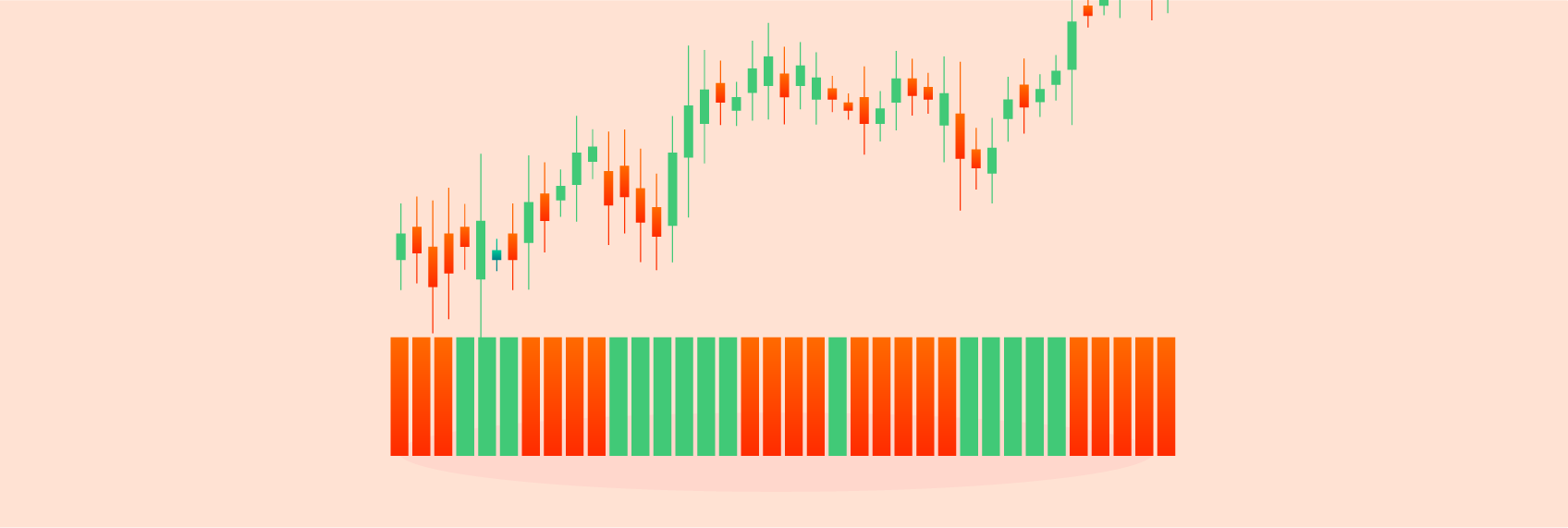
Unlike traditional volatility indicators, the Chop Zone doesn't measure the magnitude of price swings. Instead, it focuses on the direction and strength of the trend or the lack thereof. The indicator visually depicts three zones using colour bars:
- Turquoise: Represents a bullish zone, suggesting a potential upward trend or continuation of an uptrend.
- Red: Represents a bearish zone, suggesting a potential downward trend or continuation of a downtrend.
- Yellow/Gray: Represents a chop zone, indicating a period of consolidation or range-bound price movement where the trend is unclear.
What is the Choppiness Index?
The Chop Zone indicator derives its signals from the Choppiness Index (CHOP), a mathematical formula that calculates the absolute value of the difference between consecutive daily high and low prices, divided by the prior day's closing price. The CHOP value typically ranges between 0 and 100, with higher values signifying a more "choppy" market.
- Thresholds and Colour Coding: The Chop Zone indicator employs pre-defined thresholds for the CHOP value. For instance, a value above 61.8 might be designated as a chop zone (yellow/grey), while a value below 38.2 might indicate a non-choppy zone (either turquoise or red, depending on the price movement direction).
Chop zone indicator strategies
While the Chop Zone indicator provides valuable insights, it shouldn't be used in isolation. Here are some effective strategies to integrate it into your trading toolbox:
- Confirmation with Price Action: The Chop Zone's signals are most compelling when confirmed by price action. For example, a sustained price breakout above a resistance level following a turquoise zone might suggest a stronger bullish signal.
- Identify Potential Trend Reversals: Emerging red zones after extended periods of turquoise zones could indicate a potential bearish reversal. Conversely, green zones after red zones might suggest a bullish reversal is in the making.
- Combine with Other Indicators: The Chop Zone indicator works well when used in conjunction with other technical indicators like volume or moving averages. This can provide a more comprehensive understanding of market sentiment and potential trend changes.
Limitations of the chop zone indicator
- Lagging Indicator: The Chop Zone indicator is a lagging indicator, meaning it reacts to past price movements. So, use it alongside leading indicators to anticipate potential trend changes.
- Discretion is Key: The Chop Zone's thresholds and colour interpretations can vary depending on the platform or indicator settings. Apply your judgement and consider historical data for context.
- Not a Standalone Tool: The Chop Zone indicator is a valuable filter, but it doesn't guarantee profitable trades. Always consider risk management strategies and incorporate other technical analysis tools for a well-rounded approach.
Conclusion
The Chop Zone indicator empowers you to identify periods of consolidation and assess the trend's strengths or weaknesses. By understanding its functionalities, and limitations, and employing effective strategies, you can leverage it to make informed trading decisions, particularly during unclear market conditions. Remember, the Chop Zone indicator is one piece of the puzzle; a successful trading strategy often involves a confluence of technical analysis and sound risk management practices. So, trade wisely, and navigate those choppy market waters with a bit more clarity!