Summary:
ACME Solar Holdings secured 50 MW of contracted renewable energy capacity in a GUVNL auction at ₹4.58 per unit. The project strengthens its firm and dispatchable renewable energy portfolio, with battery storage, execution costs and commissioning timelines influencing future profitability.
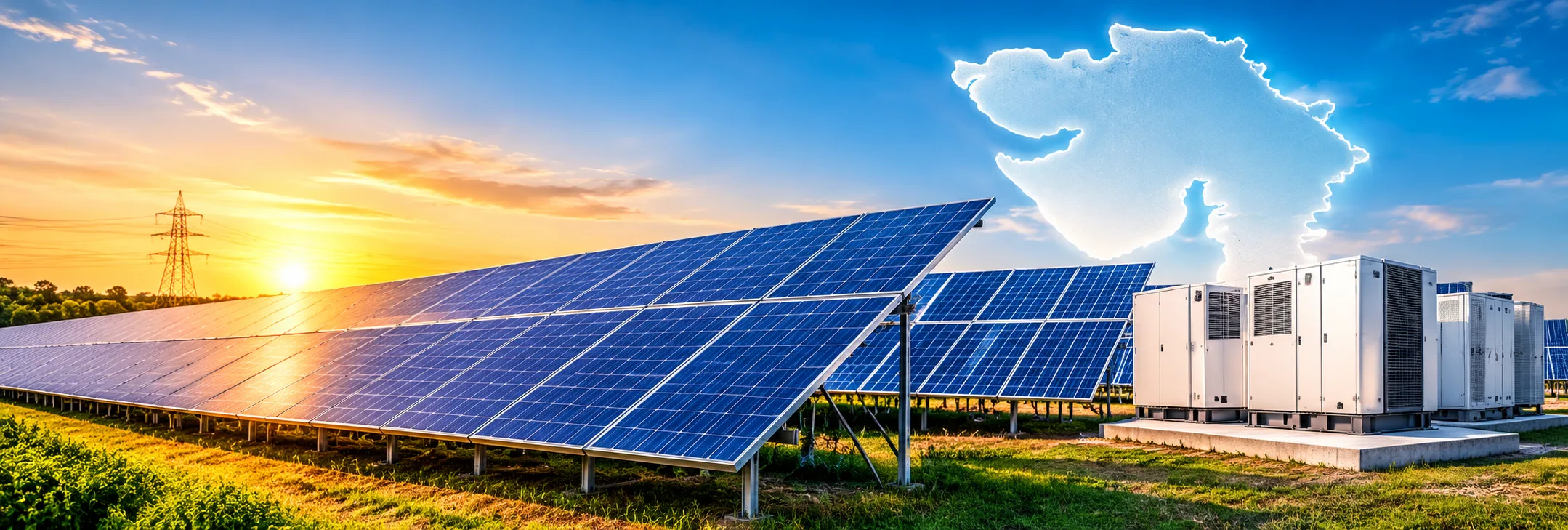
Gujarat Urja Vikas Nigam Limited (GUVNL) has awarded 50 MW of contracted renewable energy capacity to ACME Solar Holdings (NSE: ACMESOLAR) in an auction. The company will provide power round the clock at ₹4.58 per unit, enhancing its reputation in renewable energy projects with battery storage.
What did ACME Solar declare?
ACME Solar said in its November 22, 2026 exchange filing that it had emerged as a successful bidder in GUVNL's firm and dispatchable renewable energy auction. The tender is for the purchase of 500 MW of renewable electricity with an additional 500 MW available under a greenshoe option. ACME Solar has bagged 50 MW of contracted capacity at a discovered tariff of ₹4.58 per kilowatt-hour (kWh).
But unlike traditional solar projects that predominantly produce electricity during the day, firm and dispatchable renewable energy projects can be built to deliver electricity supply commitments over varying time periods. This means that energy storage is an important consideration in project planning.
Why Battery Storage Is Important?
The renewable energy market in India is evolving. Most of the big projects before that were adding solar and wind generation capacity. Electricity distribution companies are now looking more and more for power that can be reliably supplied in the evening hours and periods of low renewable generation.
Battery energy storage systems can be a solution of this problem.
When solar or wind are strong, they may generate more electricity than needed . This excess can be stored and used later, depending on the capacity of the batteries and the operating requirements .
The Gujarat contract further expands ACME Solar’s portfolio of projects with firm power delivery.
The company’s announcement did not specify a separate allocation of battery capacity for this award. Thus, the contracted 50 MW should not be taken as 50 MW of newly commissioned battery storage.
What is the tariff of ₹4.58?
The tariff found will be a factor in future revenue potential of the project, but contracted capacity alone is not enough to assess annual earnings.
Actual revenue will be subject to power purchase agreement, contracted supply profile, project commissioning, electricity delivered and prevailing commercial conditions.
The cost of purchasing the equipment, the cost of financing, battery replacement needs and operating costs will also influence the profitability of the project.
These factors are important as storage-backed renewable energy projects have different cost structures to standalone solar projects.
What Could Move ACME Solar Stock?
Winning in a competitive power auction can improve the visibility of future revenues and support expectations of additional capacity growth.
However, a contract award does not directly equate to revenue. Investors can see the investment required, potential returns and project execution time line before re-valuing the company.
The announcement was made on Sunday November 22 and Acme Solar Holdings Limited shares rose 2.37% or ₹9.60 to ₹415.00 as of 11:48 AM on Monday, November 23, 2026.
Conclusion
ACME Solar’s latest 50 MW project in Gujarat is yet another step toward renewable electricity with reliable delivery commitments. The ₹4.58 per unit tariff is the base at which the project economics can be assessed and its final earnings impact will be governed by commissioning timelines, storage requirements and cost of financing.