Summary:
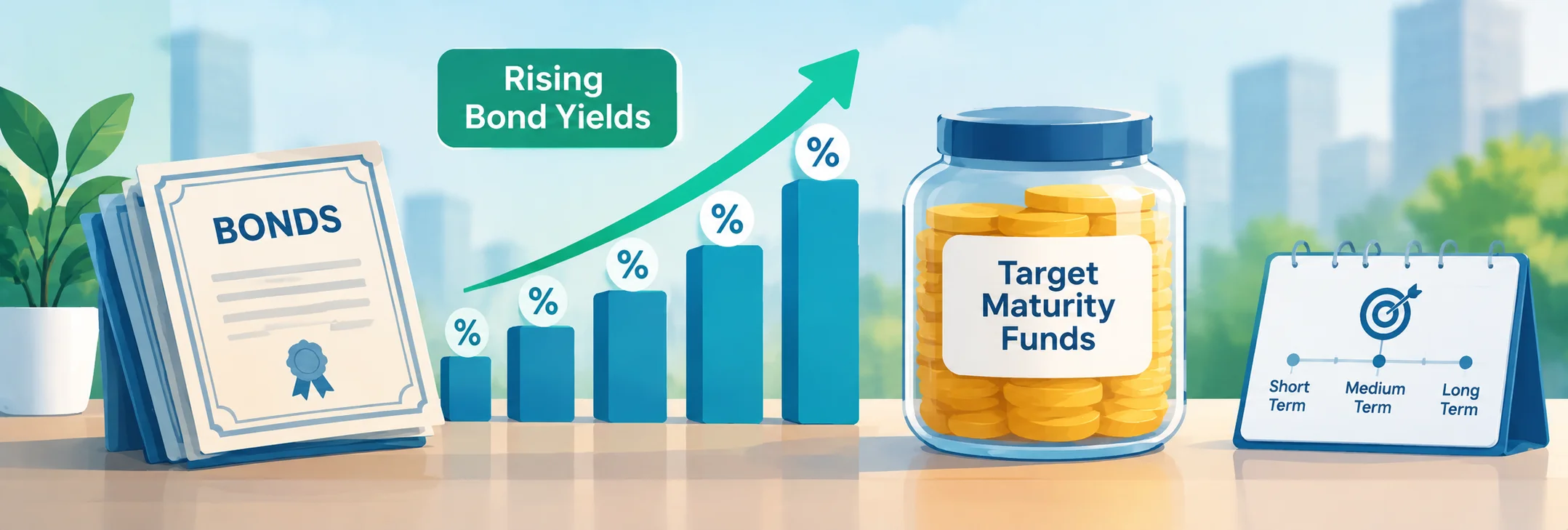
Rising Indian bond yields have renewed interest in target maturity funds. Investors should compare entry yields, maturity dates, credit quality, expenses and taxation before investing. Returns are not guaranteed, and early redemption can expose investors to changing net asset values.
What do rising bond yields mean for target maturity funds?
Indian bond yields have moved higher after the Reserve Bank of India increased its policy rate in October 2026. This has changed the return available on newly purchased debt securities and brought target maturity mutual funds back into focus.
These funds follow a defined bond index and a specified maturity date. The structure makes their investment period easier to understand, although neither the return nor the net asset value is guaranteed.
Government Bond Yields Move Higher
On October 14, the benchmark 10-year government security yield touched about 7.40%, its highest level in roughly three years. The RBI’s market data for October 16 put the 2036 benchmark government security yield at 7.37%. The policy repo rate stood at 5.50% after a 25-basis-point increase on October 7.
Shorter securities offered different yields. The latest RBI auction readings showed 182-day Treasury bills at 6.28% and 364-day bills at 6.48%.
Explore Government Bonds based on it's yield and yearly returns
How Target Maturity Funds Work
A target maturity fund generally holds securities included in a bond index, such as government securities, state development loans, or AAA-rated corporate bonds. As the bonds approach their redemption dates, the remaining duration of the portfolio usually falls.
This matters when interest rates change. Rising yields push existing bond prices down, but shorter remaining maturities tend to limit the scale of those price moves. Holding a fund close to its target date reduces the effect of interim market movements; it does not remove credit risk, expenses or the possibility of selling at a loss.
Returns Depend on the Entry Yield
The yield-to-maturity figure reflects current bond prices and expected cash flows, before fund-level costs and possible deviations from the index. The historical number describes an earlier holding period. A comparison dated October 14 showed selected one-year fund returns ranging from 6.09% to 6.70%, while selected three-year returns ranged from 7.61% to 7.66%.
An investor buying a fund in October 2026 and one who invested a year earlier may therefore experience different outcomes. Portfolio composition, reinvestment of coupon payments, expense ratios, and tracking differences affect final proceeds. Funds holding state debt or corporate bonds also face risks that differ from sovereign government securities.
Maturity Dates Still Matter
Funds expiring in 2027, 2028 and 2029 have different exposure to future interest-rate changes. Matching the fund’s target date with the timing of an actual cash requirement avoids assuming that early withdrawal will always be possible at a favourable price.
Investors can redeem open-ended target maturity units before maturity, but the net asset value changes daily. Debt-fund gains are generally taxed according to the applicable rules and investor circumstances. A fair comparison therefore considers the expected holding period, post-tax proceeds, credit quality and costs, rather than the advertised yield alone.
The October rise in bond yields has improved available market yields, but actual returns will depend on the securities held and the point at which units are redeemed.