Summary:
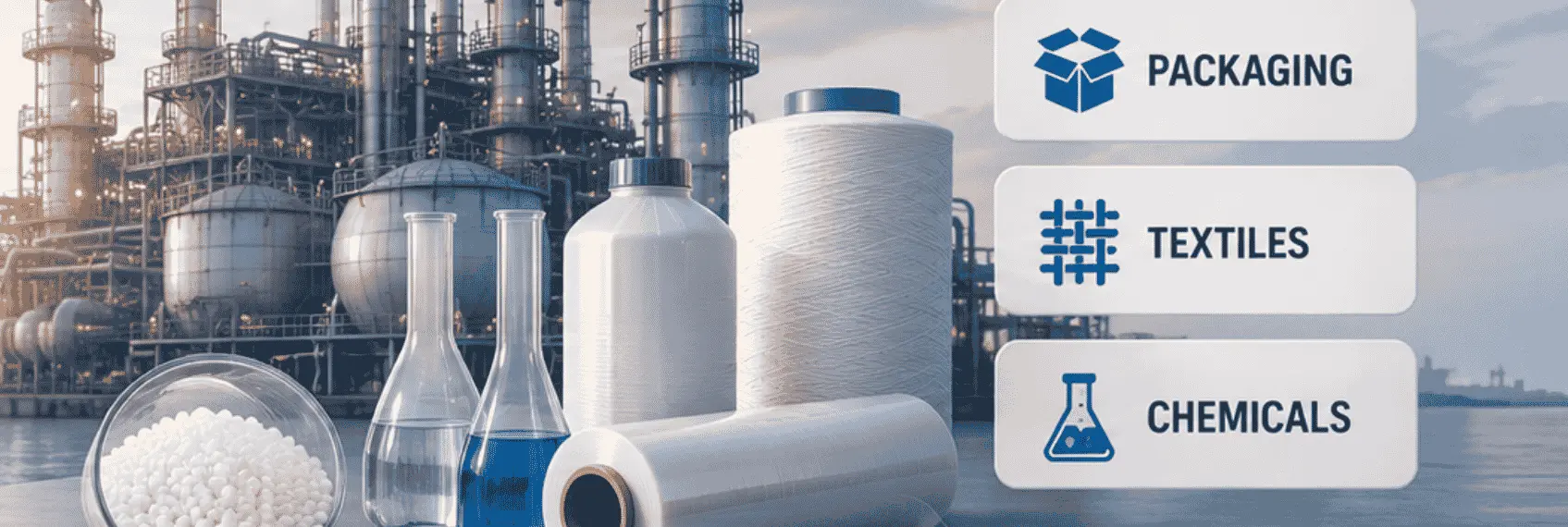
The government has extended the customs duty exemption on key petrochemical imports until July 15, providing relief to industries reliant on imported raw materials. The move is expected to lower input costs for sectors such as plastics, packaging, textiles, and chemicals. Stocks like Deepak Nitrite, Finolex Industries, Chemplast Sanmar, and Supreme Industries are likely to remain in focus as investors assess the impact on margins and pricing.
The Government of India has also extended the full customs duty waiver on imports of nearly 40 crucial petrochemical items by 15 days more, thus delaying the date for June 30, 2026, to July 15, 2026. The concession was initially announced on April 2 to act as a temporary provision in order to safeguard domestic businesses from supply chain disruptions due to war in West Asia and international transport.
Some of the major petrochemical feedstocks covered under the exemption include anhydrous ammonia, methanol, toluene, styrene, phenol, acetic acid, monoethylene glycol, purified terephthalic acid, isopropyl alcohol, vinyl chloride monomer, dichloromethane, polybutadiene, styrene-butadiene rubber, and unsaturated polyester resins. In addition, some of the main polymers covered under the concession include polyethylene, polypropylene, polystyrene, PVC, PET chips, polycarbonate, epoxy resins, polyurethane, ABS, SAN, polyols, PEEK, polyvinyl alcohol, polyvinyl acetate, and polyoxymethylene.
Relief for Downstream Industries
These products find extensive use in manufacturing sectors such as plastics, packaging, textiles, pharmaceuticals, chemicals, automotive components and others. Through an increase in the zero duty window, the government wants to ensure uninterrupted availability of raw materials, reduction of input cost pressure and prevent any disruption in supply to downstream manufacturing industries. This comes amidst rising tensions in West Asia along with worries of cargo transport through the Strait of Hormuz, which has increased the price of crude oil, fertilisers and many imported inputs.
The decision, however, has some downsides too for certain firms. Downstream producers of such products would find it economically beneficial, but domestic producers of the same chemicals or polymers might have to face pricing pressure because of cheaper imports due to the period of exemption from customs duties. In addition to this, the government has to consider revenues too as it has set its customs revenue target of ₹2.71 trillion for the present fiscal year as against ₹2.64 trillion achieved in FY26.
Stocks in Focus
One company that should be kept under observation is Deepak Nitrite since the company is a major player in phenol, acetone, and chemical intermediates through its phenolic business. Deepak Group is regarded as being among the leading producers of phenol and acetone in India, thus making the stock worth considering as far as any policy that may affect phenol, acetone chain and solvent intermediaries is concerned. For Deepak Nitrite, the effect could be positive and negative in terms of cheaper imported inputs which would be favorable to downstream business as well as duty-free import of competing products that could hurt realizations in domestic market.
Another stock that should be kept under consideration is Finolex Industries because of the exposure of the company to PVC Resin, PVC Pipes and Fittings. The reason is that both vinyl chloride monomer and PVC are among the items that are exempted. Thus, the extension may have effect on cost of raw material, spreads and inventories in pipes category.
Chemplast Sanmar is part of the PVC value chain, mainly specializing in specialty paste PVC and suspension PVC. It is one of the major specialty PVC resin producers in India, while vinyl chloride monomer is an important feedstock in the PVC value chain. While duty relief can help ease raw material access, the effect of low cost imports on pricing power in domestic PVC will be monitored by investors.
Supreme Industries can be considered as a downstream beneficiary since it is into the business of plastic pipes, packaging, and plastics in general. It uses polymers like PVC, polyethylene, and polypropylene, hence raw material cost changes have an impact on its margins.
Market View
Overall, the July 15 extension is a short-term cushion for sectors dependent on petrochemical feedstocks. For the market, the key monitorables will be import volumes, polymer and chemical spreads, inventory gains or losses, and whether the government extends the relief further if West Asia-related supply risks persist.