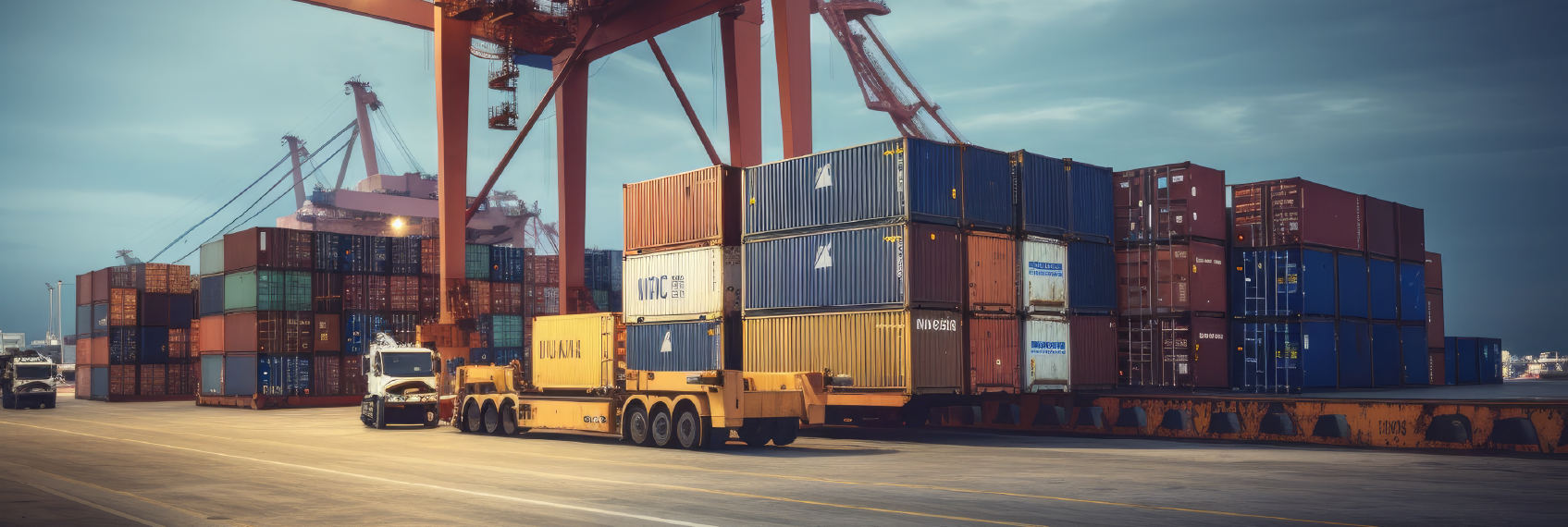
Every earnings season, analysts obsess over demand signals, raw material costs, and pricing power. But one cost line keeps slipping through the cracks: logistics. And right now, it's moving in a direction that should worry every CFO and investor tracking Indian businesses with physical supply chains.
Logistics inflation is not a new concept. But the current wave looks different from what companies navigated in 2021 or 2022. Back then, the driver was largely pandemic-induced. Today's pressure is structural, and that makes it stickier.
What's driving logistics costs higher
Fuel remains the biggest lever. Despite some softening in global crude prices, domestic diesel costs in India have not corrected in proportion. Add to that the rising cost of driver labour, third-party logistics vendor consolidation, and infrastructure gaps on certain freight corridors, and you have a situation where moving goods is simply more expensive than it was 18 months ago.
Then there's the international freight angle. For companies with import-heavy bills of materials or export-oriented revenue, ocean freight rates have shown renewed volatility. The Red Sea disruptions earlier this year pushed shipping costs on key trade routes well above historical averages. Some normalisation has occurred, but the consensus among freight forwarders is that the bottom seen in 2023 is unlikely to return anytime soon.
Why doesn't it always show up in guidance?
Here's where it gets interesting. Many management teams bury logistics under broader cost-of-goods-sold or "other expenses" lines. When investors call, focus on EBITDA margins; the granularity of logistics as a standalone cost driver often gets glossed over. Companies talk about "supply chain efficiencies" and "freight optimisation" without always disclosing what they're spending or how it's trending.
This opacity creates an asymmetry. Investors assume the operating model is stable, but a company absorbing a 15 to 20 per cent rise in logistics costs without a comparable revenue offset is quietly seeing margin erosion that quarterly calls rarely flag explicitly.
Sectors most exposed
Not every business carries the same logistics load. The sectors where this risk is most pronounced include:
- FMCG companies with wide distribution networks and frequent replenishment cycles
- E-commerce and quick commerce players running high-frequency, last-mile heavy operations
- Auto ancillary firms managing multi-tier supplier networks
- Agrochemical and fertiliser companies are dealing with seasonal demand spikes and rural distribution costs
- Pharma companies managing cold-chain and regulatory-compliant transport
For businesses in these categories, logistics as a percentage of revenue can range anywhere from 4 to 12 per cent. A 15 per cent spike in those costs, even partially passed through, hits net margins in ways that are not trivial.
What investors should watch
Start by reading earnings transcripts more carefully. Look for management commentary on freight, warehousing, last-mile costs, and third-party logistics contracts. Ask whether companies have hedged fuel costs or locked in logistics vendor rates for the current fiscal year.
Watch for working capital signals too. Companies under logistics cost pressure sometimes respond by reducing order frequency or building larger inventory buffers, both of which show up on the balance sheet before they show up in the P&L.
Finally, pay attention to gross margin trends at the product category level where available. If gross margins are holding but EBITDA margins are compressing, logistics is often the culprit hiding in the middle.
The margin buffer question
Indian companies have generally managed cost pressures well over the past three years by leaning on pricing, premiumisation, and operational efficiency. But those levers are not infinite. If logistics inflation stays elevated through the second half of FY26, businesses with thin operating margins and high distribution intensity will find it harder to shield earnings.
The risk is not catastrophic for any single company. But across a portfolio, and across an earnings season, it adds up to a consistent drag that the market may not have fully discounted.
Conclusion
Logistics costs are unglamorous. They don't generate headlines or analyst upgrades. But that's precisely why they're worth watching. The companies that manage this well will defend margins that others lose. The ones that don't will show it quietly, one quarter at a time.