Summary:
Petrol and diesel prices across India were increased by up to ₹3 per litre, marking the first major hike since 2022. The revision comes amid rising global crude oil prices and supply disruptions linked to the West Asia crisis. Stocks of oil retailers like Indian Oil Corporation, Bharat Petroleum, and Hindustan Petroleum Corporation are expected to remain in focus.
Petrol and diesel prices across India were hiked by up to ₹3 per litre on Friday, marking the first major fuel price revision in nearly four years as rising global crude oil prices and disruptions in the Strait of Hormuz intensified pressure on state-run oil marketing companies.
The increase comes after public sector fuel retailers, Indian Oil Corporation, Bharat Petroleum Corporation Limited and Hindustan Petroleum Corporation Limited, kept retail fuel prices largely unchanged since April 2022 despite sharp volatility in global energy markets.
New Petrol and Diesel Prices in Major Cities
Following the revision, petrol in Delhi now costs ₹97.77 per litre compared to ₹94.77 earlier, while diesel prices rose to ₹90.67 per litre from ₹87.67.
Fuel prices increased differently across cities due to variations in state-level taxes and VAT structures.
In Kolkata, petrol prices climbed by ₹3.29 to ₹108.74 per litre, while diesel rose by ₹3.11 to ₹95.13 per litre.
Mumbai witnessed a ₹3.14 increase in petrol prices, taking rates to ₹106.68 per litre. Diesel prices in the city increased by ₹3.11 to ₹93.14 per litre.
In Chennai, petrol prices increased by ₹2.83 to ₹103.67 per litre, while diesel prices rose by ₹2.86 to ₹95.25 per litre.
The latest increase has pushed petrol prices above ₹100 per litre in several cities once again.
CNG Prices Also Increased
Apart from petrol and diesel, CNG prices in Delhi-NCR were increased by ₹2 per kg to ₹79.09 per kg. Earlier, Mahanagar Gas Limited had also raised CNG prices by ₹2 per kg in the Mumbai region.
Why Fuel Prices Were Increased
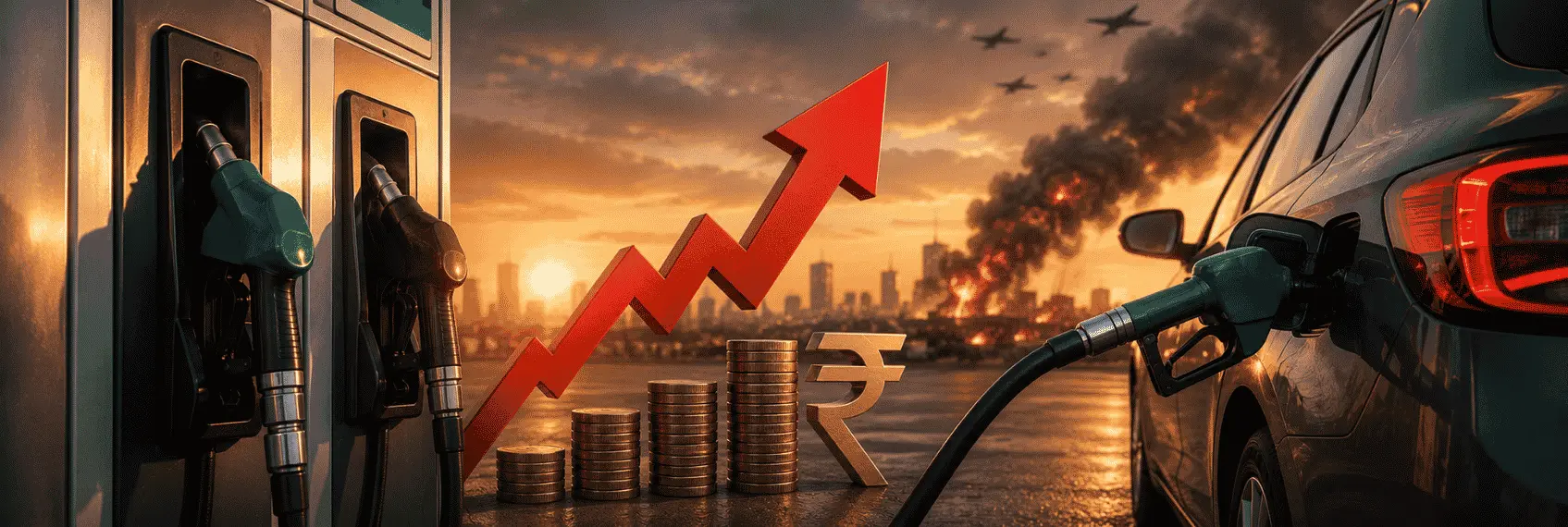
The sharp increase in global crude oil prices following the escalating West Asia conflict has been the primary reason behind the fuel price hike.
International crude oil prices surged above $120 per barrel after disruptions in the Strait of Hormuz linked to the U.S.-Israel conflict with Iran. Though prices later cooled to around $100–105 per barrel, the pressure on Indian fuel retailers remained severe.
India’s crude oil basket averaged around $69 per barrel in February before the conflict intensified. Since then, average prices have jumped sharply to nearly $113–114 per barrel.
India imports nearly 90% of its crude oil requirements, making the economy highly vulnerable to global oil price shocks and supply chain disruptions.
Fuel Prices Were Frozen for Four Years
Retail fuel prices had remained largely unchanged since April 2022 after state-run oil marketing companies suspended the daily fuel price revision mechanism following Russia’s invasion of Ukraine.
The companies absorbed massive losses during the first half of FY23 as global oil prices surged. While easing crude prices later helped them recover some losses, the renewed geopolitical crisis in West Asia again widened the gap between international crude prices and domestic retail fuel prices.
There was only one revision during this period when the government reduced petrol and diesel prices by ₹2 per litre in March 2024 ahead of the Lok Sabha elections.
Industry estimates now suggest that petrol prices would need to rise by nearly ₹10 per litre and diesel prices by around ₹15 per litre for oil marketing companies to fully break even at current crude price levels.
Government Says No Fuel Shortage
Despite concerns around the Strait of Hormuz disruption, the Centre has repeatedly assured citizens that there is no fuel shortage in the country.
Oil Secretary Neeraj Mittal recently stated that India currently holds around 60 days of fuel stocks and nearly 45 days of LPG inventories.
Union Petroleum Minister Hardeep Singh Puri also said India has sufficient reserves to avoid immediate supply disruptions despite volatility in global energy markets.
However, Puri warned that if elevated crude oil prices persist and retail fuel prices remain unchanged, state-run fuel retailers could suffer losses of nearly ₹1 lakh crore within a single quarter.
According to him, the three state-owned oil marketing companies are currently losing nearly ₹1,000 crore every day, while cumulative under-recoveries have approached ₹1.98 lakh crore.
He added that fuel prices had remained unchanged for four years despite multiple global energy shocks and acknowledged that the government would eventually need to pass some of the higher costs on to consumers.
RBI Governor Signals Possibility of More Price Revisions
Sanjay Malhotra, Governor of the Reserve Bank of India, also indicated that fuel prices may need further revisions if the West Asia crisis continues for a prolonged period.
Speaking at a conference in Switzerland earlier this week, Malhotra noted that India remains heavily dependent on imported energy and fertilisers, and prolonged disruptions in global energy supply chains could increasingly impact the domestic economy.
PM Modi Urges Fuel Conservation
Prime Minister Narendra Modi has urged citizens to reduce fuel consumption and conserve foreign exchange reserves amid rising global energy costs and geopolitical tensions.
Impact on HPCL, BPCL and IOC
Shares of oil marketing companies including Hindustan Petroleum Corporation Limited, Bharat Petroleum Corporation Limited and Indian Oil Corporation are expected to remain in focus following the fuel price hike.
During its latest earnings call, HPCL management said the June quarter is likely to remain challenging due to elevated crude prices and geopolitical uncertainties.
The company stated it currently maintains around two months of secured crude supply and remains adequately supplied till July.
HPCL also said sourcing patterns have shifted significantly during the crisis, with dependence on Persian Gulf crude reducing and procurement of Russian crude increasing.
The company reported LPG under-recoveries of ₹1,350 crore during the quarter and said it received government compensation of ₹3,300 crore towards LPG subsidies.
HPCL management added that crude supplies remain available through multiple sourcing channels, including long-term agreements with suppliers in Africa and South America.