Summary:
ONGC and Oil India shares surged after the government reduced royalty rates on crude oil and natural gas production. The move is expected to lower operating costs for upstream companies, improve profitability, and support future investments in India’s energy sector.
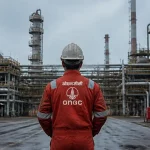
Shares of upstream oil companies saw an increase in share prices to a significant degree in the session of Tuesday, May 12, owing to the announcement by the Central government regarding a decrease in royalty rates for the production of crude oil and natural gas in many categories of oilfields, such as those located in deep water and ultra-deep water.
Oil & Natural Gas Corporation saw its share prices rise to a maximum of 5.84%, while Oil India Limited gained more than 7% on that day. On the National Stock Exchange, shares of ONGC were valued at around ₹294, rising by 4.63%, while Oil India was quoted at ₹488.80.
It should be noted that the Nifty 50 stock index fell by 0.72% in the mentioned trading session.
Government Revises Royalty Structure
The Ministry of Petroleum and Natural Gas made an announcement on May 8 regarding the revised royalty rates and formulas.
It was declared that the rationalisation of royalty rates and formulas for crude oil, natural gas, and casing head condensate was one of the major reform projects for India's energy sector.
As per the new regime, the royalty on onshore crude oil production would be fixed at 10% against 16.66% for nominated blocks and pre-NELP blocks. The royalty on offshore crude production would be 8% against 9.09%.
For natural gas production, the royalty would be 8%, which is lower than the existing 10%. This was due to the implementation of the flat deduction formula.
ONGC and Oil India are likely to reap the benefits of the new regime as state-owned upstream entities.
Hardeep Singh Puri Calls Move A “Big Boost”
Union Minister for Petroleum and Natural Gas, Hardeep Singh Puri, referred to this reform as “a big boost” for the Indian upstream petroleum and natural gas industry.
While posting on X, the minister mentioned that the step represents a new beginning in the regulatory system governing oil and natural gas in India, with the removal of old anomalies and the creation of a stable and consistent framework under Prime Minister Narendra Modi.
The minister added that following the historical changes made in the Oilfields (Regulation and Development) Act and Petroleum & Natural Gas Rules, through the 2025 amendments, the government has finally updated its royalty methodology in hydrocarbons for increased regulatory consistency.
The minister noted that the revised schedule seeks to eliminate the inconsistency in royalty regimes while promoting the growth of the upstream sector in the long run.
The decision was made following a decade-long initiative to transform India’s energy regulations, thus ensuring energy security in the long run.
What Royalty Means For Upstream Oil Companies
Royalty is the tax imposed on oil and gas exploration companies for extraction of crude oil and natural gas from natural deposits in the country. The tax rate is usually imposed as a percentage of hydrocarbon value.
If crude oil with the value of ₹100 is extracted and the tax rate is 10%, then the company will have to pay ₹10 as royalty to the government.
High royalty rates raise operating costs for upstream companies, whereas low royalty rates help reduce operating expenses and make further investments in the exploration and production of natural gas and crude oil, especially costly ones like offshore, deep water, and ultra-deep water.
Upstream oil companies are organizations involved in exploration and production of crude oil and natural gas. They explore and drill wells for extraction of hydrocarbons in underground and offshore reservoirs.
ONGC and Oil India are among the biggest upstream companies in India, providing natural gas and crude oil to refiners and retailers.
India Faces Rising Fuel Pressure Amid West Asia Tensions
This reduction in the royalty rates is coming against a background where the government is witnessing increased pressure concerning fuels due to increased geopolitical tensions in West Asia.
Oil prices in the international market have shot up due to fears that supply might be disrupted in areas such as the Strait of Hormuz, which are very crucial to the global supply chain.
India needs almost 85% of its crude requirement, and hence its economy will be very much susceptible to any changes in international oil prices. It not only increases their import bill but also puts pressure on the rupee and foreign exchange reserves.
With this kind of situation prevailing in the market, PM Narendra Modi had recently asked people to save fuel, travel by public transport, minimize international travel, and not buy gold for a year.