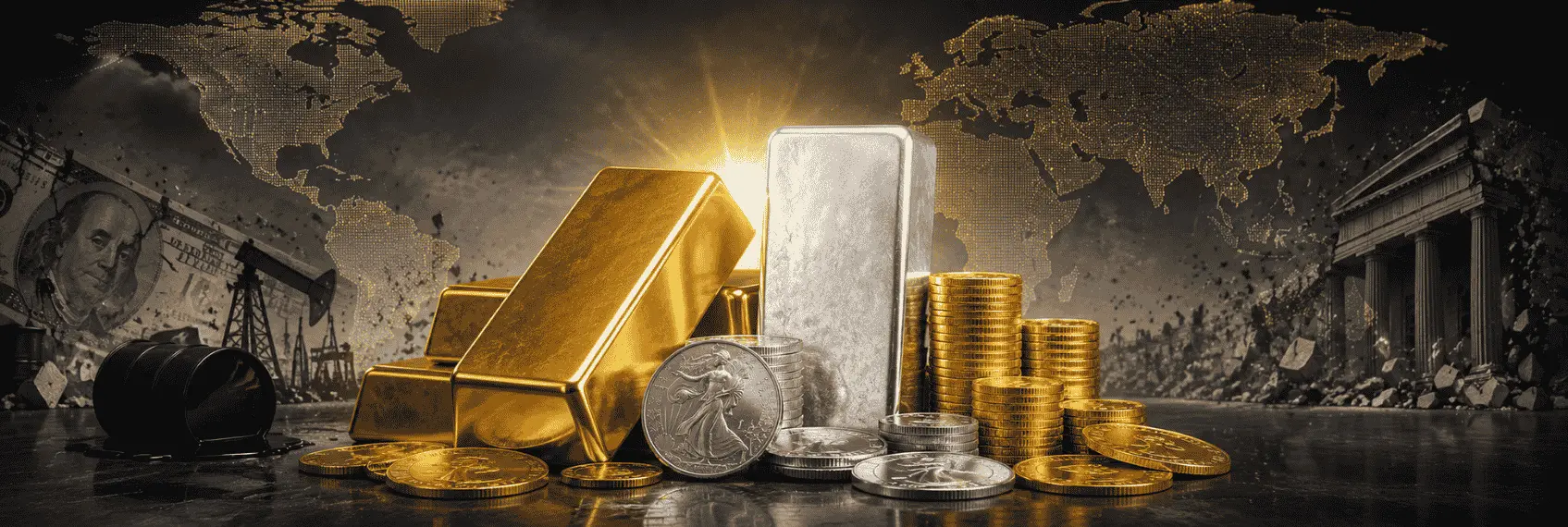
Once upon a time, U.S. currency was physical gold bullion itself. Even though paper money became more common in the twentieth century, currency remained tied to gold in some way through 1971. Once the gold window was closed “fiat” dollar was born, so was the “Petro Dollar” (Countries were using US Dollar to buy Oil). By 1975, all member-nations of Oil Producing and Exporting Countries (OPEC) adopted the Petrodollar.
A shift in the petrodollar system is widely considered structurally bullish for gold in the long run
The erosion of the petrodollar will provide a rising floor for gold prices by creating a permanent, structural shift in global demand. Gold has overtaken US Dollar reserves globally. Petrodollars once anchored U.S. markets. Now that link is breaking, boosting volatility and strengthening gold.
Gold has now overtaken Treasuries as the largest component of global reserves for the first time in decades. U.S. dollar system is not collapsing overnight. It is eroding under the weight of debt, deficits and global fragmentation as each crisis chips away at confidence.
The dollar remains central, but its share of global trust is slowly declining.
Gold sits at the intersection of that transition—under no government's control, immune tosanctions and increasingly relevant as a reserve asset in a fragmented world.
Precious metals as strategic asset- Gold is emerging as a barometer of global monetary trust, while silver is becoming a critical input for resilient energy systems, elevating both beyond traditional commodity roles.
Silver’s role in photovoltaic cells embeds it directly into these long-term energy systems infrastructure decisions. Solar remains the fastest-growing renewable technology globally. Silver’s long-term outlook is increasingly being shaped by the global reordering of energy security rather than by traditional cyclical industrial demand, raising the structural demand floor.
How this transition mechanism supports Gold in the Long Term?
- Central Bank Diversification: To hedge against a declining dollar or geopolitical risks, central banks in oil-producing and oil-consuming nations are increasingly shifting reserves from U.S. Treasuries into physical gold.
- Inflationary Pressure: If fewer nations buy U.S. debt (Treasuries) through"petrodollar recycling," the U.S. may face higher borrowing costs and potential inflation. Gold historically serves as a primary hedge against inflation and currency devaluation.
- Decreased Dollar Demand: The petrodollar system forces nations to hold large reserves of U.S. dollars to pay for oil. As oil begins to be traded in other currencies, the global need to hold dollars decreases, potentially weakening the dollar's value.
- A "Neutral" Reserve Asset: In a more multipolar financial world where trust in any single fiat currency may be lower, gold is regaining its role as the primary neutral reserve asset that is not subject to the political or fiscal policies of any one nation.
Short Term Pressure
Short Term gold prices are still influenced by the interest rates and immediate geopolitical headlines. Gold is trading within a comparatively narrow range of roughly $4,500–$4,800 an ounce. No material buying nor sellers either.
The oil shock reasserted the need for U.S. dollars during global liquidity drains. Stronger US Dollar tightened global financial conditions pressurizing emerging markets (higher oil import bills slowed discretionary gold buying). Funding stress was increased and has forced deleveraging across risk assets lacking persistent marginal buyers for Gold. Oil export volumes with revenue collapsed with the inability of any surpluses into gold.
Gold price weakness has been met with sovereign accumulation, not capitulation.
As the petrodollar system increasingly relies on physical coercion rather than voluntary participation, its long-term stability weakens, and gold stands to benefit.