India’s push to become a global steel powerhouse has just found a strategic partner in Latin America. In a significant diplomatic and economic development, the Ministry of Steel, Government of India, and Brazil’s Ministry of Mines and Energy have signed a Memorandum of Understanding (MoU) to deepen cooperation in mining and critical minerals essential for steel production.
The agreement was exchanged in the presence of Prime Minister Shri Narendra Modi and Brazilian President Luiz Inácio Lula da Silva at Hyderabad House in New Delhi, signalling that this is more than a routine bilateral arrangement. It is a long-term strategic alignment.
With both nations committing to scale bilateral trade to over $20 billion in the next five years, the focus on critical minerals places this partnership at the heart of global supply chain realignment.
A Strategic Move in a Resource-Hungry World
Steel is the backbone of infrastructure, defence, manufacturing and energy transition projects. As India accelerates investments in roads, railways, housing, renewable energy and industrial corridors, steel demand is rising steadily.
India currently has a steelmaking capacity of 218 million tonnes, and expansion plans are already underway. However, capacity growth must be matched with reliable access to raw materials. This is where Brazil becomes critical.
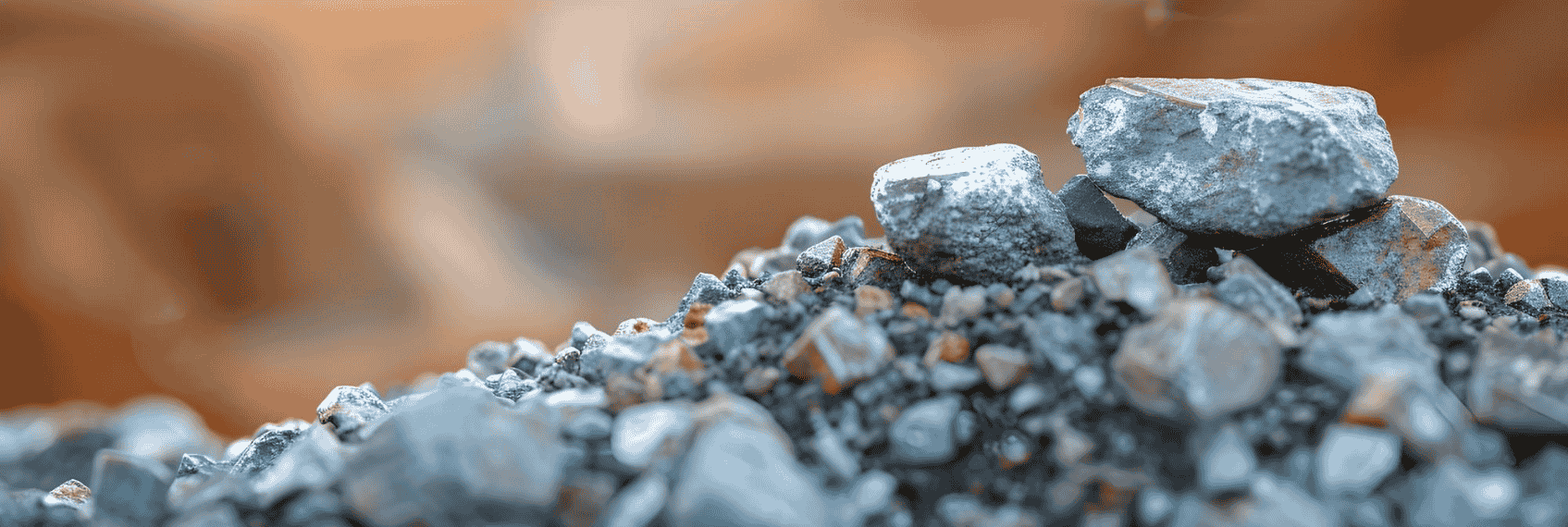
Brazil is among the world’s largest producers of iron ore and holds significant reserves of minerals vital for steelmaking, including manganese, nickel and niobium. These minerals are not just industrial inputs; they are strategic assets in a world increasingly concerned about supply security.
The MoU creates an institutional framework to ensure that access to such resources is stable, diversified and sustainable.
What the MoU Covers: Beyond Raw Material Access
This agreement is not limited to mineral trade. It spans the entire steel value chain and brings technology into sharp focus.
The cooperation includes:
- Investment in exploration, mining and related infrastructure
- Processing and recycling technologies for minerals
- Automation and advanced exploration techniques
- Use of artificial intelligence in geoscientific data analysis
- Adoption of best practices in extraction, beneficiation and environmental management
The emphasis on AI-driven exploration and automation reflects the changing nature of mining globally. Resource extraction is becoming data-intensive, technology-enabled and sustainability-focused. India’s partnership with Brazil can accelerate that transition.
Why Critical Minerals Matter More Than Ever
The phrase “critical minerals” is no longer confined to policy papers. It has become central to geopolitical strategy.
Minerals like nickel and manganese are essential not only for steel but also for batteries, electric vehicles and renewable energy systems. Niobium improves steel strength and reduces weight — crucial for high-performance infrastructure and defence applications.
Securing these minerals through trusted partnerships reduces vulnerability to global disruptions. Over the past few years, supply chain shocks have demonstrated how concentrated mineral sourcing can become a strategic risk.
India’s collaboration with Brazil, therefore, strengthens resilience at a time when nations are rethinking resource security.
Strengthening the India–Brazil Trade Corridor
Brazil is India’s largest trade partner in Latin America. Prime Minister Modi, in his joint statement, described trade between the two nations as “a reflection of trust.”
Both countries have committed to expanding bilateral trade to over $20 billion within five years. Mining and minerals will likely form a strong pillar of that target.
Beyond steel and mining, the broader set of outcomes finalised during the visit included cooperation in:
- Critical minerals
- Digital collaboration
- MSME and entrepreneurship
- Health
- Mass communication
- Sharing of traditional knowledge
This multi-sector engagement suggests that economic ties are deepening across strategic domains, not just commodities.
Technology-Led Growth for India’s Steel Ambitions
India’s steel sector is transitioning from volume expansion to value enhancement. Future competitiveness will depend on:
- Efficient raw material preparation
- Cleaner production processes
- Recycling and circular economy integration
- Data-driven exploration and mine planning
Access to advanced mineral processing technologies from Brazil can improve beneficiation efficiency and reduce wastage. AI-driven geological modelling can shorten exploration timelines and enhance reserve estimation accuracy.
Such technological integration could lower input volatility and improve margins over the long term.
Sustainability at the Core
Global steel production is under pressure to decarbonise. Sustainable mining practices and responsible extraction methods are no longer optional.
The MoU’s focus on environmental management and best practices reflects this shift. For India, which aims to grow steel output while aligning with climate commitments, access to sustainable extraction methods and improved recycling capabilities will be critical.
This partnership could help embed sustainability deeper into the supply chain.
What This Means for the Steel Sector
For investors and industry observers, the message is clear:
- India is securing raw material supply through diversified partnerships.
- Technology adoption in mining and mineral processing is accelerating.
- Steel capacity expansion is being matched with a resource strategy.
- Bilateral trade with Brazil is poised for meaningful growth.
In a capital-intensive industry where input stability determines profitability cycles, strategic mineral partnerships reduce uncertainty.
Conclusion of India-Brazil MoU
The India–Brazil MoU signals a shift from transactional trade to structural collaboration. As India prepares for sustained infrastructure growth and industrial expansion, securing critical minerals becomes foundational.
The target of $20 billion in bilateral trade is ambitious but achievable if mining, steel and technology cooperation translate into tangible investment flows.
In an era where supply chains are being restructured and resource nationalism is rising, partnerships built on trust and mutual growth stand out. India’s engagement with Brazil in critical minerals may well become one of the defining pillars of its steel strategy over the next decade.
For a sector that builds the nation’s physical backbone, this is a move aimed at securing its mineral spine.