SUMMARY
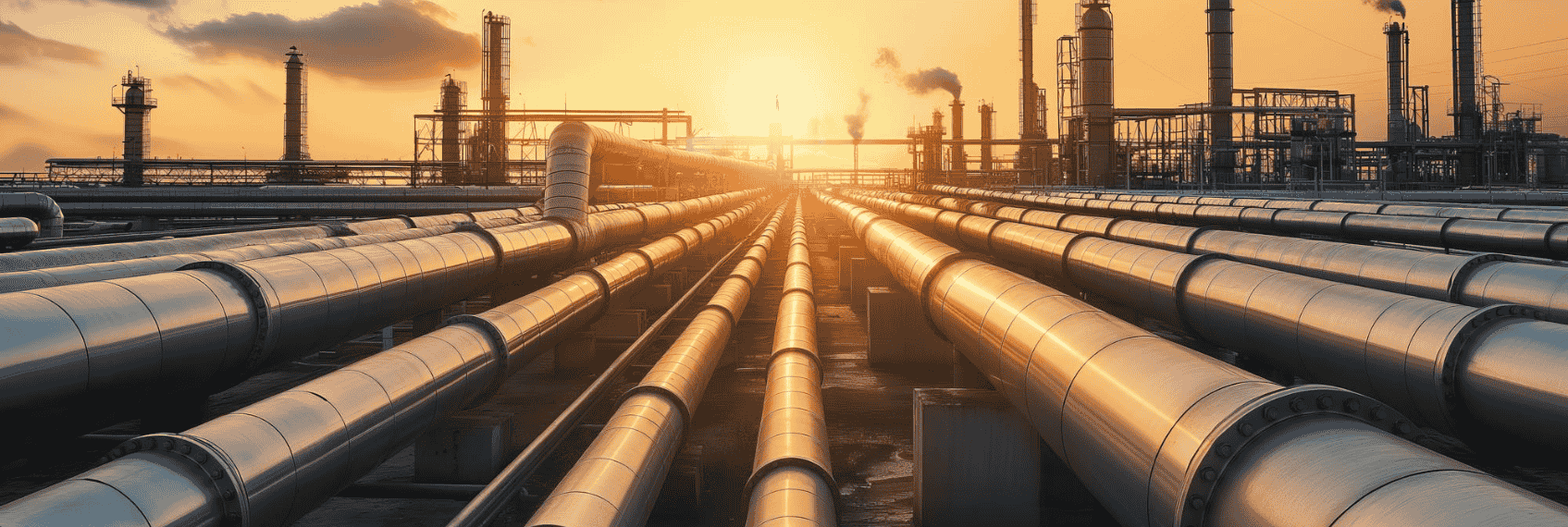
There's an interesting dynamic playing out in India's piped natural gas space right now. The government, spooked by what happened to LPG supplies during the West Asia conflict, is now in a mad rush to get more homes connected to PNG, the kind of gas that doesn't come in a cylinder from overseas, but flows through a pipe from domestic fields.
And IGL is right at the center of this push.
Before the US-Iran war and the Hormuz disruption, India was adding about 3,000 to 4,000 PNG connections per day across all city gas distribution companies. That number has already tripled to around 10,000–12,000 connections per day post-conflict. But the government, through the Petroleum and Natural Gas Regulatory Board (PNGRB)isn't satisfied. The target is 30,000 connections per day by June 2026.
IGL's Managing Director Kamal Kishore Chatiwal put it bluntly: the entire CGD industry needs to work together to hit that number. The push is part of National PNG Drive 2.0, launched by PNGRB in January 2026 and now extended to June 2026. In March 2026 alone, CGD companies activated over 3.1 lakh new connections across homes, hostels, commercial establishments, and canteens, the highest monthly number on record.
Here's the thing about PNG that's become suddenly obvious to policymakers: it uses domestic gas. India produces roughly 100 million standard cubic meters of gas per day domestically. The total household PNG consumption right now is only about 3.8 million SCMD, a mere 3-4% of domestic production. Chatiwal himself said it plainly: 'Household gas, the piped gas that is coming into the house, we can see it as the safest.'
Compare this to LPG, where India imports 60% of its requirement, most of it through the Strait of Hormuz. The crisis of early 2026, where monthly LPG imports collapsed from 2.04 million tonnes in February to 1.12 million tonnes in March, a 45% drop, was a wake-up call. PNG is effectively the government's hedge against that vulnerability.
Let's be clear: faster PNG connections is directionally positive for IGL, but the short-term picture has a few rough edges.
First, the positives. Each new PNG connection is a long-duration customer, people connected to piped gas rarely go back to LPG. Volume growth drives revenue, and as the customer base scales, operating leverage improves. IGL already has operations across 12 geographical areas spanning 32 districts in four states. FY26 capex was planned at around ₹2,000 crore, with ₹1,400 crore for core business. Faster rollout could actually improve asset utilization on existing pipeline infrastructure.
The government is also offering incentives. Some CGD companies are promoting one-rupee-per-day connection schemes to bring hesitant consumers on board. States that fast-track PNG reforms get an additional 10% LPG allocation, which is itself a carrot for states to cooperate with CGD companies.
Now the challenges. The execution ramp from 10,000 to 30,000 connections per day is steep. It requires field teams, meter availability, pipeline readiness, and consumer willingness, all simultaneously. In newly licensed geographical areas, building demand has historically been difficult. IGL's earnings growth has also slowed, with a reported negative YoY trend over the past year, and the stock's P/E at roughly 13.2x is already priced for a recovery scenario.
The EV threat to CNG, which still dominates IGL's revenue, is a long-term structural concern. But in the near term, the tailwind from government push and supply-security motivation among consumers is stronger than it has ever been.
The PNG expansion story is real, it's being accelerated by policy urgency, and it has a decade-long runway. For long-term investors, the current dip in IGL's stock, weighed down by Q4 margin concerns, could represent a decent accumulation opportunity. Watch for monthly connection data: if the industry sustainably crosses 20,000 connections per day by May, that would be a genuine positive signal.
Short-term traders, though, should be careful. Execution risks are real, and the stock tends to react sharply to quarterly earnings misses.
IGL & Gujarat Gas Q4 FY26 Earnings Preview: LNG Price Surge, Margin Pressure in Focus
3 min Read Apr 10, 2026
India Hikes Natural Gas Price for April; ONGC, Oil India Stocks in Focus
3 min Read Apr 10, 2026
No LPG Shortage in India as Hormuz Supplies Stay Intact
3 min Read Apr 10, 2026
Stocks to Watch: Wipro, HDFC Life, Tata Steel, Eicher Motors in Focus
3 min Read Apr 10, 2026
TCS Announces Q4 Results: Reports Sequential Growth, Strong Deal Wins, Margin Expansion; AI Revenue Crosses $2.3 Billion
3 min Read Apr 10, 2026
For android only