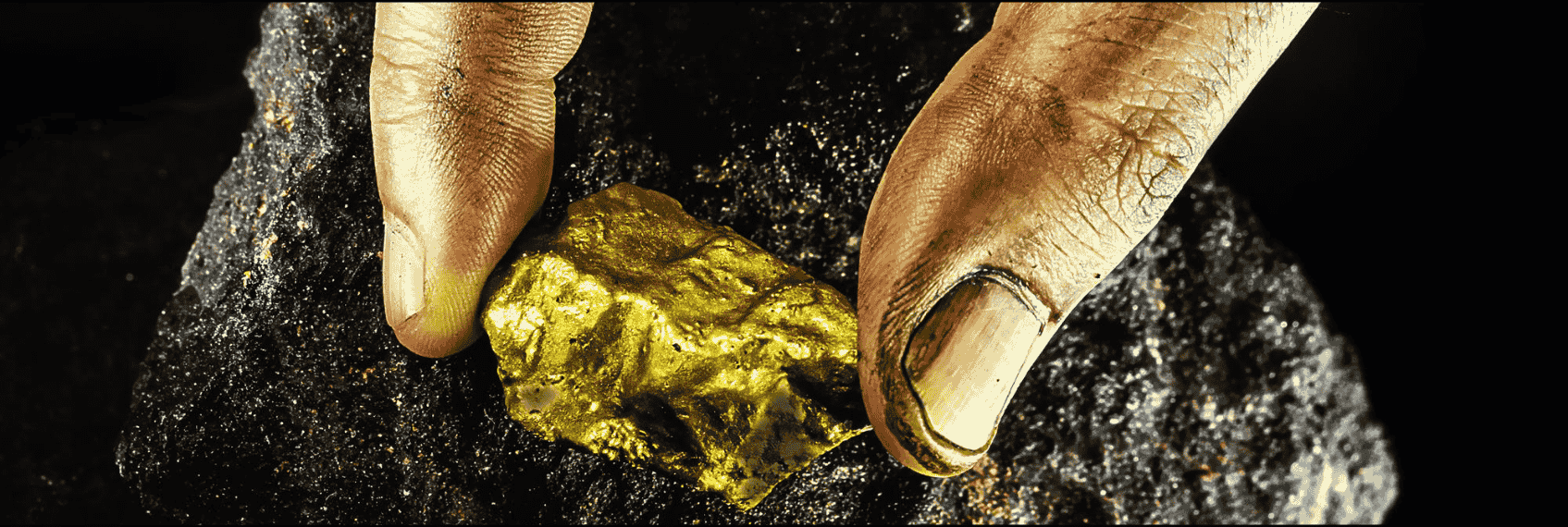
The Union Budget 2026 places rare earth metals and critical minerals firmly at the centre of India’s long-term industrial and strategic planning. As global production systems shift towards clean energy, electric mobility, advanced electronics, and defence technologies, demand for rare earth elements (REEs) has surged worldwide.
Against this backdrop of rising geopolitical risks and supply disruptions, the government’s focus is clear: India must secure, process, and utilise its own rare earth resources to reduce import dependence and strengthen domestic manufacturing.
Rare earth metals are a group of 17 chemical elements, including neodymium, praseodymium, dysprosium, and others. While they are not truly “rare” in nature, they are difficult and expensive to mine and process, which makes supply highly concentrated in a few countries.
These elements are essential to modern life and strategic industries. They are used in permanent magnets for electric vehicles and wind turbines, components in smartphones and electronics, defence applications such as radar and jet engines, and medical imaging equipment. Because of their role in green technologies and national security, rare earths are now classified as critical minerals by many governments, including India.
The urgency behind India’s rare earth push is closely linked to global supply constraints. China currently dominates the rare earth ecosystem, controlling nearly 90% of global processing capacity and about 70% of production. In April 2025, China imposed strict export controls on seven key rare earth elements. Exporters were required to obtain government licences and provide detailed disclosures on end use.
These controls led to a sharp fall in exports and triggered supply bottlenecks across global markets. Indian manufacturers, particularly in electric vehicles and electronics, faced shipment delays and uncertainty in sourcing critical inputs. This episode highlighted India’s vulnerability to external supply shocks and reinforced the need for domestic capacity creation.
One of the most significant announcements in Budget 2026 is the proposal to establish Dedicated Rare Earth Corridors. The government will support four mineral-rich states—Odisha, Kerala, Andhra Pradesh, and Tamil Nadu, to develop integrated ecosystems around rare earth metals.
These corridors are designed to cover the entire value chain, from mining and processing of rare earth elements to targeted research, innovation, and manufacturing. By clustering infrastructure, logistics, and industrial activity, the corridors aim to lower costs, improve efficiency, and attract private investment into the sector.
Permanent magnets are among the most critical applications of rare earth metals, especially neodymium–praseodymium magnets used in EV motors and wind turbines. The government had already launched a dedicated scheme for Rare Earth Permanent Magnets in November 2025, signalling early intent to build domestic capability.
The Budget also clarifies the customs duty regime. The existing customs duty exemption for permanent magnets used in synchronous generators above 500 kW for wind-operated electricity generators will lapse on April 1, 2026. This change nudges manufacturers to source or produce magnets domestically rather than rely on imports in the long run.
To make India a competitive destination for rare earth processing, Budget 2026 introduces several fiscal measures aimed at reducing input costs and encouraging exploration.
The Basic Customs Duty on Monazite, a key source of rare earth elements, is being reduced from 2.5% to Nil, effective February 2, 2026. This directly lowers costs for domestic processors. In addition, a BCD exemption is proposed for importing capital goods required specifically for the processing of critical minerals in India.
On the exploration front, the government plans to include certain critical minerals in Schedule XII of the Income-tax Act. This move allows expenditure on prospecting and exploration to qualify for deductions under Section 51, improving the economics of discovering new resources.
Infrastructure support is a crucial enabler of the rare earth strategy. The operationalisation of National Waterway-5 in Odisha will connect mineral-rich regions such as Talcher and Angul, as well as industrial hubs like Kalinga Nagar, to major ports including Paradeep and Dhamra. This is expected to reduce logistics costs and improve the movement of minerals and processed materials.
Additionally, the Budget allocates ₹500 crore for 2026–27 under the National Mineral Exploration and Development Trust (NMEDT), supporting activities of the National Council for Mineral Modernization. This funding will help modernise exploration, data collection, and mineral development processes.
The Union Budget 2026 marks a strategic turning point in India’s approach to rare earth metals and critical minerals. By combining fiscal incentives, infrastructure development, exploration support, and targeted manufacturing schemes, the government is laying the foundation for a resilient domestic rare earth ecosystem.
In a world where access to critical minerals increasingly shapes economic competitiveness and national security, India’s focus on rare earth self-reliance is not just an industrial policy choice, it is a strategic necessity.

Japan Claims World-First Deep-Sea Rare Earth Discovery
3 min Read Feb 5, 2026
Transforming India into a Global Biopharma Hub: Budget 2026’s Strategic Vision
3 min Read Feb 3, 2026
Budget 2026: REC and PFC at the Centre of India’s Energy Financing Overhaul
2 min Read Feb 2, 2026
Budget 2026: STT Hike on F&O - What It Means for You
4 min Read Feb 2, 2026
Union Budget 2026-27 Latest Analysis: Sector Impact, Stock Winners & Losers
6 min Read Feb 2, 2026
Budget-to-Budget Winners: Top Performing Defence Stocks from 2025 to 2026
3 min Read Jan 23, 2026
How Top Rare Earth Metal Stocks Performed in FY26: Hindustan Copper, GMDC, MOIL, OMDC
4 min Read Jan 23, 2026
Hot Sectors to Watch Out: Top 3 Performing Sectors From Budget 2025 to Budget 2026
3 min Read Jan 23, 2026
Important Budget 2026 Terminologies You Must Know Before February 1st, 2026
6 min Read Jan 20, 2026
Rare Earth Magnet Stocks in India 2025: GMDC, Hindustan Zinc & NLC Expansion Plans
4 min Read Aug 29, 2025
State Bank of India Subsidiary SBI Funds Management Limited Files DRHP for IPO; SBI to Divest 6.3% Stake via OFS
3 min Read Mar 20, 2026
Rupee Hits Record Low Near 93 vs US Dollar as Oil Prices Surge and Foreign Outflows Rise
3 min Read Mar 20, 2026
Top Gainers & Losers: Nifty 500 Rebounds 1.24% After Sell-Off
3 min Read Mar 20, 2026
Why Gold and Silver Prices Are Falling Despite US-Iran War and Market Volatility
3 min Read Mar 20, 2026
Nifty & Sensex Crash Over 3%; BSE Market Cap Erodes ₹12.5 Lakh Crore Amid Rising Crude Oil
3 min Read Mar 19, 2026
For android only