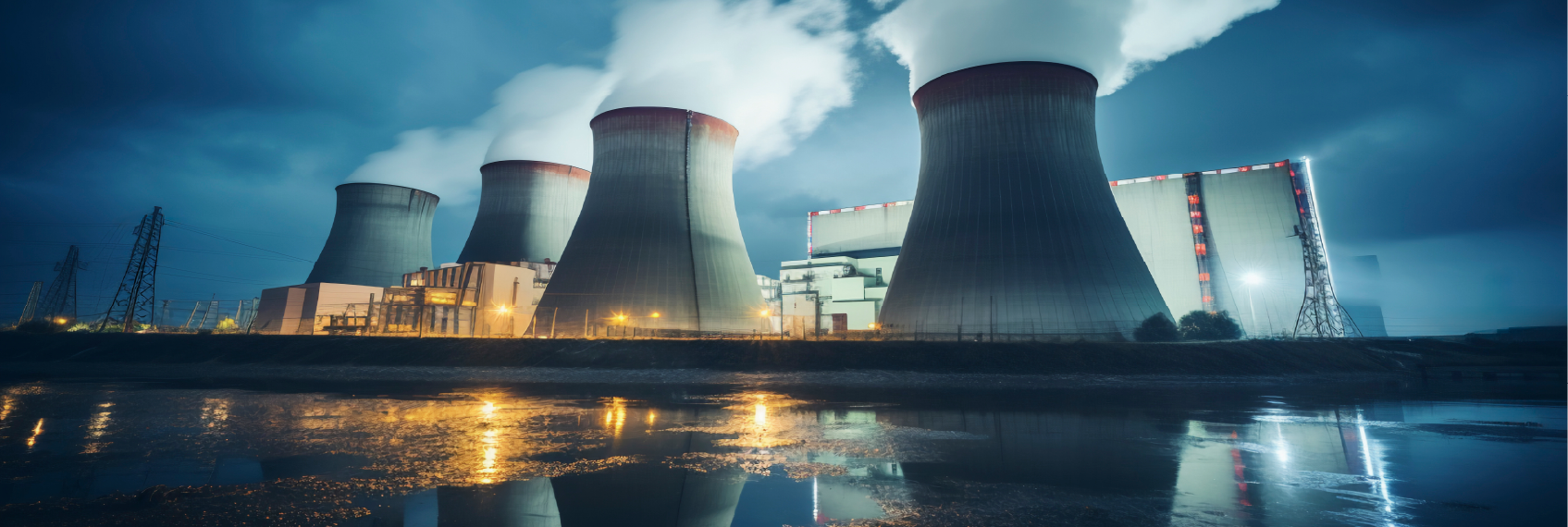
India’s nuclear energy sector has entered a critical phase of transformation. On December 20, 2025, the President of India granted assent to the Sustainable Harnessing and Advancement of Nuclear Energy for Transforming India (SHANTI) Bill, 2025. This legislation constitutes the most important reform of India’s nuclear governance framework since independence.
India's nuclear expansion aligns with its overall intention to achieve at least 500 GW of non-fossil fuel-based energy by 2030 and achieve net zero carbon emissions by 2070. A budget of ₹20,000 crores has been allocated in the Union Budget of 2025-26 for the government to support the nuclear energy mission with a preliminary focus on building, researching, and deploying small modular reactors. At least five advanced domestic reactors are expected to be online by the end of 2033.
The SHANTI Bill, 2025 consolidates India’s nuclear laws into an exclusive statute governing production, regulation, safety, and liability related to nuclear energy and ionising radiation. The legislation reflects acknowledgement that earlier laws, particularly the Atomic Energy Act of 1962, were misaligned with the latest energy security needs and nuclear market practices. The Bill was introduced in the Lok Sabha on December 15, 2025, approved on December 17, 2025, passed by the Rajya Sabha on December 18, 2025, and was granted Presidential assent on December 20, 2025. The expedited legislative process indicates powerful political consensus on nuclear energy as a strategic national priority.
The SHANTI Bill, 2025, is a pivotal development in India's governance of nuclear energy. As a Bill seeking to dismantle regulatory monopoly and permit residual regulatory control, the SHANTI Bill ends the state's previous de facto monopoly on developing and operating nuclear reactors. For many investors, the legislation provides an important measure of clarity regarding the necessary regulatory requirements for making long-term investment commitments to develop and operate nuclear reactors. Despite remaining concerns about sufficient liability coverage, adequate regulatory capacity, and continued transparency of nuclear development, the Bill is extremely likely to enable India to soon achieve its target of having 100 gigawatts of nuclear capacity by 2047 and improve energy security and the progress toward carbon free energy generation by 2030.

SEBI Life Cycle Funds Explained: Asset Allocation & Long-Term Investment Strategy
2 min Read Feb 27, 2026
Free Lunches Cannot Go on Forever
2 min Read Feb 27, 2026
Should you bond with Bonds - Caveat Emptor
2 min Read Feb 27, 2026
Omnitech Engineering IPO 2026 Opens Feb 25: ₹583 Crore Issue, Price Band ₹216–227, Listing on NSE & BSE
2 min Read Feb 25, 2026
Why FPIs Are Pouring into PSU Banks While Selling Other Indian Sectors in 2026 – Improved Asset Quality, Mergers & Stake Dilution Drive the Rally
2 min Read Feb 23, 2026
For android only