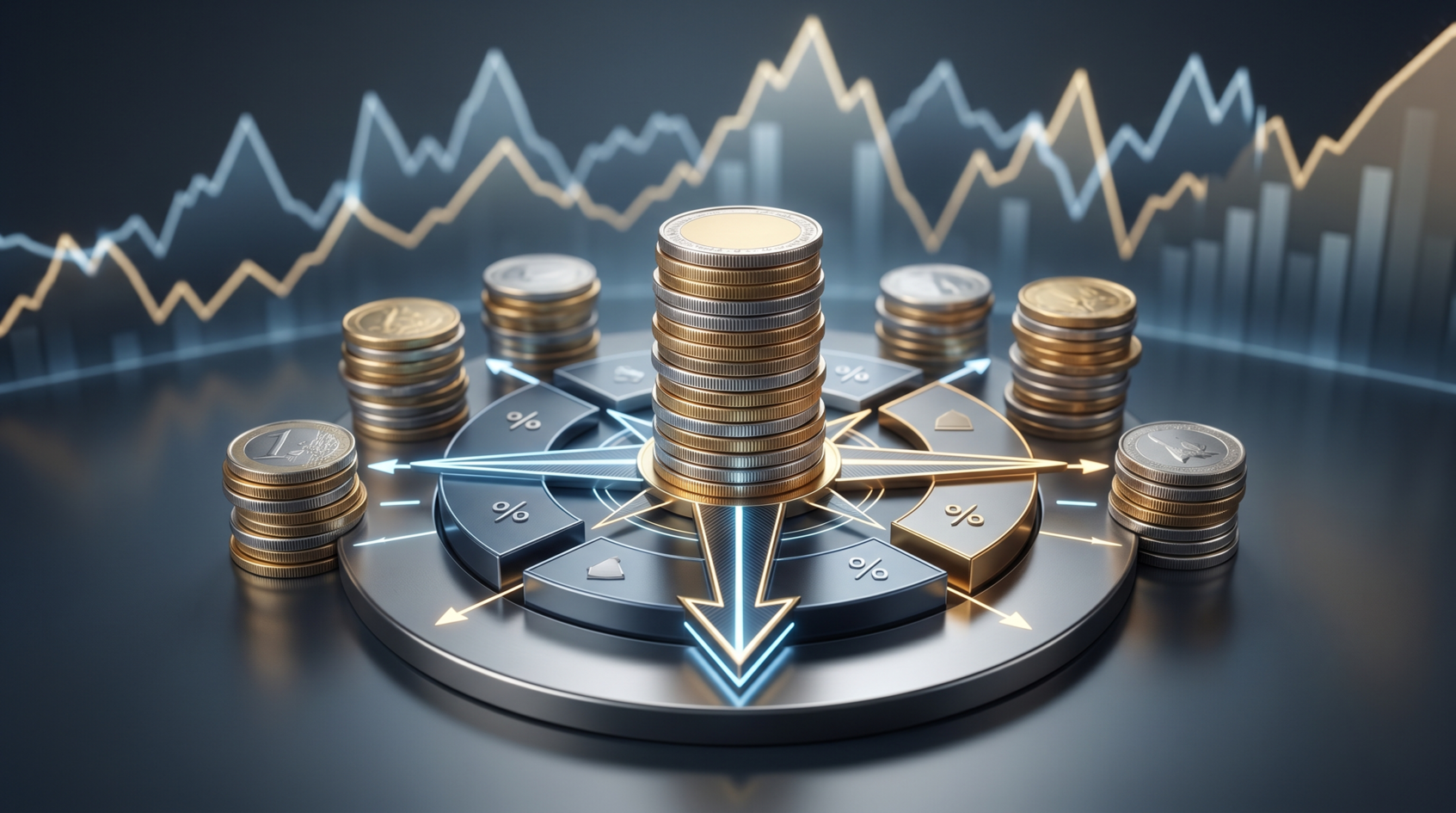
Most investors check their portfolios in one of two situations: either after a strong rally, when everything looks fine, or after a sharp fall, when panic takes over. Neither of those is rebalancing. Both are reactions. Rebalancing is something you do deliberately before markets force your hand.
What is portfolio rebalancing?
Portfolio rebalancing is restoring your investment mix to its original allocation. Over time, different asset classes grow at different rates. Equities might surge while debt stays flat, or vice versa. Left alone, your portfolio quietly drifts from where you set it.
Rebalancing corrects that drift by trimming assets that have grown beyond their target weight and redirecting toward the ones that have fallen below. The goal is not to chase returns. It is to stay aligned with the risk level you originally chose.
Why portfolio rebalancing matters in volatile markets
Volatile markets amplify drift fast. When a sector surges on sentiment or smallcaps bounce sharply in a few weeks, portfolios untouched for months can look very different from what was originally set. The risk profile shifts, often without the investor realising it.
Controls portfolio risk
When equities outperform and their share of the portfolio climbs above target, you are now carrying more equity risk than you intended, without having made that choice consciously. Rebalancing trims the overweight and brings exposure back in line. It works in reverse too: if equities fall below target, rebalancing restores that exposure at lower prices.
Maintains investment discipline
Rebalancing gives you a structured reason to act that is not driven by fear or excitement. You are not buying because something looks exciting or selling because something looks scary. You are adjusting because allocation has moved.
Supports goal-based investing
A 30-year-old saving for retirement has a very different risk capacity than someone three years from withdrawing funds. Without rebalancing, equity-heavy portfolios can quietly become far more aggressive than the investor's life stage actually calls for.
Helps manage market uncertainty
A portfolio with clear allocations across equities, debt, gold, and international assets behaves more predictably than one that has drifted. You are not trying to predict the next market move. You are making sure you are not entirely reliant on one outcome being right.
Common causes of portfolio drift
Drift doesn't require any mistakes. It happens passively.
The most common cause is unequal performance across asset classes. When equities rally and debt stays flat, the equity portion grows in weight simply because its value increased faster. Irregular SIP contributions that don't match the original allocation split add to this. So does adding lump sums without adjusting proportions. Sometimes the fund itself shifts, like a flexicap fund that gradually turns more aggressive, for instance.
Tax considerations and exit loads can also delay selling, letting drift continue longer than it should.
Popular portfolio rebalancing strategies
Calendar-based rebalancing
Review the portfolio at fixed intervals, like once a year, or at the end of the financial year, and restore allocations to target if they have moved. Simple, predictable, low transaction costs. The downside is that significant drift can accumulate between reviews when markets move fast.
Threshold-based rebalancing
Rebalance whenever any asset class drifts more than a set percentage from its target, regardless of timing. More responsive to market movements, but requires closer monitoring and tends to result in more frequent transactions during volatile stretches.
Hybrid rebalancing
Review at fixed intervals, but only act if drift has crossed a defined threshold. If the portfolio is within range at the scheduled review, leave it alone. For most individual investors, this is the practical middle ground because it avoids unnecessary churn while catching significant drift before it gets out of hand.
Cash flow rebalancing
Direct fresh contributions from SIPs, bonuses, or any new money toward whichever asset class is currently underweight, rather than selling anything. No capital gains triggered. Works well during the accumulation phase, though it is slower to correct large drifts.
Sample rebalancing framework for 2026 investors
This is not a prescription. Investor profiles vary too much for that. But here is a general structure to work from.
| Investor profile | Equity range | Debt allocation | Other |
| Under 35, long horizon | 65–75% | 20–25% | 5–10% gold/international |
| 35–50, mid-horizon | 50–65% | 25–35% | 10% gold/international |
| 50+, near retirement | 35–50% | 40–50% | 10–15% gold/liquid |
After the sharp April recovery in smallcaps, investors who have heavily invested in that segment, particularly those closer to retirement, may want to review whether it still fits their risk profile. With the rupee under pressure in 2026, analysts have also noted a case for some allocation toward gold and dollar-linked assets as a partial hedge.
The key question is not what the market did. It is whether your current allocation still matches your actual situation.
How different asset classes behave during volatile markets
Equities
Equities move the most during volatile periods, in both directions. Smallcaps and thematic funds amplify this, making them strong in rallies and harder in corrections. Large-cap and flexicap strategies tend to hold steadier, though not immune.
Debt instruments
Debt typically stabilises a portfolio when equities are swinging. With India moving into a softer interest rate environment, longer-duration debt may offer better returns, though it does carry some interest rate risk of its own.
Gold
Gold often strengthens during geopolitical stress or currency weakness. It does not produce income, but it tends to move differently from equities, which is the point of holding it.
International investments
International exposure adds currency diversification and access to markets that don't always move with India. Dollar-linked assets can partially offset rupee depreciation for domestic investors.
Mistakes investors should avoid while rebalancing
Chasing last year's top performers is the most common one. The fund that led the charts one year can be among the worst the next, especially sectoral funds tied to a specific narrative.
Over-rebalancing is also a real problem. Acting on a small drift within a single month generates taxes and exit loads that compound into meaningful drag over time. Rebalancing infrequently and deliberately is the discipline, not constant adjustment.
And letting market timing creep in defeats the purpose entirely. Waiting for equity to rise more before selling, or delaying a shift into debt until the next correction, is speculation dressed up as strategy.
Tax and cost considerations during rebalancing
Rebalancing in India creates taxable events. For equity mutual funds, long-term capital gains above a certain threshold are taxed at a lower rate than short-term gains on holdings under 12 months. Selling a fund sitting at 10 months just to rebalance can cost more than simply waiting to cross the long-term threshold.
Before executing any rebalance, check holding periods on everything you plan to sell. Factor in exit loads too, which typically apply within the first year of holding a mutual fund.
When should investors rebalance their portfolio?
If any asset class has drifted more than 8 to 10 percentage points from the original target, it is worth acting. The same applies when your life stage shifts, like a new financial milestone, a child, or retirement approaching, or when a lump sum changes the overall balance.
For most investors, reviewing once a year at the end of the financial year is enough. Acting more than twice a year on drift usually generates more cost than it is worth.
Portfolio rebalancing checklist for 2026
- Compare current allocation against your original target
- Identify asset classes that have drifted beyond 8–10% of target
- Check holding periods before selling anything
- Redirect fresh SIP contributions to underweight assets first
- Account for exit loads on funds held under one year
- Leave allocations within normal drift range alone
- Set a reminder for next year's review
Conclusion
Volatile markets are where a consistent rebalancing habit earns its keep. Not because rebalancing generates returns on its own, because it does not, but because it keeps you from accidentally taking more risk than you intended or selling at exactly the wrong time.
The mechanics are straightforward. Tax details need attention. The hardest part is ignoring what the market did last month and focusing on what your portfolio actually needs.