
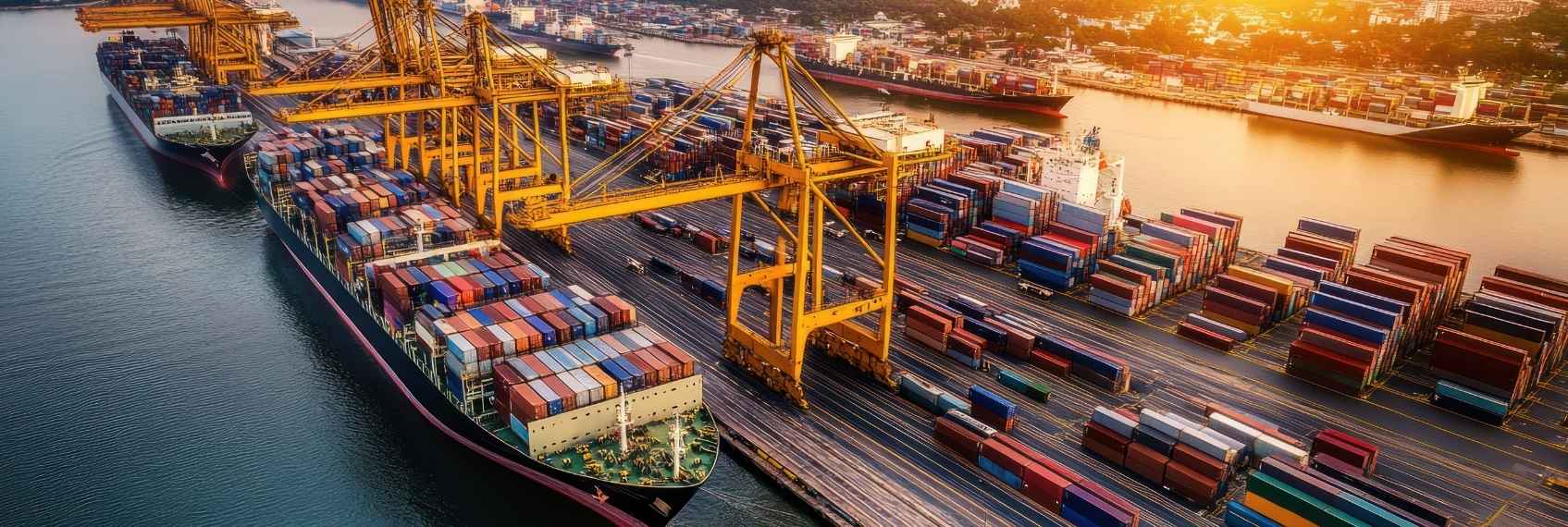
India–U.S. Bilateral Trade Agreement (BTA) is positioned as a step-change in market access for Indian exporters, aimed at securing sustained preferential access in the U.S. market (over $30 trillion) along with tariff rationalisation, zero-duty access across large product categories, and deeper digital and technology cooperation, while retaining safeguards for farmers, MSMEs and domestic industry.
India’s exports to the United States stands at $86.35 billion in 2024, and the agreement is presented as improving competitive access across sectors such as textiles, leather, gems and jewellery, agriculture, machinery, home décor, pharmaceuticals and technology-driven industries.
The Tariff Reset: India-U.S. BTA
A central feature of India–U.S. Bilateral Trade Agreement is relief on “Reciprocal Tariffs” that were earlier as high as 50% on several products. Of India’s exports, $40.96 billion were subject to reciprocal tariffs; under the agreement, tariffs on $30.94 billion are reduced from 50% to 18%, and tariffs on another $10.03 billion are reduced from 50% to zero.
There is also an “exemption category” for “no additional duty” amounting to $1.04 billion, including agricultural products valued at $1.035 billion that are assured zero reciprocal tariff.
Separately, “Section 232 (end-use basis)” commitments provide additional structural duty relief for $28.30 billion, where additional duties that earlier could go up to 50% are reduced to zero.
The Competitive Gap: Why India’s Pricing Edge Improves
While duties on Indian products have been lowered, several competing suppliers continue to face elevated tariffs in the U.S. market with China (35%), Vietnam (20%), Bangladesh (20%), and others around 19%. This tariff differential is described as improving India’s price competitiveness and expanding export opportunities across labour-intensive industries and manufacturing segments.
Sector to Watch Out After Trade Deal
1) Textiles And Apparel: The First Order-Beneficiary Basket
Tariffs on textile exports are reduced from 50% to 18%, and silk receives 0% duty access, with the U.S. market size referenced at $113 billion. It stands to benefit readymade garments, carpets, man-made textiles, cotton textiles, bedspreads, curtains, yarn, baby clothing, bed linen, blankets, gloves and more.
One of the biggest beneficiaries of the 18% tariff is providing a competitive edge over regional peers (like Vietnam, Bangladesh).
2) Leather And Footwear: A Direct Boost to Value-Added Exports
Tariffs on leather and footwear exports are reduced from 50% to 18%, with the U.S. market at $42 billion; it stands to benefit finished leather, leather footwear and components.
3) Gems And Jewellery: Broader Relief Plus Zero Duty on Select Categories
Gems and jewellery exports see tariffs reduced from 50% to 18% (U.S. market at $61 billion). Additionally, 0% duty market access is secured for major categories including diamonds, platinum and coins (covering a U.S. market of $29 billion).
4) Home Décor: A Two-Layer Benefit—Tariff Cuts and Zero Duty Access
Home décor exports see tariffs reduced from 50% to 18% (U.S. market referenced at $52 billion), with products such as wood and furniture items, pillows, cushions, quilts, comforters, non-electrical lamps and related furnishings. A separate 0% duty access is mentioned for products covering $13 billion, including seats, chandeliers, illuminated signs and parts of lamps.
5) Toys: A Smaller Segment with A Clear Scaling Narrative
Toy exports from India are reduced from 50% to 18%, with the U.S. market referenced at $18 billion; this is a big opportunity for domestic manufacturers (particularly MSMEs) to scale production and integrate into global supply chains.
6) Machinery And Parts: The Large Market Opportunity Investors Track
Tariffs on machinery exports are reduced from 50% to 18%, opening opportunities in a U.S. machinery market referenced at $477 billion. India’s current exports in this segment are stated at $2.35 billion, and the reduced tariff structure is positioned as strengthening competitiveness across machinery and components.
Agriculture: Export Upside with A Clear Protective Ring-Fence
India has a trade surplus of $1.3 billion in agricultural trade with the U.S. in 2024 (exports $3.4 billion; imports $2.1 billion).
On exports, the U.S. will apply zero additional duty on Indian exports worth $1.36 billion, with beneficiary products including spices; tea and coffee; copra and coconut oil; nuts such as cashew; fruits and vegetables; certain cereals; bakery products; cocoa preparations; sesame and poppy seeds; and processed products such as fruit pulp, juices and jams.
At the same time, the agreement is described as sensitivity-led: agricultural market access uses immediate duty elimination, phased elimination (up to 10 years), tariff reduction, margin of preference and TRQs.
Highly sensitive sectors remain protected under an exemption category, including meat, poultry and dairy, cereals and millets, and other listed items.
Beyond Tariffs: The Second-Order Levers Markets Often Underestimate
Zero-Duty Access for Large Industrial Export Buckets
The agreement secures zero additional duty access for industrial exports valued at $38 billion. Under Section 232 provisions, zero additional duty applies to aircraft parts, machinery and machinery parts, generic drugs and pharmaceutical ingredients, and elementary auto parts, among other categories listed.
Pharmaceuticals (Generics): 0% tariffs
Quality, Standards and Reduced Re-testing Friction
Further, the agreement highlights on quality standards, accreditation systems and ease of compliance in priority sectors including high-technology products, medical devices and ICT goods, and says recognition of conformity assessments would reduce double-testing requirements—saving time and costs for exporters.
ICT, Semiconductors and Data centres
It also flags facilitating access to advanced semiconductor chips, server components and critical technology inputs required for expansion of Indian data centres and the Digital India initiative.
Digital Trade Partnership
Digital trade is framed as fast-growing; the document cites WTO data showing globally digitally delivered services exports rising from $4.35 trillion (2023) to $4.78 trillion (2024), and states India’s digitally delivered services exports at $0.28 trillion in 2024. It argues a structured framework can reduce regulatory uncertainty and compliance friction, supporting smoother cross-border service delivery.
Intermediate Inputs: Cost And Capability Upgrades
The agreement is described as facilitating access to critical intermediate inputs, listing items such as rough diamonds and precious stones; specialty chemicals for pharma and agro-processing; select active pharmaceutical ingredients; semiconductor wafers and fabrication inputs; electronics components (IC substrates, sensors, microcontrollers); carbon fibres; industrial enzymes; precision tools; aerospace components; battery materials (including lithium compounds and cathode materials); and fertiliser inputs such as phosphate rock and potash where cost-effective.
It also lists high-technology categories—advanced medical devices (diagnostic imaging equipment and surgical robotics), AI chips, semiconductor manufacturing equipment, cloud infrastructure hardware, telecom/ICT network equipment, cybersecurity hardware, clean energy technologies (smart grids and meters), quantum computing components, satellite/space technology components and data centre infrastructure equipment.
For markets, the practical checklist is straightforward:
Conclusion
The India-U.S. Interim Trade Framework is a cornerstone towards a full & comprehensive BTA, ensuring mutually beneficial trade and resolving various geopolitical and economic issues. The Indian economy may benefit in the longer run after the gradual implementation of various FTAs/BTAs with various countries, including the U.S. and the EU. Indian consumers may have access to cheaper & better-quality consumer goods – this will ensure a lower cost of living and better affordability.

Aye Finance IPO: What Investors Should Know Before Subscribing
5 min Read Feb 10, 2026
Fractal Analytics IPO 2026: India’s First AI-Focused Public Offering
5 min Read Feb 10, 2026
Top 7 High Dividend Yield and Low Debt Companies in India: Coal India, Power Grid Infra
5 min Read Feb 9, 2026
What Is Anthropic and Why Is Everyone Talking About It Now?
5 min Read Feb 5, 2026
𝐀𝐫𝐞 𝐃𝐅𝐈𝐬 𝐒𝐞𝐞𝐢𝐧𝐠 𝐒𝐨𝐦𝐞𝐭𝐡𝐢𝐧𝐠 𝐭𝐡𝐞 𝐌𝐚𝐫𝐤𝐞𝐭 𝐈𝐬𝐧’𝐭?
5 min Read Feb 4, 2026
For android only