Summary:
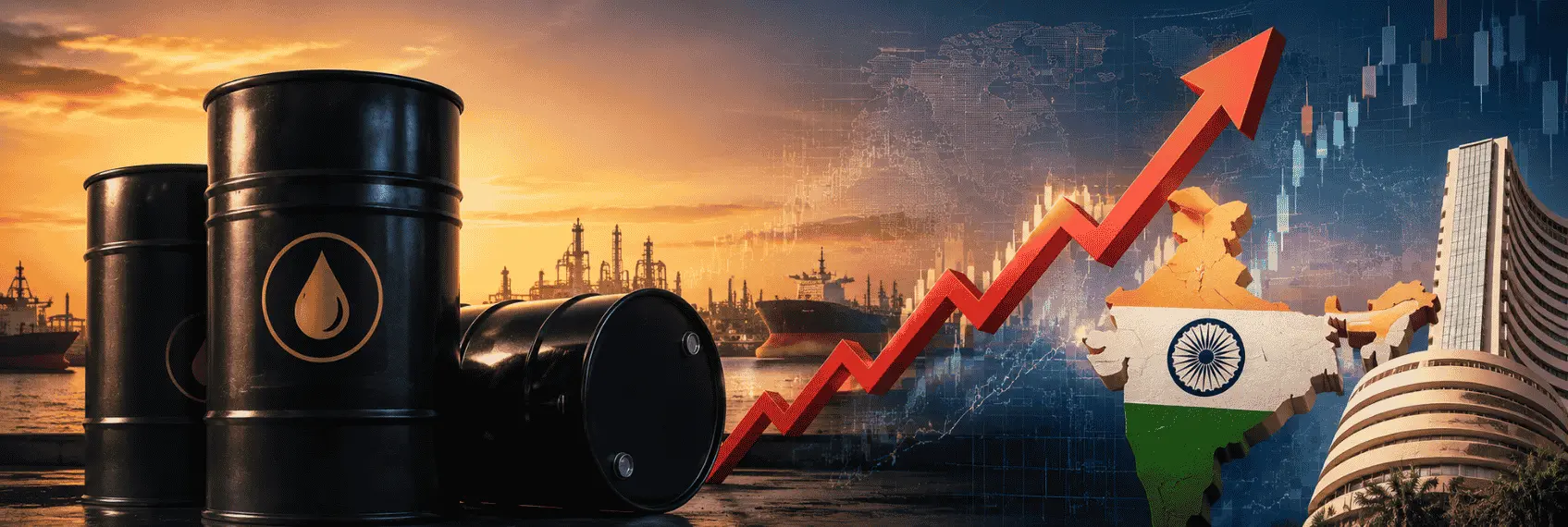
Brent crude oil climbed close to $94 per barrel as fresh US-Iran tensions raised concerns over global energy supplies. Higher crude prices can increase India's import bill, pressure the rupee and revive inflation concerns. Investors may closely watch oil-sensitive sectors such as aviation, FMCG, paints and logistics, while energy-related stocks could remain in focus.
On Monday, June 01, 2026, Brent crude futures rose over 3% to nearly $94 per barrel as geopolitical risk in the Middle East again moved to the centre of global commodity markets. The surge came after the US and Iran exchanged strikes, while fresh concerns around the Strait of Hormuz kept traders worried about energy supply disruptions. Brent futures were quoted around $94 per barrel, up 3.05%.
Why Crude Oil Prices Are Rising
The immediate trigger is the uncertainty around a possible peace arrangement between the US and Iran. Talks around extending the ceasefire and reopening the Strait of Hormuz have not delivered clear progress. The Strait of Hormuz remains one of the most important shipping routes for global oil and gas flows, and any disruption there quickly gets reflected in crude prices.
For India, this matters the most as India is dependent on imports for its crude oil requirement. It affects inflation, currency, trade deficit, corporate margins and market sentiment.
Why India Is Sensitive to Higher Crude Prices
India is a large crude oil importer and consumer. The government has said India’s daily crude consumption is around 55 lakh barrels, and crude is now being imported from around 40 countries to reduce dependence on any single route. About 70% of crude imports are currently coming through routes outside the Strait of Hormuz, compared with about 55% earlier.
This diversification gives India some supply comfort. However, it does not fully protect the economy from higher prices. When Brent crude oil price rises sharply, India’s import bill increases, the rupee can come under pressure, and inflation risks may return. Higher crude prices generally hurt India’s trade balance, add pressure on the currency, and can weigh on real GDP growth if the rise is sustained.
Impact on Indian Equity Markets
A spike in crude oil prices is usually negative for Indian equities in the near term. The first impact is seen through macro worries. Higher crude can widen the current account deficit, push up landed fuel costs, and reduce the comfort around inflation. If inflation risk rises, expectations of interest rate cuts may get pushed back.
The second impact comes through corporate earnings. Companies that use crude derivatives, fuel, freight, packaging material or imported inputs may see margin pressure if they are unable to pass on the higher cost to consumers.
The third impact is on foreign investor sentiment. A weaker rupee, higher import bill and tighter inflation outlook can make foreign investors cautious on India, especially when valuations are already rich.
Impact of Crude Oil Price Rise on Sectors
| Sector | Likely Impact | Why It Gets Affected |
| Aviation | Negative | Aviation turbine fuel is a major cost item. Higher crude can directly hurt airline margins unless fares rise. |
| Oil Marketing Companies | Negative to mixed | Companies like fuel retailers may face margin pressure if petrol and diesel prices are not revised in line with crude. Inventory gains may help temporarily, but sustained high crude is usually uncomfortable. |
| Paints, Adhesives and Chemicals | Negative | Many inputs are crude-linked. Rising crude can push up raw material costs and compress margins. |
| Tyres | Negative | Synthetic rubber, carbon black and other inputs are linked to crude. Higher costs can hurt profitability. |
| FMCG | Mildly negative | Packaging, freight and distribution costs may rise. Rural demand can also be affected if fuel-led inflation increases household expenses. |
| Cement and Logistics | Negative | Diesel and freight costs matter. Higher fuel prices can increase transportation expenses. |
| City Gas Distribution | Mixed to negative | If LNG and gas costs rise, margins may come under pressure unless price hikes are passed on. |
| Fertilisers | Negative if gas costs rise | Natural gas is a key input. Higher energy prices can increase subsidy burden or hurt company economics. |
What Should Market Participants Watch Now?
Investors should track three things closely first: whether Brent sustains above the $90 to $95 range. Second, whether the rupee weakens further against the dollar. Third, whether fuel-linked inflation starts showing up in wholesale prices, freight rates and corporate commentary.
If crude remains elevated only for a few sessions, the market may absorb the shock. But if prices stay high for several weeks, the impact may move from sentiment to earnings. In that case, sectors with high fuel and crude-linked raw material costs may underperform, while upstream energy stocks and select exporters may attract attention.
Conclusion
The rise in Brent crude toward $94 is not just an oil market event. For India, it touches inflation, currency, fiscal comfort, corporate margins and investor appetite. Supply diversification gives India some cushion, but price risk remains. Until there is clear progress on the US-Iran front and the Strait of Hormuz situation improves, Indian markets may remain cautious, with sector rotation likely to favour energy producers and defensives over crude-sensitive businesses.