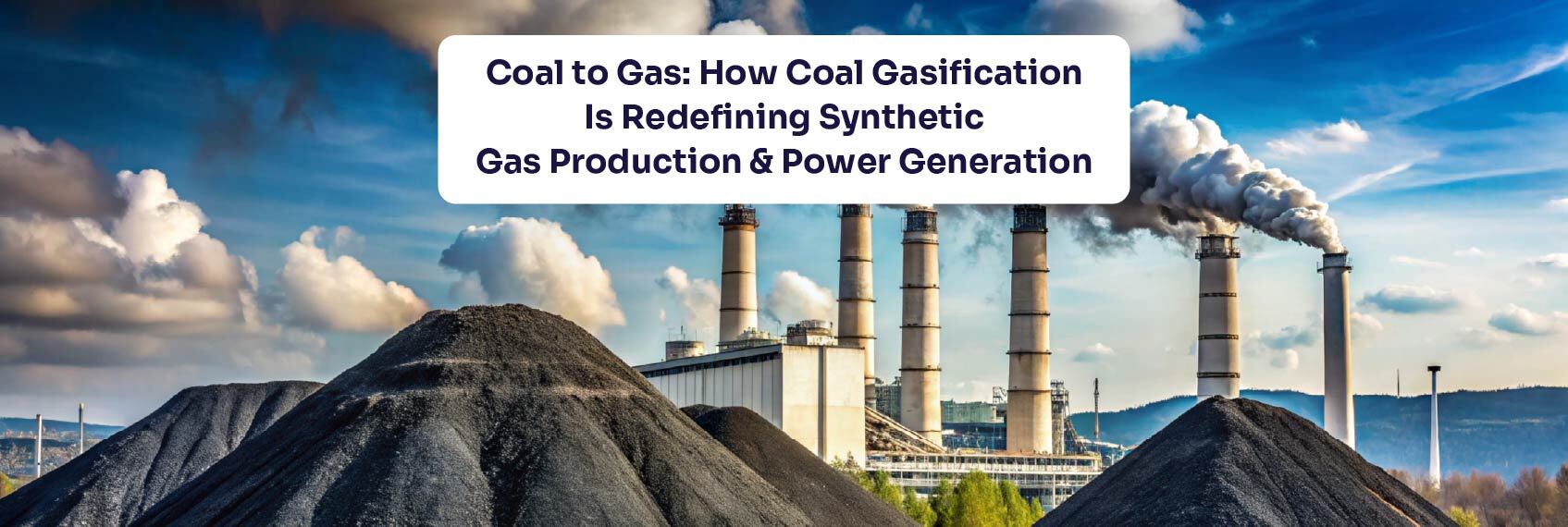
The gasification of coal (coal-based gasification) is essential to India's energy, making it an important part of India's energy and resources (roadmap for energy). The long-term use of coal through the gasification of coal provides an environmentally sustainable solution for both the future and the long-term use of the resource. The ability to produce multiple sources of clean energy will allow the continued growth of the renewable resource base without hindering the growth of cleaner fuel alternatives by both public and private entities.
The process of gasifying coal uses extreme heat (1,000 to 1,400 °C) and controlled amounts of oxygen and water vapour to partially oxidise coal into a combustible mixture of carbon monoxide (CO) and hydrogen (H2) called syngas, along with some amount of carbon dioxide (CO2) and methane (CH4).
In this particular approach to producing syngas, the molecular nature of the coal is broken down in the reactor rather than directly combusting it. This makes it possible to remove various impurities, such as sulphur compounds, particulates, and trace amounts of metals before the resultant gas is combusted. Coal gasification facilities can be surface-based or developed as underground coal gasification systems, where the gasification reaction actually takes place within the coal seam; thus, limiting the requirement for conventional coal mining.
Coal gasification in India has a rich history that started with pilot projects in the late 1900's but faced challenges for many years due to issues such as cost and technology. However, after the implementation of the National Coal Gasification Mission (which has set a goal of converting 100 million tons of coal into gas by the end of March 2030) by the government, momentum built up behind coal gasification projects. Recently, there have been many new investments into coal gasification and trials of underground coal gasification in eastern India. These changes are indicative of the increasing awareness of coal gasification as compared to combustion as a more efficient and environmentally sound way to utilize the coal resource.
The first step of producing synthetic gas from coal is the preparation of coal for gasification followed by feeding the coal into a gasifier. The use of high temperature and pressure in the gasifier allows for the coal to undergo various chemical reactions with carbon, steam, and oxygen to create syngas. The resulting syngas must be cooled down and cleaned to remove impurities such as sulphur, ash, and other contaminants, which is one of the primary benefits associated with coal gasification technology.
The cleaned syngas can then be utilized either directly as a fuel or as a feedstock to produce chemicals, fertiliser and liquid fuels. The operational coal gasification facilities throughout India provide evidence of the efficacy of this method of energy and industrial production.
Integrated Gasification Combined Cycle (IGCC) systems are the most common coal gasification power generation technologies. In these systems, a gas turbine generates power using syngas to provide fuel, and then the heat produced during the gas turbine process is used to produce steam that spins another turbine.
IGCC systems have an overall efficiency of approximately 45% compared with conventional coal-fired power generating stations that typically have a 35% efficiency.
In terms of emissions, coal gasification technologies provide significant benefits over traditional combustion technologies. One of the key benefits of using syngas as a fuel is that it can be cleaned prior to combustion, which reduces both sulphur and nitrogen oxides as well as particulate matter. Additionally, coal gasification technology allows for the capture of CO2 from the syngas before combustion occurs.
The conversion of coal to gas allows for better pollution control and has CO2 capture rates of more than 90% in advanced processes. This, however, presents obstacles to overcome. Indian coal generally has a high ash content that makes it more difficult to design a gasifier and requires the use of more water. Addressing these issues is critical for large-scale implementations of coal-to-gas technology in areas that experience shortages of water.
Coal gasification requires substantially more upfront capital than the installation of traditional combustion plants. Such capital costs range from ₹8 to ₹12 crore per megawatt of installed capacity. Some of this capital can be recovered through efficiency, flexibility of fuels, and the co-production of chemicals, methanol, and hydrogen.
Coal-to-gas also has uses beyond electricity, such as the production of fertilisers, petrochemicals and synthetic fuels, as well as producing hydrogen from syngas for low-carbon steelmaking and other industrial decarbonisation options.
With developments such as plasma gasification and digitally-optimised reactors being released in the next several years, performance improvements and cost reductions are likely to occur by the end of the decade. Budgetary incentives released February 01, 2025, may facilitate international cooperation on technology development and application, thereby supporting the deployment of coal as an energy solution. It has become increasingly evident that coal gasification provides a means of transitioning from non-renewables towards renewable energy rather than competing against renewables.
Coal gasification is a logical means of providing an environmentally safe alternative to traditional coal usage while balancing India's existing coal reserves with the need to promote clean, sustainable energy systems. Coal gasification provides a vehicle for producing syngas efficiently and can be used for many different applications, thus enhancing energy security, industrial development, and emissions control. While coal gasification will not replace renewables long term, it should provide a significant role during India's transition toward new forms of energy.

Decoding Goldman Sachs’ 2026 Investment Themes For Indian Equities
4 min Read Feb 27, 2026
SEBI Life Cycle Funds Explained: Asset Allocation & Long-Term Investment Strategy
4 min Read Feb 27, 2026
Free Lunches Cannot Go on Forever
4 min Read Feb 27, 2026
Should you bond with Bonds - Caveat Emptor
4 min Read Feb 27, 2026
Budget 2026 Winners & Losers
4 min Read Feb 26, 2026
For android only