Summary:
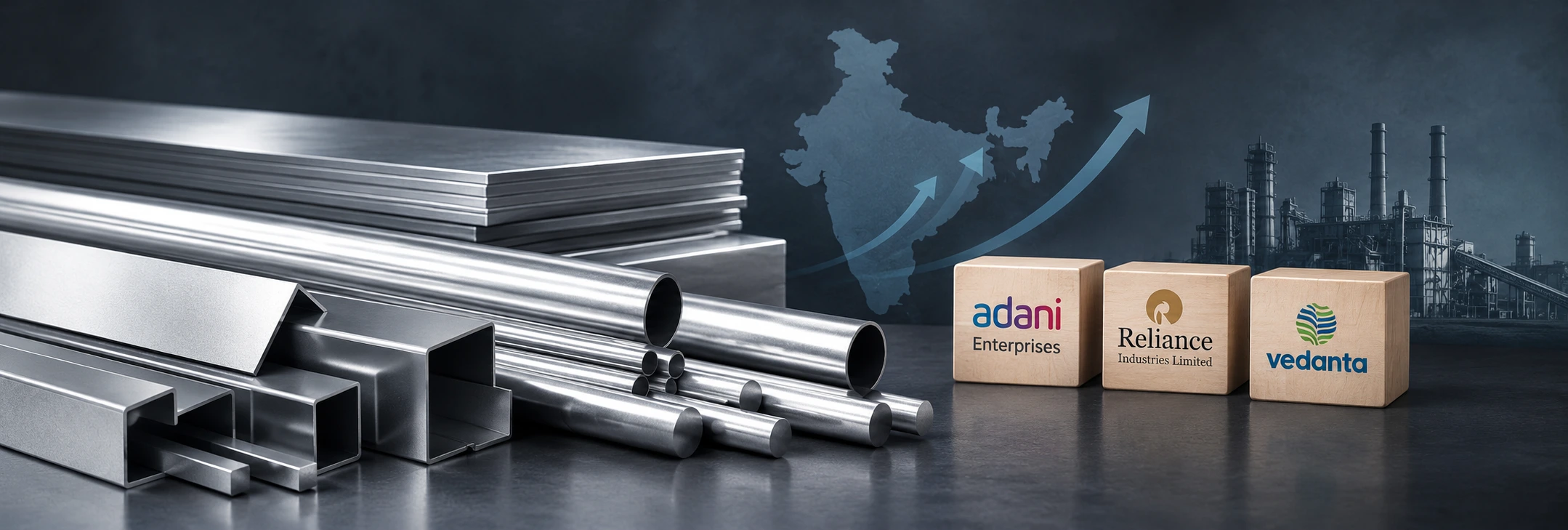
India's aluminium sector is entering a new phase as Adani Enterprises and Reliance Industries explore expansion while Vedanta accelerates its own capacity plans. New projects could increase aluminium supply, intensify competition and reshape the industry's production, cost and consolidation dynamics.
The entry of large business groups such as Adani Group and Reliance Industries into India’s aluminium sector is expected to intensify competition in an industry currently dominated by a few major producers. Vedanta Chairman Anil Agarwal has welcomed the development, stating that increased competition could improve efficiency across the sector and eventually lead to consolidation through mergers and acquisitions.
India’s primary aluminium industry has traditionally been led by three major producers — Vedanta, Hindalco Industries and National Aluminium Company (Nalco). Around 90% of the country’s aluminium production capacity is currently controlled by Vedanta and Hindalco, making the sector largely concentrated among established players.
Agarwal said that the arrival of new competitors would encourage companies to improve productivity, reduce costs and strengthen their operations. “Whoever is efficient will survive,” he said, highlighting that competition could eventually create opportunities for industry consolidation.
Adani and Reliance expand aluminium ambitions
The aluminium sector is attracting interest from large industrial groups due to rising demand from infrastructure, energy transition and manufacturing industries.
Adani Enterprises, along with UAE-based International Resources Holding, has announced an $11.5 billion integrated aluminium project in Odisha. The project includes a 4 million tonne alumina refinery, a 2 million tonne aluminium smelter and a 1 million tonne downstream manufacturing park.
Reliance Industries is also exploring opportunities in Odisha’s bauxite resources. The company has purchased tender documents for the Karlapat bauxite block, which has attracted interest from multiple industrial groups.
The possible entry of these large players could increase capacity additions and create a more competitive environment for existing aluminium producers.
Vedanta plans aggressive capacity expansion
Despite welcoming new competition, Vedanta is continuing with its own expansion strategy. The company is targeting aluminium production capacity of around 6 million tonnes in the next three years and plans to expand further towards 10 million tonnes over the longer term.
Vedanta has also announced a broader investment programme of $25 billion over the next three to five years across businesses including aluminium, oil and gas, zinc, steel and power. The company plans to fund these expansions through internal accruals, debt and asset recycling.
Separately, Vedanta has proposed large-scale investments in Odisha, including aluminium expansion projects. The plans include a 3 million tonne per annum aluminium smelter in Dhenkanal and a 6 million tonne per annum alumina refinery in Rayagada.
What does increased competition mean for aluminium companies?
Greater competition could put pressure on companies to improve operational efficiency, control costs and invest in technology. While established producers benefit from existing infrastructure, new entrants backed by large capital resources could change the competitive landscape.
For consumers and downstream industries, increased aluminium production capacity could improve supply availability. Aluminium is a key input for sectors such as automobiles, renewable energy, construction, defence and electrical equipment.
However, execution timelines, availability of raw materials and project approvals will determine how quickly new capacity reaches the market.
Impact on Vedanta stock and aluminium sector outlook
The development has drawn attention to aluminium companies as investors evaluate the impact of new competition and capacity expansion plans. The sector’s future performance will depend on aluminium prices, demand growth, cost efficiency and successful execution of expansion projects.
Vedanta’s focus remains on increasing production capacity while maintaining competitiveness. The company is also expanding in areas such as critical minerals, oil and gas, zinc, silver and power.
The entry of Adani and Reliance marks a potential shift in India’s aluminium industry, moving it from a concentrated market towards a more competitive structure where scale, technology and operational efficiency are likely to play a bigger role.